 Pin it
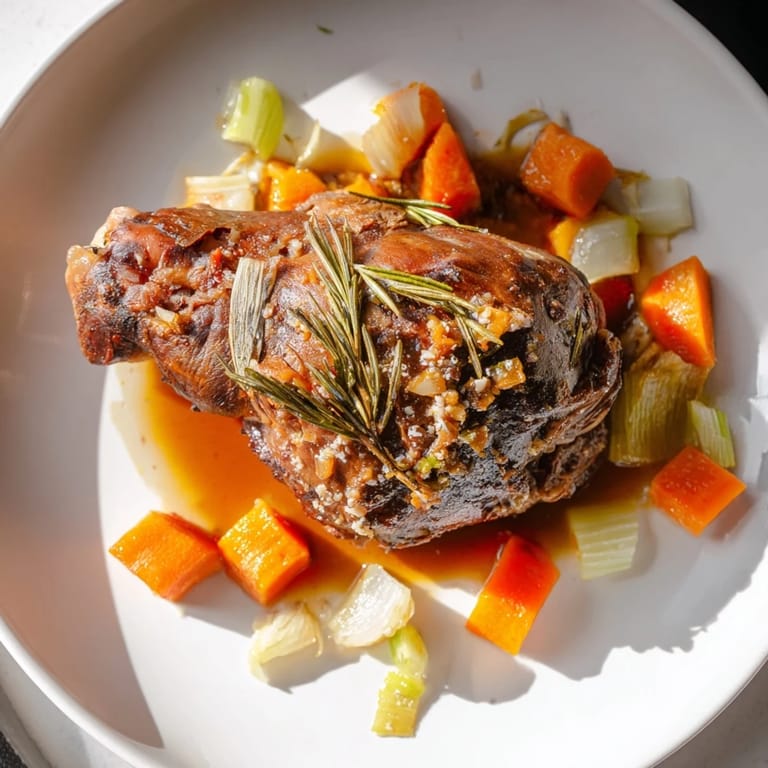
 The kitchen smelled like a winter forest the first time I tucked rosemary sprigs around those lamb shanks. I was nervous about the long roasting time, convinced I'd somehow dry them out, but my neighbor insisted slow heat was the secret. Three hours later, the meat practically slid off the bone, and I understood why people plan entire dinners around a single pot. That evening taught me patience tastes better than I ever imagined.
I made this for a small holiday gathering once, and my friend who claimed she didn't like lamb asked for seconds. She said the rosemary changed everything, made it taste earthy instead of gamey. I watched her mop up the sauce with bread, and I knew I'd be making this dish every winter from then on. It's become my quiet way of showing love without saying much at all.
Ingredients
- Lamb shanks: Look for shanks with a good amount of meat still clinging to the bone. The marrow inside adds richness to the sauce as it cooks, so don't trim away too much.
- Carrots and celery: These aren't just filler, they soak up all the roasting juices and become sweet, almost caramelized. I like cutting them into big chunks so they hold their shape.
- Onion: Yellow or white onions work best here. They break down into the sauce and add a subtle sweetness that balances the wine.
- Garlic cloves: Smashing them with the flat of your knife releases all the oils without burning. I learned this after scorching minced garlic more times than I care to admit.
- Fresh rosemary: This is the star. Dried rosemary won't give you the same piney, aromatic punch. If the sprigs are woody, don't worry, you'll fish them out later.
- Fresh thyme and bay leaves: These add layers of flavor that sneak up on you. I once forgot the bay leaves and the dish tasted flat, like it was missing a note.
- Beef or lamb stock: Homemade is lovely, but a good quality store bought stock works beautifully. Just make sure it's gluten free if that matters to you.
- Dry red wine: Use something you'd actually drink. I once used a bottle I wouldn't touch, and the bitterness came through in the sauce.
- Olive oil: You need this for searing. The browning creates a crust that locks in flavor and adds color to the final sauce.
- Salt and black pepper: Season generously before searing. The seasoning forms a crust that deepens every bite.
Tired of Takeout? 🥡
Get 10 meals you can make faster than delivery arrives. Seriously.
One email. No spam. Unsubscribe anytime.
Instructions
- Preheat your oven:
- Set it to 160°C (320°F) so it's ready when you are. Low and slow is the only way this works.
- Prepare the lamb:
- Pat each shank completely dry with paper towels, then season every side with salt and pepper. Wet meat won't brown properly, and you want that deep caramelized crust.
- Sear the shanks:
- Heat olive oil in your Dutch oven over medium high heat until it shimmers. Lay the shanks in carefully and let them sit undisturbed for about 2 minutes per side until they're mahogany brown. This step builds flavor you can't get any other way.
- Sauté the vegetables:
- Toss in the onions, carrots, celery, and smashed garlic right into the same pot. Stir them around for 4 to 5 minutes until they start to soften and pick up all those browned bits from the bottom.
- Nestle everything together:
- Return the lamb shanks to the pot and tuck the rosemary, thyme, and bay leaves around them. It should look crowded and cozy.
- Add the liquid:
- Pour in the red wine and stock, then bring everything to a gentle simmer. Use a wooden spoon to scrape up any stuck on bits from the bottom, that's pure flavor.
- Cover and roast:
- Put the lid on tightly, or cover with foil if your pot doesn't have one. Slide it into the oven and let it roast for 2 and a half to 3 hours, flipping the shanks once halfway through. You'll know it's done when the meat barely clings to the bone.
- Finish the sauce:
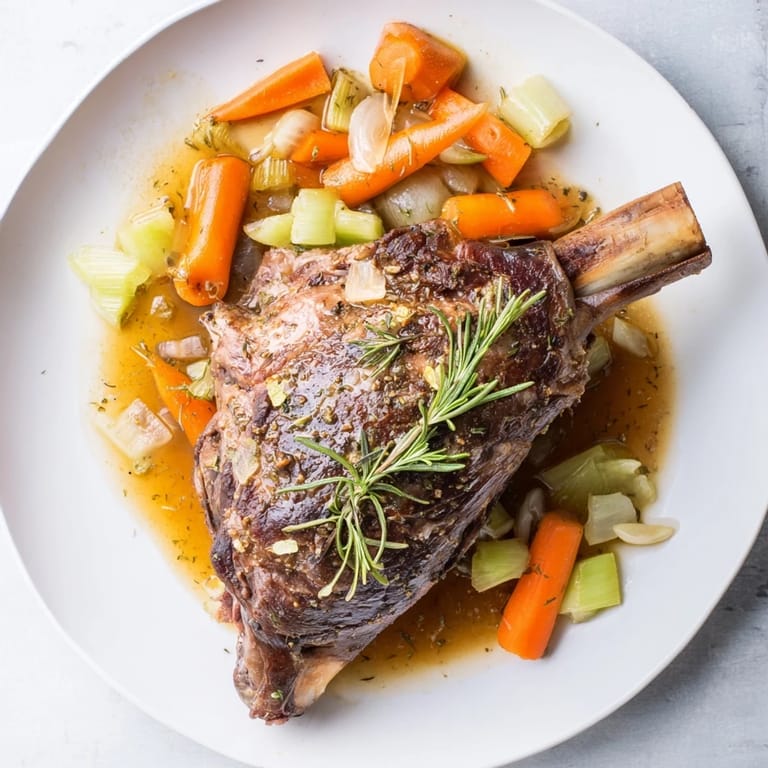
- Carefully transfer the lamb and vegetables to a serving platter. Skim off any excess fat floating on top of the sauce, then simmer it on the stovetop for a few minutes if you want it thicker. Spoon it generously over the lamb and serve while it's still steaming.
 Pin it
 One cold December night, I served this to my parents with a simple bowl of mashed potatoes. My dad, who rarely says much about food, paused mid bite and told me it reminded him of a meal he had in a tiny tavern in Greece years ago. That moment made all the prep worth it. Sometimes a dish becomes a bridge to a memory you didn't know someone was carrying.
Serving Suggestions
Creamy mashed potatoes are my go to, but polenta works beautifully too, especially if you stir in a little butter and Parmesan. I've also served this over soft egg noodles when I wanted something lighter. A crusty loaf of bread on the side is non negotiable for mopping up every last drop of sauce.
Make Ahead and Storage
This dish actually improves if you make it a day ahead. Let it cool completely, then cover and refrigerate. The next day, skim off any solidified fat from the top, reheat gently on the stovetop or in a low oven, and the flavors will have deepened overnight. Leftovers keep well for up to three days in the fridge, and they reheat like a dream.
Variations and Extras
I sometimes add a strip of orange zest to the braising liquid for a subtle brightness that cuts through the richness. A splash of balsamic vinegar at the end adds a sweet tang that surprises people. If you want more vegetables, throw in some parsnips or small potatoes halfway through roasting.
- Try swapping thyme for oregano if you want a more Mediterranean vibe.
- For a thicker sauce, whisk in a teaspoon of cornstarch mixed with cold water during the final simmer.
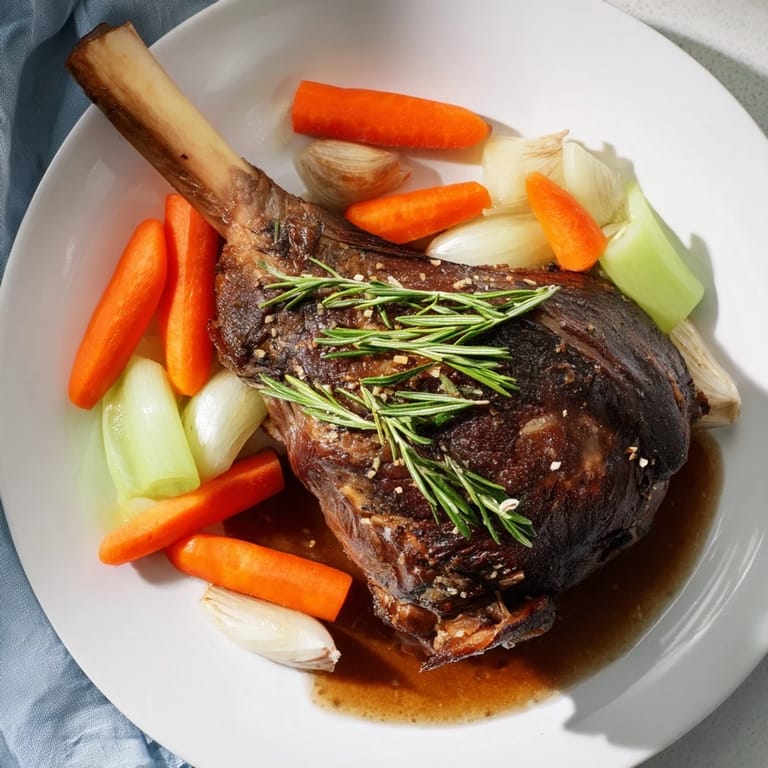
- Garnish with fresh rosemary leaves right before serving for a pop of color and aroma.
 Pin it
 This recipe taught me that the best meals aren't rushed. I hope it fills your home with warmth and your table with quiet joy.
Recipe FAQs
- → How long should lamb shanks be slow-roasted?
Typically, lamb shanks are slow-roasted for 2 ½ to 3 hours to achieve tender, fall-off-the-bone texture.
- → What herbs complement lamb shanks best during cooking?
Rosemary, thyme, and bay leaves add aromatic depth and enhance the savory flavor of lamb shanks.
- → Can I use red wine in the cooking liquid?
Yes, dry red wine is ideal for braising; it adds richness and complexity to the sauce.
- → What vegetables are commonly used in slow-roasting lamb shanks?
Onions, carrots, celery, and garlic soften during cooking and infuse the dish with natural sweetness and aroma.
- → How do I thicken the sauce after roasting?
Skim excess fat and simmer the sauce on the stovetop to reduce and thicken it to desired consistency.
- → What side dishes complement slow-roasted lamb shanks?
Creamy mashed potatoes or polenta are classic pairings that balance the rich flavors of the lamb.