 Pin it
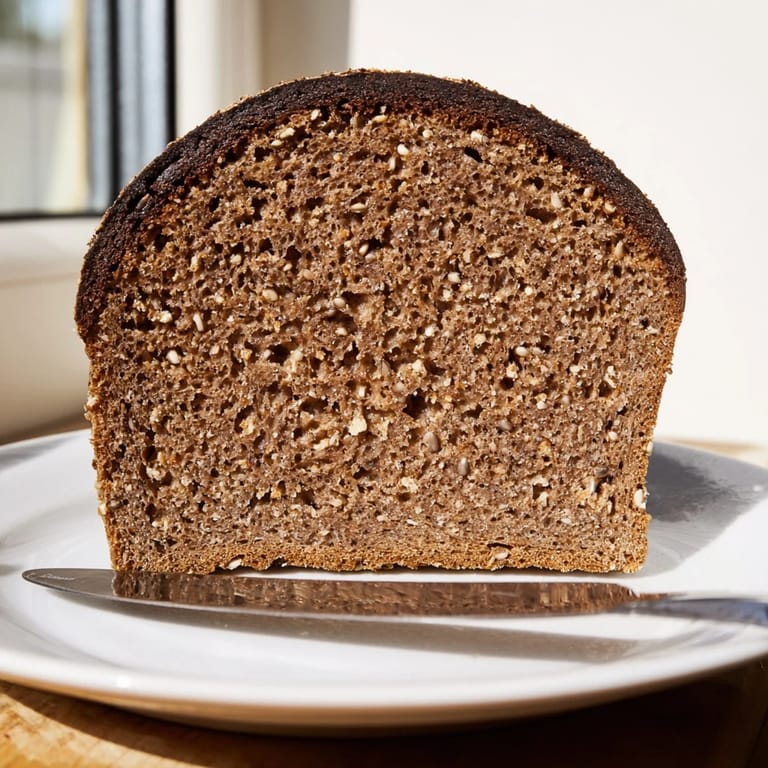
 My grandmother kept a worn wooden board in her kitchen just for slicing rupjmaize, and the moment that bread came out of the oven, the entire house filled with this earthy, almost smoky aroma that made everyone stop whatever they were doing. There's something about the deep rye flavor and those little caraway seeds that feels less like breakfast and more like an anchor to something real and honest. This bread doesn't rush you—the long rise happens while you sleep, and in the morning you're rewarded with a loaf so dense and flavorful it barely needs anything but butter and time.
I made this bread for a friend who'd just moved to a new city, and watching her tear into a still-warm slice with butter melting into every crevice told me everything I needed to know about why this recipe matters. There's comfort in a bread this substantial, this honest—it's the kind of thing that makes a sparse kitchen feel less lonely.
Ingredients
- Dark rye flour (500 g): This is the soul of rupjmaize; it brings that deep, almost nutty flavor you can't fake with anything else. Don't use regular rye flour if you can help it—seek out the darker varieties, which have more character.
- Bread flour (100 g): Just enough to give the dough structure without overpowering the rye's personality. It helps create that tender crumb inside the robust crust.
- Active dry yeast (1 packet): The long rise means the yeast has time to develop flavor, so don't rush this part. Warm water (about 40°C) wakes it up without killing it.
- Molasses or dark honey (2 tbsp): This feeds the yeast and adds a subtle sweetness that balances the rye's earthiness. I learned the hard way that light molasses tastes thin here—go dark or go home.
- Warm water (350 ml): The temperature matters; too hot and you'll kill the yeast, too cold and it sulks. Aim for the warmth of a comfortable bath.
- Salt (2 tsp): Never skip this. It grounds the flavor and tightens the gluten network, which is especially important with rye's looser structure.
- Caraway seeds (2 tsp): These are optional only if you've never had them before. Once you taste their warm, slightly licorice note in fresh bread, you'll understand why they're traditional.
- Vegetable oil (1 tbsp plus extra): Keeps the dough tender and helps it rise evenly. A neutral oil works best so the rye and caraway can shine.
Tired of Takeout? 🥡
Get 10 meals you can make faster than delivery arrives. Seriously.
One email. No spam. Unsubscribe anytime.
Instructions
- Wake up the yeast:
- Pour your warm water into a bowl, add the molasses, then sprinkle the yeast over top. Stir gently and let it sit for 10 minutes—you'll see it foam up, which means it's alive and ready to work. This is your proof that everything's going to rise.
- Bring the dough together:
- Add the rye flour, bread flour, salt, and caraway seeds to your yeasty mixture and stir with a wooden spoon until it looks shaggy and rough. The dough will be stickier than wheat bread dough, and that's exactly right.
- Knead with intention:
- Drizzle in the oil and knead by hand or with a dough hook for 5 to 7 minutes, until the dough becomes smooth and elastic. It will still feel slightly sticky to your fingers—don't panic and add flour. Rye dough lives in this sticky place.
- Let time do the heavy lifting:
- Oil a large bowl, shape your dough into a ball, and nestle it inside. Cover it with plastic wrap or a damp towel and let it rise at room temperature for 12 to 16 hours, ideally overnight. While you sleep, the yeast is developing flavor and the gluten is getting organized.
- Shape and proof again:
- Punch down the dough (this is satisfying), turn it onto a lightly floured surface, and shape it into a round or oval loaf. If you're using a loaf pan, press it in gently; if you're using a baking sheet, place it seam-side down on parchment paper. Cover and let it rise for 45 to 60 minutes until it looks puffy and alive.
- Prepare for the oven:
- While the dough finishes rising, preheat your oven to 220°C (425°F). Once ready, dust the top of your loaf generously with rye flour—this creates that rustic, speckled crust. If you're feeling decorative, score the top with a sharp knife in a simple cross or line.
- Bake with patience:
- Slide the loaf into the center of the oven and bake for 45 to 50 minutes. You'll know it's done when the crust is deeply browned and the bottom sounds hollow when you tap it. The kitchen will smell like a Latvian grandmother's kitchen.
- Cool before slicing:
- Remove the loaf to a wire rack and let it cool completely—I know it's torture, but slicing into hot bread turns it gummy. Once cool, slice and toast if you like, which brings out all the bread's best qualities.
 Pin it
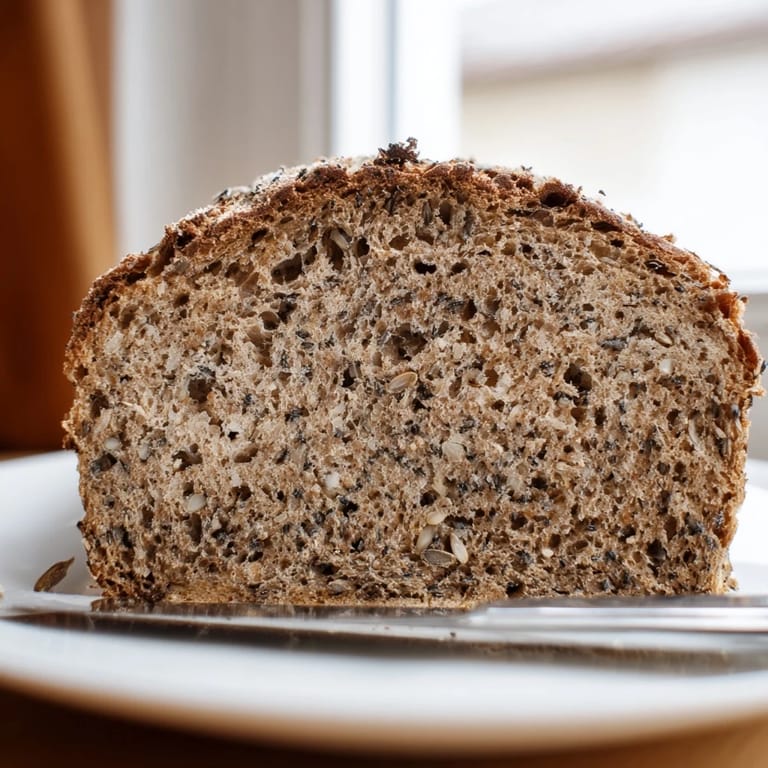
 The first time I served this with smoked fish and good butter, my friend was quiet for a moment, then asked for the recipe written down. That's when I realized this bread does something a store-bought loaf never can—it makes people slow down and pay attention.
Why Caraway Seeds Matter
Caraway isn't just flavor—it's tradition encoded in a seed. In Latvia, rupjmaize without caraway is like a song without a chorus. The seeds taste warm and faintly licorice-like, and they brighten the heavy earthiness of the rye. If you've never tried toasting them lightly in a dry pan before adding to the dough, the flavor deepens in a way that makes people ask what you did differently.
The Art of the Long Rise
Twelve to sixteen hours might sound extreme, but that's the secret most bread recipes won't tell you—time develops flavor that no amount of yeast or salt can rush. The slow fermentation means the dough breaks down the flour more completely, creating a more digestible bread with deeper, more complex taste. This is old bread-making wisdom, the kind bakers used before commercial yeast made everything fast.
Serving and Storage
Rupjmaize is best sliced thick and toasted, which brings out a nutty flavor that barely emerges in the fresh loaf. Serve it with salted butter, smoked fish, pickled vegetables, or simply alongside a bowl of beet soup. This bread freezes beautifully—slice it before freezing so you can toast individual slices whenever you want that Latvian kitchen feeling without starting from scratch.
- Keep it wrapped loosely in cloth or paper once cooled; plastic makes the crust sweat.
- Toasting even slightly stale bread revives it completely, so don't throw away day-old slices.
- A bread this dense stays fresh for five to seven days if you store it properly, which means one loaf becomes many meals.
 Pin it
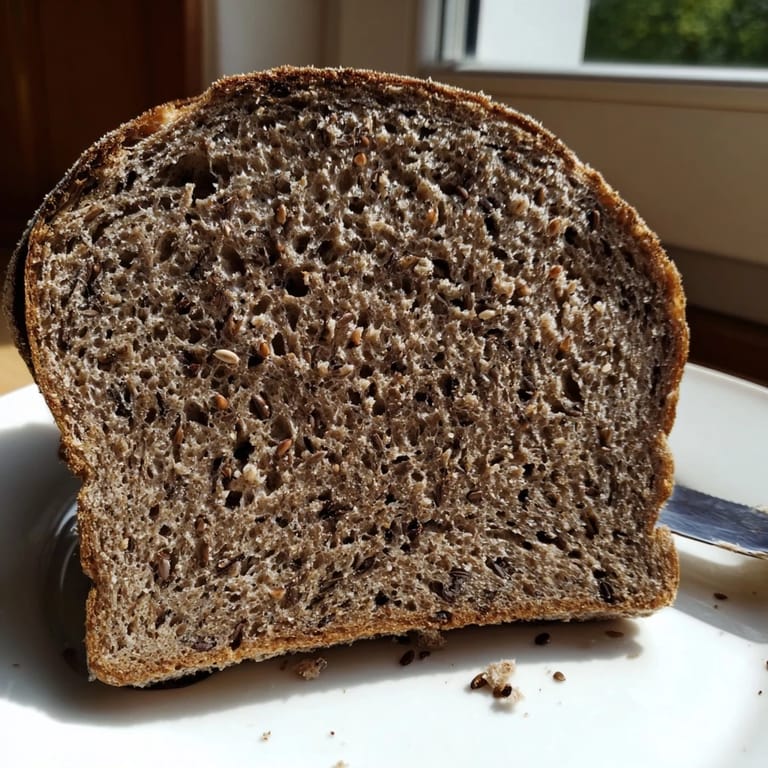
 This bread has a way of making a simple meal feel like home, no matter where you're eating it. Make it once and you'll understand why it's been baked the same way in Latvia for generations.
Recipe FAQs
- → What makes Latvian Rupjmaize distinct?
Its dense texture and unique flavor come from dark rye flour combined with caraway seeds and a long rising period.
- → How does caraway affect the bread?
Caraway seeds add a subtle nutty and aromatic touch that complements the deep rye flavors.
- → Can the bread be toasted?
Yes, toasting enhances the crust’s crunchiness and releases aromatic notes from the caraway seeds.
- → What is the best way to shape the dough?
Shape the dough into a round or oval loaf on a floured surface before the final rise and baking.
- → How long should the dough rise?
Allow an initial rise of 12 to 16 hours at room temperature, then a second rise for 45 to 60 minutes before baking.
- → Can molasses be substituted?
Dark honey can be used as an alternative to molasses to add sweetness and color.