 Pin it
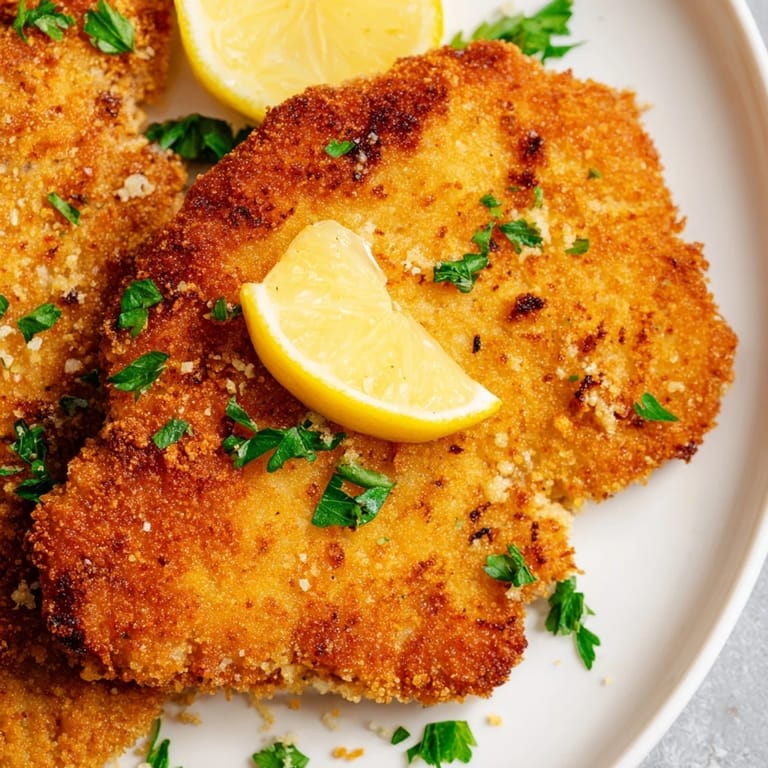
 The first time I really understood schnitzel wasn't from a recipe—it was watching my neighbor emerge from her kitchen with a plate of golden, impossibly crispy cutlets that shattered delightfully under a fork. She'd caught me admiring the aroma drifting through our shared wall and insisted I watch her make it. What struck me most wasn't the technique, but how she moved through each step with such ease, as if her hands already knew exactly what to do. That evening taught me that schnitzel isn't about complexity—it's about respecting a few simple elements and getting each one right.
I made this for a small dinner party on a rainy Sunday, and something unexpected happened—everyone set down their phones and actually talked. The schnitzel arrived at the table still crackling slightly, steam rising from underneath, and it became this moment where the dish itself demanded attention. My friend Sarah, who usually rushes through meals, slowed down. She squeezed lemon over hers, took a bite, and just closed her eyes. That's when I realized schnitzel isn't just food; it's an edible pause button.
Ingredients
- Boneless pork chops or chicken breasts (4 pieces, about 150g each): Pork gives you richer flavor and stays juicier, but chicken works beautifully if that's what you have—the key is pounding them thin so they cook evenly and quickly.
- All-purpose flour (100g): This creates the first protective layer that helps the egg adhere; don't skip it or your breading will be uneven.
- Eggs (2 large) and milk (2 tbsp): The milk thins the egg mixture slightly so it coats more evenly without clumping up on the meat.
- Fine dry breadcrumbs (150g): Fine crumbs give you that delicate, shimmering crust—panko is tempting but will make it too thick and heavy.
- Vegetable oil or clarified butter (120ml): Butterschmalz is traditional and tastes extraordinary, but neutral oil works perfectly; the heat matters more than the fat itself.
- Salt, pepper, and lemon wedges: These aren't afterthoughts—salt and pepper on the meat before breading are essential, and lemon brightens everything at the end.
Tired of Takeout? 🥡
Get 10 meals you can make faster than delivery arrives. Seriously.
One email. No spam. Unsubscribe anytime.
Instructions
- Pound your meat to even thickness:
- Place the cutlet between plastic wrap and pound gently but firmly until it's about 1/4 inch thick all over. Uneven thickness means some parts cook while others stay raw, so take your time here.
- Season generously:
- Salt and pepper both sides now, not later. The seasoning soaks into the meat and becomes part of the finished dish.
- Set up your breading station:
- Shallow plates or bowls work better than deep ones—you need room to move the meat around without making a mess. Arrange them in order: flour, egg mixture, breadcrumbs.
- Coat with intention:
- Dredge in flour and shake off the excess, dip into egg until both sides glisten, then press gently into breadcrumbs. The gentle press matters—you want them to stick, not compact into a thick shell.
- Heat your oil or butter properly:
- Medium-high heat is your target. Test it by dropping a tiny breadcrumb in—it should sizzle immediately and turn golden in seconds, not drift around lazily.
- Fry until golden and crispy:
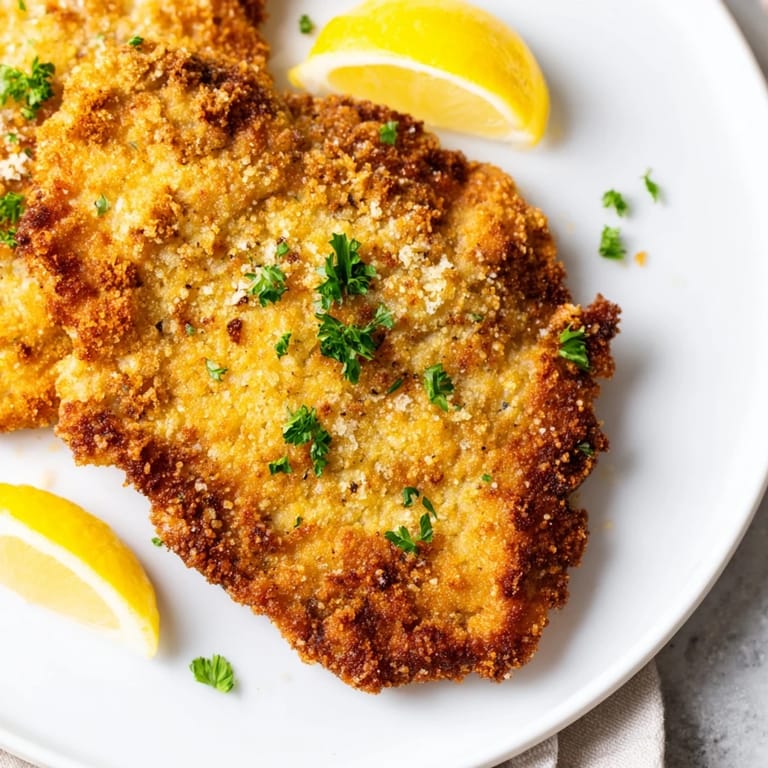
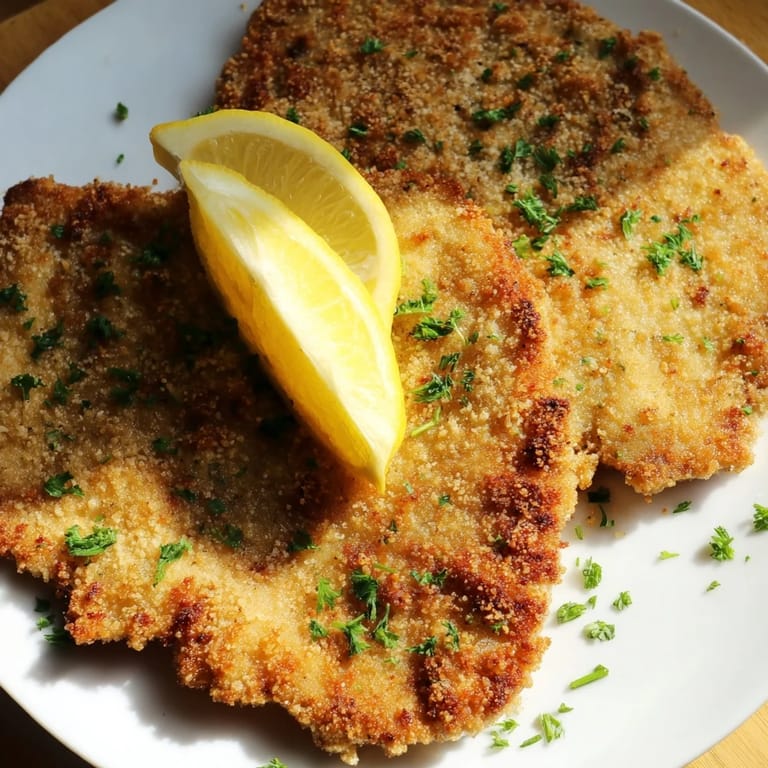
- Two to three minutes per side, and you'll see it transform from pale to deep golden brown. The crust will sound crispy when you tap it with your spatula.
- Drain and serve at once:
- Paper towels absorb excess oil quickly. Serve immediately while the crust is still crackling, with lemon wedges ready to squeeze over top.
 Pin it
 There was an afternoon when my kids helped me make schnitzel, and they discovered that tapping the finished cutlet with a fork created this satisfying cracking sound. They did it over and over, giggling at the noise, and suddenly a dish I'd made a hundred times became an adventure. Food tastes different when there's laughter in the kitchen. That's when I understood why my neighbor had been so willing to share her knowledge—she knew this recipe was really about creating a small, golden moment worth repeating.
The Right Meat Matters
Pork chops and chicken breasts are your two main paths here, and they behave slightly differently. Pork stays naturally moister and forgiving if you accidentally cook it a touch longer, while chicken dries out faster if you're not paying attention. The best schnitzel makers I know choose based on what they're serving it with—pork pairs beautifully with sharp potato salad and vinegary cucumber, while chicken feels lighter alongside creamy sides. Temperature matters too: let your meat sit at room temperature for about 10 minutes before pounding so it cooks more evenly in the pan.
Why Thin Is Everything
That 1/4-inch thickness isn't arbitrary; it's the golden ratio that lets the breadcrumb crust turn crispy while the inside stays tender and juicy. Thicker cutlets give you tough meat with a crust that's burnt before the center is cooked, while thinner ones dry out before they brown. When you pound the meat, you're not just tenderizing—you're equalizing thickness so every bite cooks at the same rate. Work gently but thoroughly, paying special attention to thicker spots that resist flattening.
The Setup and The Service
Mise en place—having everything ready before you start—transforms schnitzel from stressful to effortless. Get your breading station arranged, heat your oil, have paper towels waiting, and prep your lemon wedges and parsley. Once you start frying, you can't step away, so readiness is your friend. The moment a schnitzel leaves the pan, it's beginning its journey toward softness, so serving immediately isn't a suggestion—it's the difference between restaurant-quality and disappointing.
- If you're cooking for a crowd, fry them as guests arrive so they hit the table at peak crispiness, or keep a batch warm in a 200°F oven while you finish the rest.
- Schnitzel reheats decently in a hot skillet for about a minute per side, but it's genuinely best fresh from the pan, so plan your timing accordingly.
- Don't be tempted to cover them while they rest—the steam will soften that crust you worked so hard to create.
 Pin it
 Schnitzel taught me that simplicity, when executed thoughtfully, creates moments people remember. There's no fancy technique here, just meat, three coatings, and hot oil—and yet it transforms into something that brings people to the table and makes them pause. Make it often, and it becomes not just a recipe but part of your cooking language.
Recipe FAQs
- → What type of meat is best for schnitzel cutlets?
Boneless pork chops or chicken breasts pounded thinly work best to ensure even cooking and tenderness.
- → How can I achieve a crispy crust on the cutlets?
Carefully coat the meat with flour, egg wash, and breadcrumbs without pressing too firmly to keep the crust light and crunchy.
- → What oil is recommended for frying schnitzel?
Vegetable oil or clarified butter provides the right heat tolerance and flavor for pan-frying schnitzels evenly.
- → Why should lemon wedges be served with schnitzel?
Lemon adds a fresh, tangy brightness that balances the richness of the crispy breaded cutlets.
- → Can I prepare schnitzel ahead of time?
It's best served immediately after frying to retain crispness, but you can keep cooked cutlets warm briefly on a rack.