 Pin it
 There's something almost magical about the smell of tomatoes and garlic hitting heat in the oven—it fills the whole kitchen with this warm, caramelized promise that a simple soup can actually taste like comfort itself. I discovered this recipe on a chilly afternoon when my garden tomatoes were starting to wrinkle at the edges, and I didn't want to waste them on something ordinary. A slow roast transformed what I thought were past-their-prime tomatoes into something sweet and deep, while the garlic bulb turned into pure silk. That first spoonful, with cream swirled through it like clouds, reminded me why I keep coming back to the kitchen on days when everything else feels complicated.
My sister called halfway through roasting the vegetables, and I described what was happening with so much enthusiasm that she showed up fifteen minutes later expecting to stay for just a quick hello. She left two hours later, empty bowl in hand, asking if I'd teach her how I made it taste this good. That's when I realized it wasn't really about technique at all—it was about patience and letting flavors have time to become themselves.
Ingredients
- Ripe tomatoes (1.5 lbs): Look for ones that feel heavy for their size and smell fragrant at the stem end; roasting concentrates their natural sweetness and masks any blandness.
- Garlic bulb (1 whole): One bulb might seem like a lot, but roasting transforms it from sharp and biting into creamy and almost nutty, making it the hidden star.
- Yellow onion (1 large): The natural sugars caramelize alongside the tomatoes, adding depth without any harsh bite.
- Olive oil (2 tbsp): High-quality matters here since it gets concentrated and less is diluted in broth.
- Heavy cream (1/2 cup): This is what turns a good soup into the kind you crave; it rounds out the acidity and adds body.
- Vegetable broth (2 cups): Use homemade if you have it, but good store-bought works fine—it just becomes the base for everything else.
- Salt and pepper: Taste as you go; roasting intensifies flavors, so you might need less seasoning than you'd expect.
- Smoked paprika (optional, 1/4 tsp): A whisper of this adds a subtle depth that people notice but can't quite name.
- Sugar (1/2 tsp optional): A tiny pinch balances acidity if your tomatoes were particularly tart—trust your palate, not the recipe.
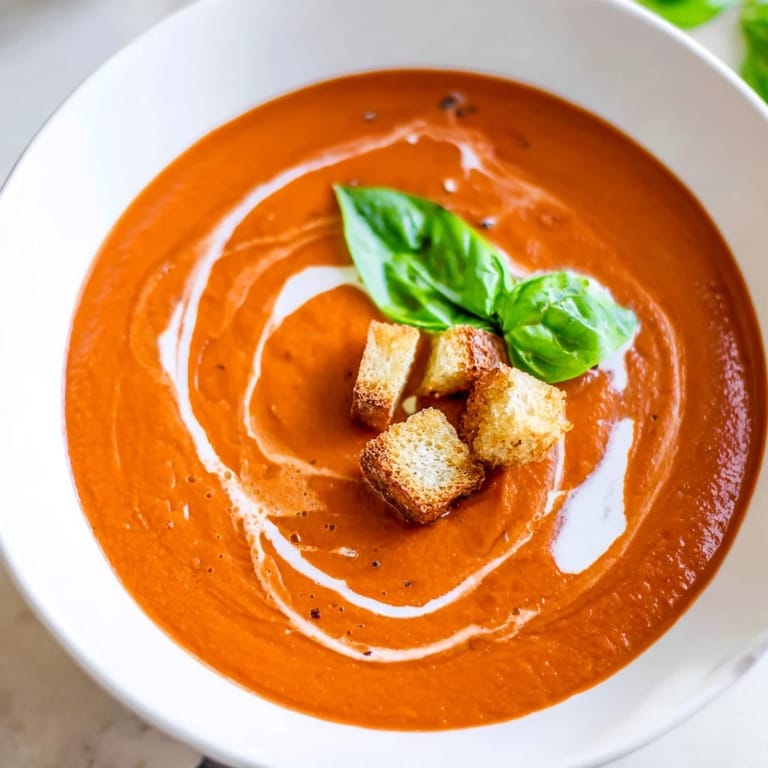
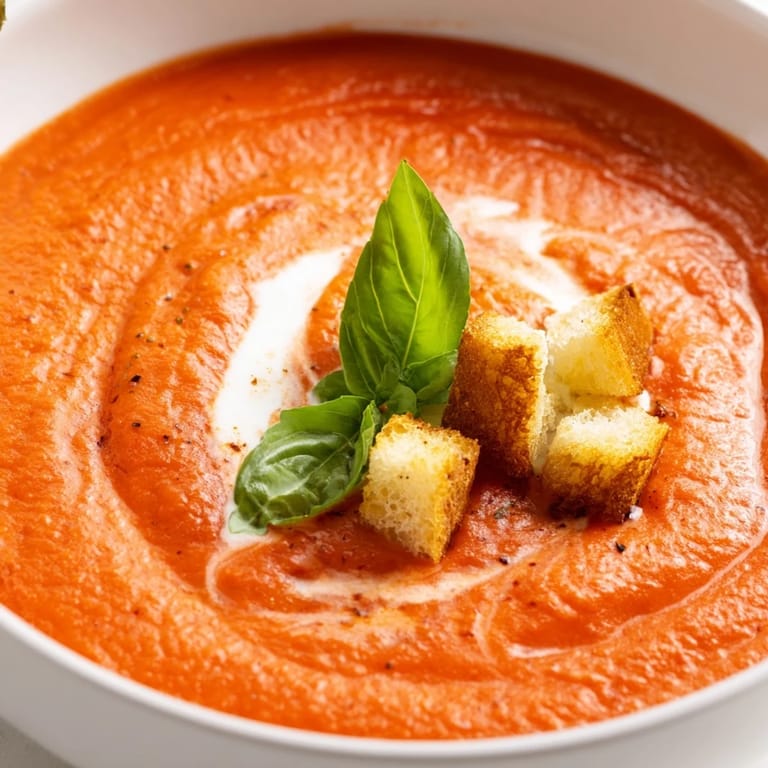
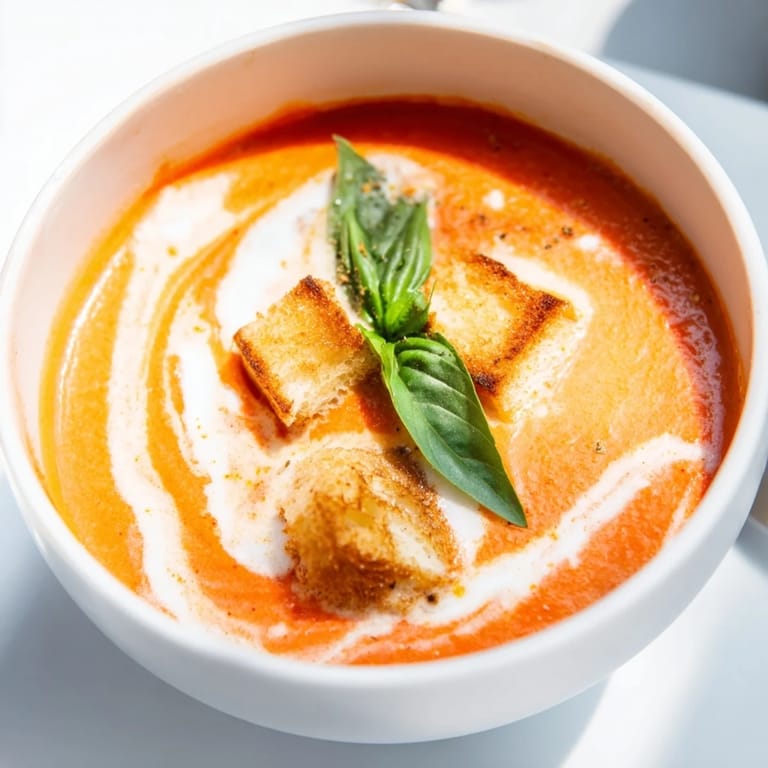
- Fresh basil and croutons (for garnish): Basil adds a fresh note right before serving; croutons give you something to crunch on while the warmth settles you down.
Tired of Takeout? 🥡
Get 10 meals you can make faster than delivery arrives. Seriously.
One email. No spam. Unsubscribe anytime.
Instructions
- Get the oven ready and prep your vegetables:
- Preheat to 400°F and arrange your tomato halves skin-side down on a baking sheet with onion wedges scattered around—they should have room to breathe. For the garlic, slice the top off the bulb to expose the cloves, drizzle with just a touch of olive oil, and wrap it loosely in foil so it steams gently as it roasts.
- Season and get everything into the oven:
- Coat the tomatoes and onions with olive oil, sprinkle salt and pepper over them, and slide it all into that hot oven. The waiting is the hardest part; after 35 to 40 minutes you'll know it's ready when the tomatoes have shriveled slightly and their edges are dark caramelized, and the garlic bulb smells creamy and soft.
- Let it cool and release the garlic cloves:
- Once everything has cooled enough to handle, squeeze each garlic clove out of its papery skin—they should slip out like little nuggets of butter.
- Blend everything into silk:
- Transfer the roasted tomatoes, onions, and garlic to a blender with the vegetable broth and blend until completely smooth, working in batches if your blender is small. The texture should be velvety with no grainy bits.
- Bring it all together:
- Pour the blended soup into a large pot and stir in the heavy cream and smoked paprika if using. Taste it—if it feels too acidic, add that optional sugar a pinch at a time and stir.
- Finish with a gentle simmer:
- Heat the soup over medium-low heat for about 10 minutes, stirring now and then, letting everything meld together. The cream should integrate fully and the flavors should taste deeper somehow.
- Taste and adjust one final time:
- Add salt, pepper, or more paprika to match your preference. Some days you want it brighter, some days richer—there's no wrong answer.
- Serve while it's still steaming:
- Pour into bowls, scatter basil leaves on top, add croutons if you want that contrast, and hand it to someone who needs to be reminded that simple food done well is actually the best food.
 Pin it
 On a particularly gray morning last winter, I made this soup and ate three bowls while reading a book I'd been meaning to get to for months. There was nothing special happening, no occasion or guest, just me and a bowl that tasted like someone had distilled all of autumn into a creamy, warm hug. It reminded me that the best meals aren't always the ones made for show—sometimes they're the ones made just because you deserved something good.
Why This Soup Works Every Single Time
The secret is honestly just roasting—it's not a technique that sounds fancy, but it's what transforms ordinary tomatoes into something concentrated and sweet. Caramelization happens when you give vegetables time and heat, and there's almost nothing that can go wrong as long as you don't rush it. Even if your tomatoes aren't peak-season perfect, the oven will make them taste better than they have any right to taste, and your kitchen will smell so good that people will ask what you're cooking the moment they walk in.
The Cream Makes the Difference
I used to make tomato soup without any cream at all, thinking it was more honest that way, until a friend poured a splash of cream into her bowl at the table and suddenly looked at me like I'd been holding out on her. The cream doesn't make the soup heavy—it rounds out all the sharp edges and makes the tomato flavor somehow brighter instead of diluted. If you're looking for a vegan version, coconut cream works beautifully and honestly tastes richer, while cashew cream adds an almost floral quality that some people prefer.
Ways to Make It Your Own
This soup is a canvas that takes well to small changes depending on your mood or what you have on hand. A pinch of chili flakes adds heat without overwhelming the roasted sweetness, while fresh thyme stirred in at the end brings an herbaceous note that works especially well if you're serving it alongside a grilled cheese sandwich. Some people swear by a drizzle of balsamic vinegar or a tiny splash of balsamic reduction that creates complexity you can't quite name, and once I added roasted red pepper and it tasted like a different soup entirely—more Spanish, somehow.
- A torn piece of fresh mozzarella on top adds richness and melts into the heat of the soup.
- Crispy bacon bits give you a textural contrast that salty-cream-lovers absolutely need in their lives.
- Serve it chilled on a warm day and it transforms into something equally craveable but completely different.
 Pin it
 This soup reminds me why I cook at all—it's not complicated, it doesn't require special skills, but somehow it tastes like care. Make it when you need something warm, when you want to impress someone who actually matters, or when you're just tired and deserve something that tastes like it took more effort than it actually did.
Recipe FAQs
- → What is the best way to roast the garlic?
Slice the top off the garlic bulb, drizzle with olive oil, wrap in foil, and roast alongside tomatoes and onions at 400°F until soft and caramelized.
- → Can I make this dish dairy-free?
Yes, substitute heavy cream with coconut or cashew cream for a creamy texture without dairy.
- → How can I adjust the soup’s acidity?
Add a small amount of sugar to balance the natural acidity of the roasted tomatoes if needed.
- → What garnishes complement this dish?
Fresh basil leaves and toasted bread or croutons add texture and a fresh herbal note to the rich blend.
- → Is it possible to add a spicy element?
Yes, a pinch of chili flakes can be stirred in to introduce a subtle heat to the smooth soup.