 Pin it
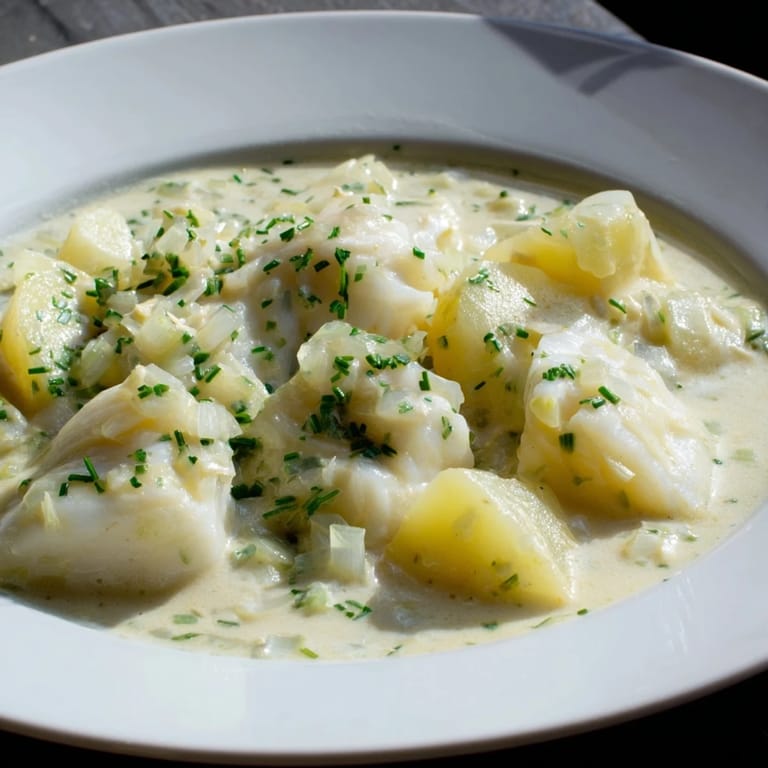
 My first bowl of Icelandic fish stew arrived on a grey afternoon in Reykjavik, served in a ceramic bowl that had clearly made the journey through countless winters. The smell hit me first—a gentle, creamy aroma with undertones of the sea—and one spoonful transported me to a kitchen I'd never been to, one where this dish had been made for generations. I spent the next hour trying to recreate that exact feeling, tasting and adjusting until my version captured something close to that quiet, nourishing magic. It became my go-to recipe on days when the weather turns cold and the world feels a bit too sharp around the edges.
I made this for a friend who'd been having a rough week, and watching their shoulders relax after that first bite reminded me why comfort food exists. There's something about a creamy stew that says you're cared for, that someone took time to sit with the simmering pot and think about whether it was ready. That bowl said more than words ever could.
Ingredients
- Cod or haddock fillets (500 g): White fish breaks apart gently and won't overpower the cream—save the bold flavors for another day.
- Potatoes (500 g): Waxy potatoes hold their shape better than floury ones; I learned this the hard way when my first batch turned to mush.
- Butter (60 g): Don't skip it or cut back; it's what makes the base taste complete and rich.
- Whole milk (500 ml) and heavy cream (100 ml): The pairing matters—milk alone tastes thin, cream alone feels heavy, together they're balanced.
- Onion (1 medium): Chopped fine so it dissolves into sweetness as it cooks.
- Fresh parsley and chives (2 tbsp each): Fresh herbs scattered on top are non-negotiable; they brighten everything.
- Bay leaf, salt, white pepper, and nutmeg: White pepper is gentler than black and won't speckle the creamy surface; the nutmeg is optional but adds a whisper of warmth.
Tired of Takeout? 🥡
Get 10 meals you can make faster than delivery arrives. Seriously.
One email. No spam. Unsubscribe anytime.
Instructions
- Start with the potatoes:
- Dice them into pieces roughly the size of your thumb, place them in salted water, and let them boil for 12 to 15 minutes until they bend easily with a fork. Don't overcook them—you want them soft but not collapsing.
- Poach the fish gently:
- In a separate saucepan, lay the fillets in just enough water to cover, add the bay leaf and a pinch of salt, and let them simmer quietly for 6 to 8 minutes until the flesh turns opaque and flakes without resistance. Save about a third of a cup of that poaching water; it holds the essence of the fish.
- Build the base:
- Melt the butter in your large pot over medium heat, then add the finely chopped onion and let it soften and turn translucent, about 5 minutes. The kitchen will smell suddenly sweet and welcoming.
- Combine and soften:
- Add the drained potatoes and gently crush them with a potato masher, leaving plenty of chunks so the stew has texture and isn't just mush. You're looking for a broken, rustic texture.
- Bring it together:
- Flake the poached fish into large pieces and add them to the pot along with the reserved poaching liquid, stirring very gently so the fish stays in beautiful pieces rather than shredding into nothing.
- Make it creamy:
- Pour in the milk and cream, then cook over low heat, stirring often, until the whole thing is warm and creamy—never let it boil or the dairy will separate and turn grainy. This takes about 5 minutes.
- Season and finish:
- Taste as you go, adding salt and white pepper to your preference, then a whisper of nutmeg if you want that warming spice. Stir in half the parsley and chives, keeping the rest to scatter on top when you serve.
- Serve with intention:
- Ladle it hot into bowls, crown each one with the remaining herbs, and if you have dark rye bread, warm it, butter it, and serve it alongside for soaking up every last drop.
 Pin it
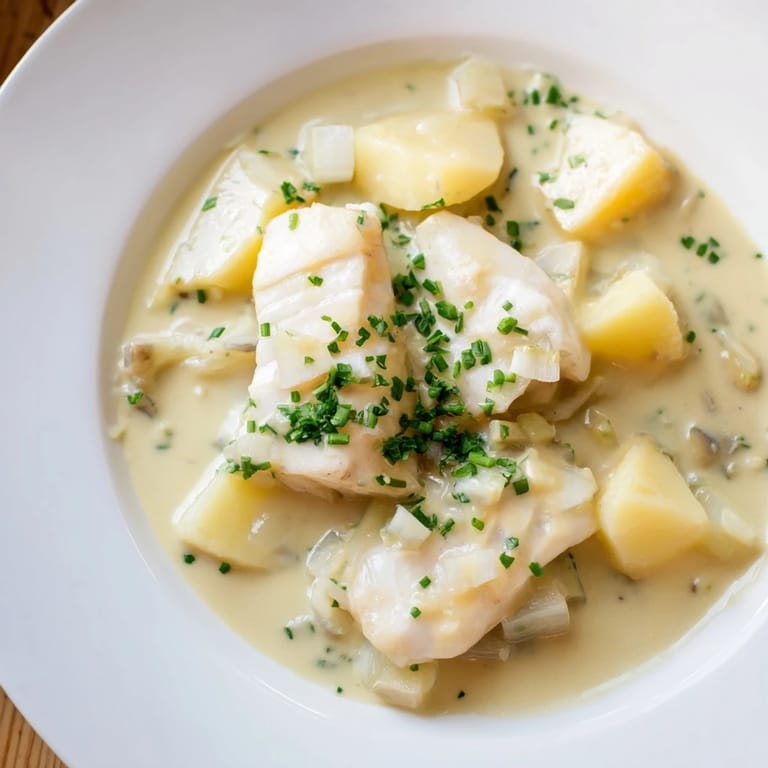
 There's a moment near the end of cooking this stew when you lift the wooden spoon and the mixture coats it just so, when the steam rises with that perfect creamy smell—that's when you know it's done. That moment taught me that cooking isn't just about following a recipe; it's about learning to listen to what the food is telling you.
Why Texture Matters
The temptation is to make everything smooth and uniform, but the potatoes are what make this stew interesting. That mixture of some pieces that dissolve into creaminess and others that keep their shape creates a dish that's never boring, spoonful after spoonful. I used to mash everything into submission until a cook friend asked me why I was making potato soup instead of stew, and that one question changed how I approach this dish.
The Fish Question
Cod and haddock are traditional for good reason—they're mild enough not to compete with the cream and delicate enough to flake beautifully without shredding. Some cooks add smoked fish to layer in more flavor, and that works, but if you're new to making this, start with plain white fish so you can taste how the components speak to each other. Once you understand the foundation, then you can play.
Making It Your Own
This recipe is sturdy enough to welcome your preferences without falling apart. I've made it lighter with less cream on nights when that felt right, added a pinch more nutmeg when I wanted warmth, even tried it with a splash of white wine once and didn't regret it.
- For a lighter version, use only milk and skip the cream—it's still delicious, just less decadent.
- Smoked fish or a mix of white fish varieties can add more complexity if you want depth beyond simple comfort.
- Dark rye bread on the side isn't just tradition; it's the perfect vehicle for soaking up every bit of that creamy sauce.
 Pin it
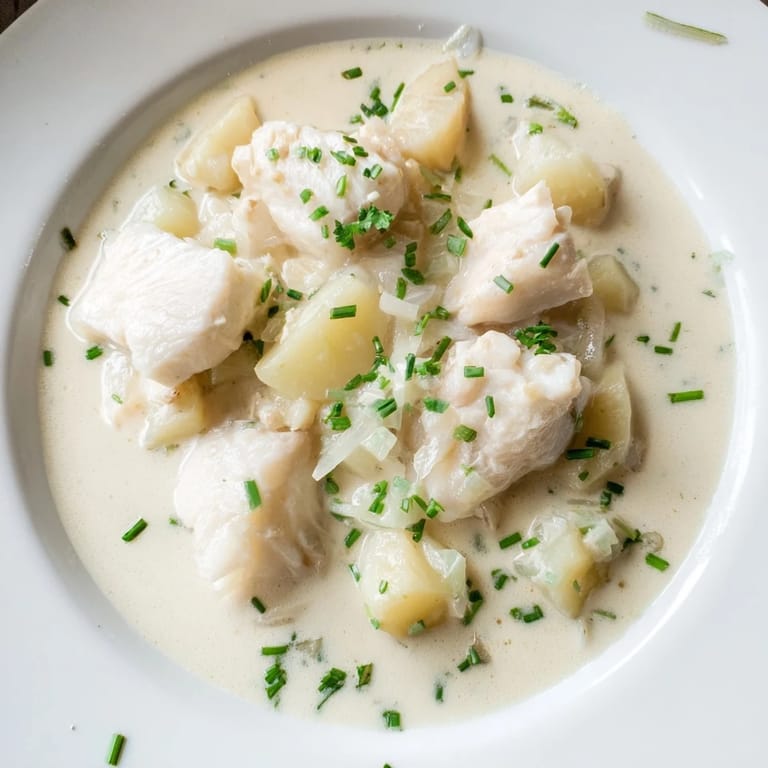
 This stew sits between home and memory, between the food you grew up with and the food you're still learning to make your own. Every time you make it, you'll find something new—a better way to time the potatoes, or how the smell changes when you add just a touch more nutmeg—and that's exactly as it should be.
Recipe FAQs
- → What type of fish is best for this stew?
Skinless, boneless white fish like cod or haddock work best as they flake easily and absorb flavors well.
- → Can I make this stew dairy-free?
To reduce dairy, omit the cream and use only milk, or substitute with a plant-based milk, keeping the creamy texture.
- → How should the potatoes be prepared?
Potatoes should be peeled, diced, boiled until tender, then gently mashed to keep some texture in the stew.
- → Is there a preferred seasoning for this dish?
Bay leaf, white pepper, salt, and a pinch of nutmeg enhance the stew’s flavor subtly without overpowering the fish.
- → What herbs complement the flavors here?
Fresh parsley and chives add a bright, fresh note that balances the richness of the creamy base.
- → Can smoked fish be used?
Yes, adding smoked fish can introduce a deeper, smoky flavor, offering a tasty variation.