 Pin it
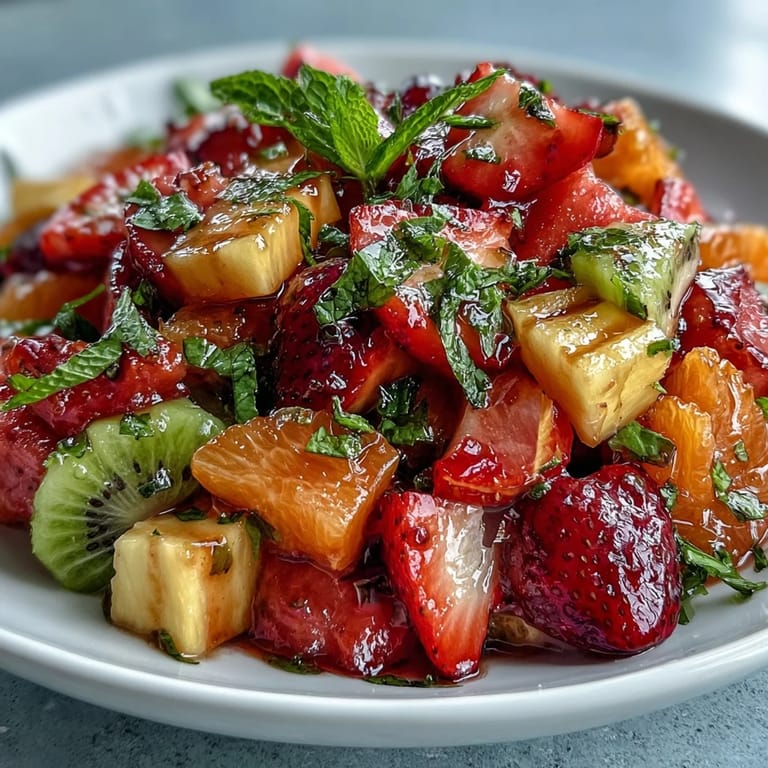
 My neighbor caught me mid-panic one July afternoon, standing in front of a farmer's market haul of tropical fruits I'd impulse-bought. She laughed and said, "Just throw them together with lime and mint—you can't mess that up." She was right, and somehow that offhand suggestion became the most requested thing I bring to summer gatherings. It's the kind of dish that feels fancy but asks almost nothing of you, which might be why it keeps showing up on my table.
There was this one dinner party where I made this the morning of, then worried all day that the fruit would get soggy and sad. But the citrus actually kept everything crisp, and by the time we ate, the flavors had melded into something better than the sum of its parts. People came back for thirds, and one friend asked if I'd add it to my "rotation"—which is what happens when something becomes genuinely useful rather than just pretty.
Ingredients
- Fresh pineapple, diced (1 cup): Choose one that smells sweet at the base and yields slightly to pressure; this is where you get that tropical backbone.
- Mango, diced (1 cup): The ripeness matters here—you want it yielding but not mushy, with that floral sweetness that makes people pause mid-bite.
- Papaya, diced (1 cup): This one adds a softer texture and a gentle, almost musky sweetness that rounds out the sharper fruits.
- Watermelon, diced (1 cup): It's mostly water, which sounds humble, but it keeps the whole thing refreshing and prevents it from feeling too heavy.
- Kiwis, peeled and sliced (2): These give you a small tartness and those beautiful green flecks that make the bowl look alive.
- Banana, sliced (1): Add this last or it'll brown on you; it brings a creamy texture that balances all the juicier fruits.
- Strawberries, hulled and quartered (1/2 cup): They're not tropical, but they don't need to be—they add a familiar sweetness and a hint of tartness that ties everything together.
- Fresh lime juice (2 tablespoons): This is the secret weapon; it doesn't just add flavor, it keeps the fruit from oxidizing and tastes bright in a way bottled juice never does.
- Honey or agave syrup (1 tablespoon): Just enough to round out the lime's sharpness without making it candy.
- Fresh mint leaves, finely chopped (2 teaspoons): Mint can overwhelm if you're not careful, so taste as you go and remember that you can always add more but you can't take it back.
- Lime zest (1/2 teaspoon): This gives you those little flavor bombs scattered through the salad; a microplane makes this painless.
- Salt (pinch): A tiny whisper of salt makes every fruit taste more like itself—don't skip it.
Tired of Takeout? 🥡
Get 10 meals you can make faster than delivery arrives. Seriously.
One email. No spam. Unsubscribe anytime.
Instructions
- Prep your fruit station:
- Line up your cutting board and get all your fruit prepped before you do anything else. This takes maybe 10 minutes and means you're not fumbling around once you're mixing.
- Gather the fruit in your bowl:
- Use a large bowl so you have room to move things around; gently add each fruit type so nothing gets crushed under its own weight. The pineapple and mango can handle being on the bottom, but save the banana and kiwis for last since they're more delicate.
- Whisk the dressing:
- In a separate small bowl, squeeze your lime juice fresh (you'll taste the difference immediately), add the honey, lime zest, and minced mint, then stir until the honey dissolves. A tiny pinch of salt goes in here, and that's when you taste it—this is your chance to adjust the sweetness or tartness before it meets the fruit.
- Toss everything gently:
- Drizzle the dressing over the fruit and use a soft hand; you're coating, not crushing. A silicone spatula works better than spoon if you have one, but honestly your clean hands work too.
- Chill or serve immediately:
- If you've got time, let it sit in the fridge for an hour or two—the flavors marry and the fruit releases some of its own juice, which mixes with the dressing. But if you're hungry now, eat it now; there's no wrong answer here.
 Pin it
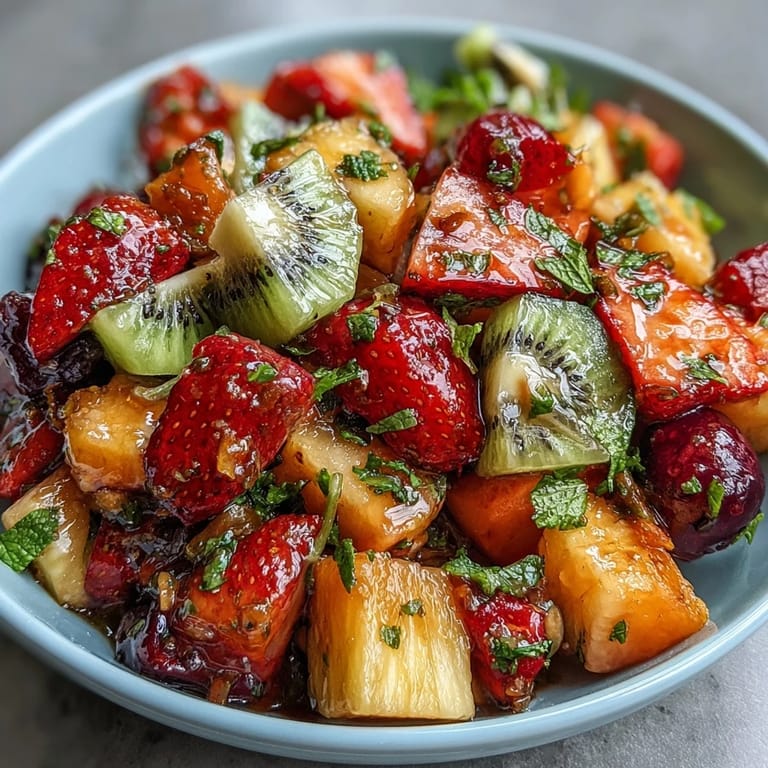
 I made this for my kid's soccer team one weekend, and watching a group of sweaty teenagers demolish it in the parking lot told me everything I needed to know about whether it worked. That's when it stopped being something I made for myself and became something I made for people I cared about.
The Art of Fruit Selection
The real skill here isn't in the assembling—it's in knowing what fruit actually smells and feels ripe. I learned this the hard way after buying mangoes that felt like baseballs and couldn't be cut without destroying half of them. Now I shop by smell and gentle pressure, and I've never had a disappointed bowl since. A ripe mango smells fragrant at the base, not chemically sweet, and yields to thumb pressure without being mushy. The same goes for pineapple: look for golden color near the base and a sweet smell that comes through the skin.
Timing and Temperature
There's something about serving this cold that makes it feel like a treat rather than just fruit in a bowl. I started chilling mine for at least an hour before serving, and people always comment on how refreshing it is—which I think is partly the temperature and partly that the flavors have had time to get to know each other. If you're making it for a crowd, you can prep the fruit hours ahead, keep it covered in the fridge, and mix the dressing right before serving to keep the mint as bright as possible.
Variations and Additions
The beauty of this recipe is that it bends to whatever fruit is in season or whatever you're craving. Dragon fruit looks stunning if you want to impress someone, and passionfruit adds this subtle tartness that changes the whole vibe. I've added toasted coconut when I want something more substantial, and once I stirred in a handful of chopped pistachios on a whim and found a new favorite texture combination. The dressing stays the same, and everything else is fair game.
- Toasted coconut or chopped nuts add texture and richness without changing the dressing formula.
- A tiny splash of rum or coconut rum can elevate this from a side dish to a grown-up dessert.
- If you're serving this with savory food, dial back the honey slightly and add another pinch of salt to balance everything out.
 Pin it
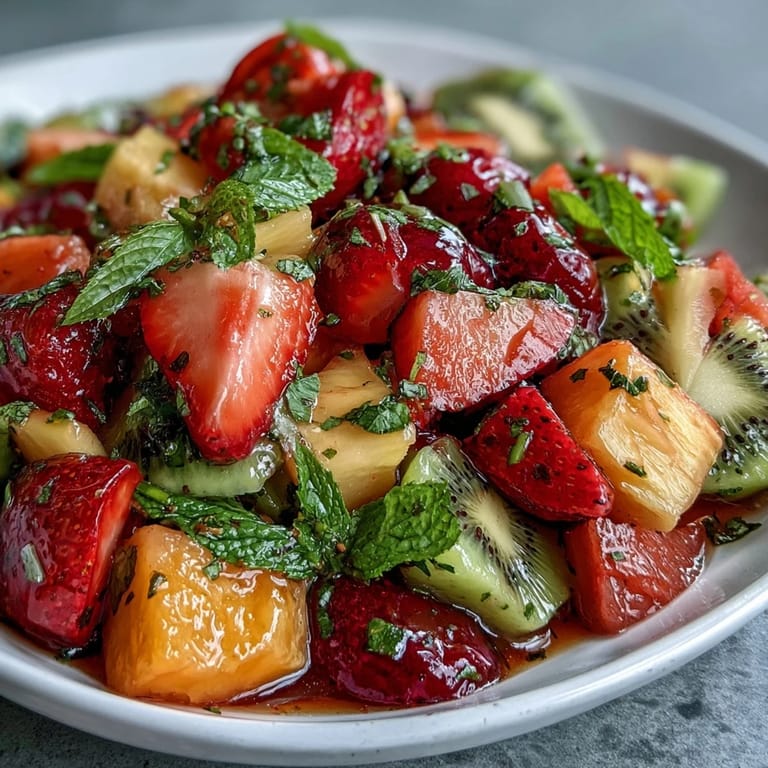
 This is the kind of recipe that proves sometimes the simplest ideas are the ones people come back to. It never feels like you're trying too hard, but somehow it always lands.
Recipe FAQs
- → What fruits can be used in this tropical mix?
Pineapple, mango, papaya, watermelon, kiwi, banana, and strawberries create the base. You can also add dragon fruit or passionfruit for variety.
- → Can the sweetener in the dressing be substituted?
Yes, honey can be replaced by agave syrup or maple syrup to maintain a natural sweetness and accommodate dietary preferences.
- → How fresh should the mint leaves be?
Using finely chopped fresh mint leaves enhances the dressing's brightness and aroma, so fresh is best for maximum flavor.
- → Is it better to serve immediately or chilled?
The fruit salad can be served right away or chilled up to 2 hours, which allows flavors to meld for a more vibrant taste.
- → What tools are helpful to prepare this dish?
A large mixing bowl, sharp knife, cutting board, whisk or fork for the dressing, and optionally a citrus zester for lime zest are useful.