 Pin it
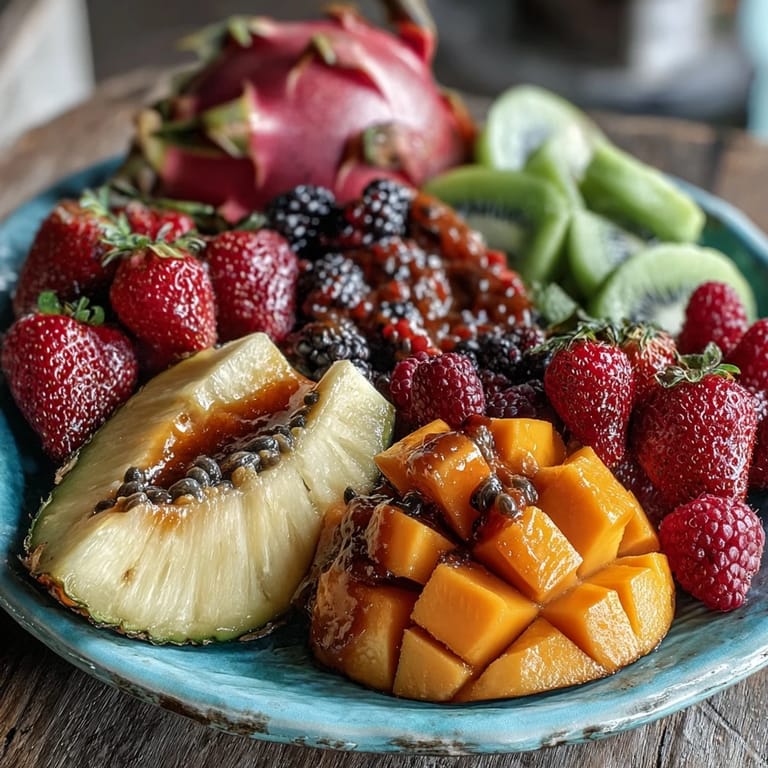
 There's something about arranging a fruit display that makes you feel like you're composing art on a plate. My neighbor brought this over last summer when she hosted a garden party, and I watched her slice through a mango with the kind of confidence that comes from doing something you genuinely love. The colors alone—that golden yellow against ruby red grapes, the shocking pink of dragon fruit—stopped everyone mid-conversation. I realized then that this wasn't just refreshing food; it was an edible invitation to slow down and savor something bright.
I made this for my daughter's graduation brunch without realizing how nervous I actually was about feeding thirty people. But the moment I set down that tiered display, I felt the mood shift—suddenly it wasn't about the food, it was about gathering. People naturally clustered around it, reaching for slices, and conversations spun out from there. That's when I understood: this dish does the work of making people feel celebrated.
Ingredients
- 2 ripe mangoes, peeled, pitted, and sliced: The quality of your mango matters more than anything else here; a ripe one should yield gently to thumb pressure and smell faintly sweet at the stem end.
- 1 large pineapple, peeled, cored, and cut into spears or chunks: Fresh pineapple's natural tartness balances the sweeter fruits, so resist the urge to use canned.
- 2 kiwis, peeled and sliced: Their bright green and delicate seeds add textural surprise and a gentle tartness that keeps things interesting.
- 1 papaya, peeled, seeded, and sliced: Choose one that's yielding but not mushy, with that sunset-orange flesh that signals ripeness.
- 1 dragon fruit, peeled and sliced: Its mild flavor lets other fruits shine, but those black seeds give you a little textural moment.
- 1 cup seedless red grapes: They're your color anchor and burst with juice when bitten, creating little pockets of refreshment.
- 1 cup fresh strawberries, hulled and halved: Their sweetness bridges between the tartness of berries and the richness of stone fruits.
- 1 cup blueberries: These tiny jewels roll around the platter and add sophistication with their subtle earthiness.
- 1/4 cup fresh mint leaves: A few leaves torn by hand right before serving release their oils and give everything an herbal awakening.
- 1 lime, cut into wedges: More than decoration, a squeeze of fresh lime juice transforms the flavor profile completely.
- 1 cup vanilla Greek yogurt or coconut yogurt: The protein base for a sauce that feels indulgent without weighing you down.
- 1 tablespoon honey or agave syrup: Agave dissolves easier into yogurt and keeps things vegan if that matters to your table.
- Zest of 1 lime: The oils in zest carry flavor that juice alone can't deliver, bringing brightness that lingers.
Tired of Takeout? 🥡
Get 10 meals you can make faster than delivery arrives. Seriously.
One email. No spam. Unsubscribe anytime.
Instructions
- Gather and prepare your fruits first:
- Wash everything, then work systematically through each fruit—peel the mango, work around the pit carefully, slice the pineapple, scoop out papaya seeds. Lay each prepared fruit on a separate cutting board as you go so you're not scrambling at the last moment.
- Build your display like you're telling a story:
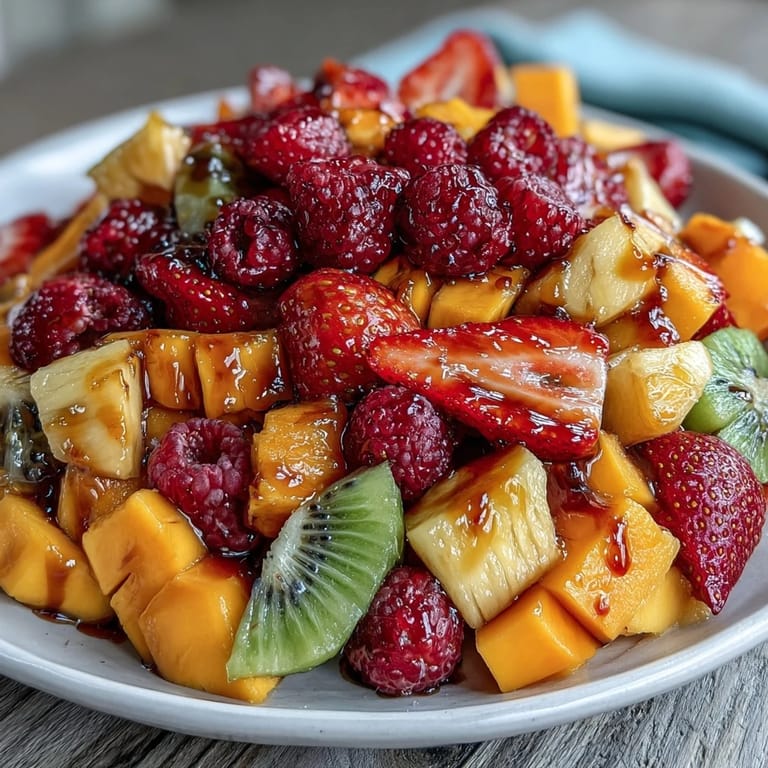
- Start with mango and pineapple as your foundation, fanning the slices so they catch light and create dimension. Layer the softer fruits second—papaya and dragon fruit—then fill the negative space with grapes, strawberries, and blueberries, letting colors speak to each other rather than blending.
- Finish with the sensory touches:
- Scatter fresh mint leaves across the top right before serving (they oxidize quickly and lose their brightness if done too early), and nestle lime wedges around the edges for both looks and function. If you're making the yogurt sauce, whisk everything together in a small bowl and let it chill alongside the platter.
- Keep everything cold until the moment of serving:
- Tropical fruits weep and soften faster than you'd expect, so a well-timed assembly ensures maximum freshness and that first-bite satisfaction.
 Pin it
 I watched my usually picky nephew try dragon fruit for the first time while standing at that display, and his face lit up like he'd discovered treasure. It wasn't about the fruit itself—it was that he felt brave enough to try something unfamiliar because the whole arrangement invited curiosity. That's when I learned this dish does more than nourish; it creates permission to be a little adventurous.
The Art of Arrangement
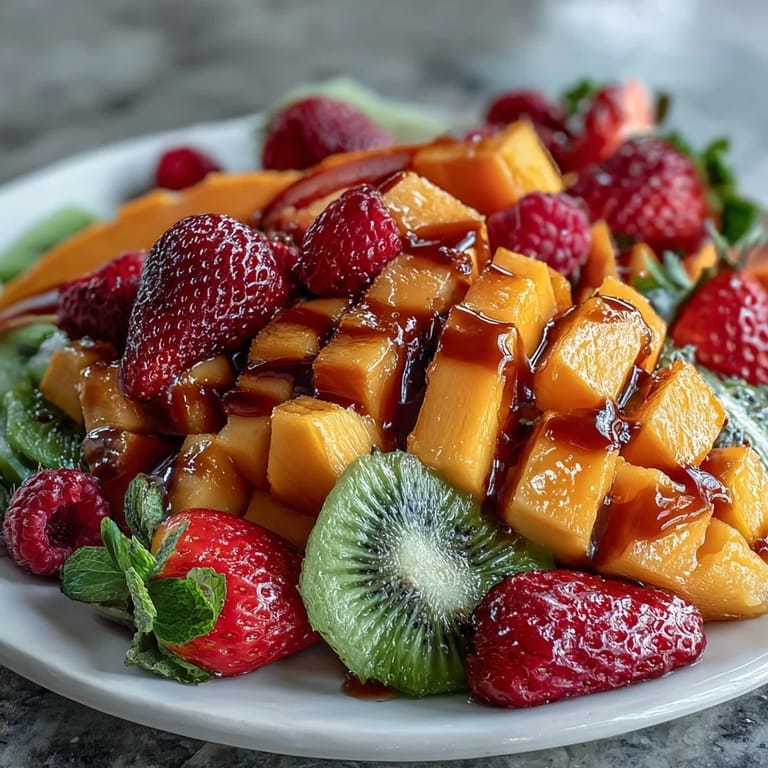
Think of this less like food assembly and more like composing a still life where every color has a purpose. The deepest purples and reds should anchor your corners, while lighter yellows and greens should radiate outward, creating visual movement that makes people want to lean in. If you're using a tiered stand, let the tallest fruits occupy the top tier—pineapple spears standing upright, for example—so the display has architecture, not just flatness. The grapes and blueberries become your negative space fillers, the finishing touches that say someone cared enough to make this beautiful.
Timing and Temperature
Chill your platter itself for fifteen minutes before you start arranging, and work quickly once fruits are cut because warmth accelerates oxidation. I learned this the hard way at a summer event when half my mango had turned brown after sitting out for an hour—now I assemble no more than thirty minutes before guests arrive, and I keep everything covered loosely with plastic wrap in the refrigerator until the moment of unveiling. The difference between fruit that tastes bright and alive versus dull and tired is often just about timing and temperature.
Making It Your Own
The true magic of this display is its flexibility—what's in season at your market should guide your choices more than rigid recipes. I've made this with passion fruit, star fruit, and even sliced stone fruits in autumn, and each version tells a different story about where you are and what time of year it is. The bones of the recipe (the combination of colors, the balance of tartness and sweetness, the mint and lime finishing notes) stay the same, but your personality shines through in the fruits you choose.
- Swap mango for sliced stone fruits like peaches or nectarines when summer turns toward fall.
- Add edible flowers or a light dusting of toasted coconut flakes if you want extra flourish without extra flavor.
- If serving to a crowd, prepare extra lime wedges because more people will want that squeeze than you'd expect.
 Pin it
 This display has become my answer to almost every gathering now—it's generous without being fussy, beautiful without requiring special skills, and it makes everyone feel a little more alive. Make it once and you'll understand why it keeps getting asked for.
Recipe FAQs
- → How should I prepare the fruits for the display?
Peel and slice mangoes and pineapple into attractive pieces. Slice kiwis, papaya, dragon fruit, and arrange grapes, strawberries, and blueberries evenly around the centerpiece for a colorful presentation.
- → Can I customize the fruit selection?
Absolutely. You can swap or add seasonal fruits like passion fruit, star fruit, or melon to tailor the display to your preferences or availability.
- → What is a good garnish to enhance the display?
Fresh mint leaves and lime wedges add color, aroma, and a refreshing touch to the arrangement, elevating both appearance and flavor.
- → Is there an optional accompaniment for this fruit display?
An optional vanilla or coconut yogurt-based dipping sauce with honey (or agave) and lime zest pairs perfectly, adding a creamy, tangy contrast.
- → How should I serve this tropical display?
Arrange on a large platter or tiered stand. Keep chilled until serving to maintain freshness and vibrant colors, making it perfect for warm weather events.