 Pin it
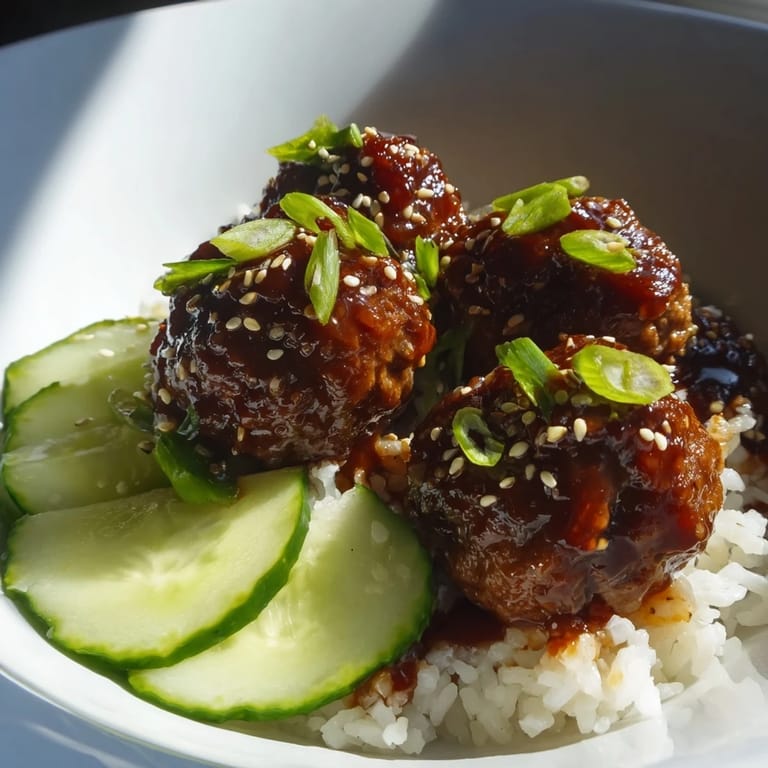
 There's something about the sizzle of meatballs hitting a hot pan that makes me slow down in the kitchen. I discovered teriyaki meatballs by accident, really—a craving for something warm and comforting colliding with leftover ground beef and a bottle of mirin I'd bought weeks earlier. That first bowl, rice steaming underneath, those glossy mahogany meatballs catching the light, felt like I'd stumbled onto something special. The sweet and savory sauce made everything taste restaurant-quality, yet it came together faster than takeout.
I made this for a friend on a rainy Tuesday evening, the kind of night where everyone's tired but hungry. She took one bite, closed her eyes, and said nothing for a moment—then asked for seconds before finishing her first bowl. That's when I knew this wasn't just convenient; it was the kind of dish that makes people feel genuinely cared for, even when it's simple.
Ingredients
- Ground beef or chicken: The foundation—use whatever's fresher in your fridge, though beef gives you that richer, deeper flavor that really sings in teriyaki.
- Egg and panko breadcrumbs: These keep everything tender and help the meatballs hold together without getting dense; panko specifically adds just the right crumb structure.
- Garlic and ginger: Fresh versions matter here—they're what prevent this from tasting generic, adding warmth and complexity that ground spices can't touch.
- Spring onions and sesame oil: The sesame oil is your secret weapon, giving the meat mixture an underlying toastiness that makes people wonder what you did differently.
- Soy sauce, mirin, and honey: This trio is the backbone of real teriyaki—soy for umami and salt, mirin for sweetness and body, honey for that final glossy sheen.
- Rice vinegar: A splash cuts through the richness and keeps everything tasting fresh and balanced rather than one-note sweet.
- Jasmine or sushi rice: Either works beautifully; jasmine is more forgiving and fragrant, while sushi rice gives you that slightly sticky texture that catches sauce perfectly.
- Cucumber and sesame seeds: These finish the bowl with a cool crunch and toasted nuttiness that makes every spoonful interesting.
Tired of Takeout? 🥡
Get 10 meals you can make faster than delivery arrives. Seriously.
One email. No spam. Unsubscribe anytime.
Instructions
- Start your rice:
- Get this going first so it's warm and ready when everything else comes together. Use a rice cooker if you have one, or a pot with a tight lid—both give you hands-free cooking while you focus on the meatballs.
- Prepare your workspace:
- Line a baking sheet with parchment paper and preheat your oven to 200°C (400°F). This takes two minutes and saves you from scrubbing later.
- Mix the meatball base:
- Combine all the meatball ingredients in a large bowl—ground meat, egg, breadcrumbs, garlic, ginger, spring onions, soy sauce, sesame oil, salt, and pepper. The trick is to mix until everything just comes together; overworking it makes them dense and tough, so use your hands and stop as soon as you don't see any streaks of raw meat.
- Shape and arrange:
- Gently roll the mixture into 20–24 golf ball–sized meatballs and place them on your prepared baking sheet, leaving a little space between each one. They don't need to be perfect—slightly irregular shapes actually look more homemade and cook more evenly than uniformly round ones.
- Bake until golden:
- Slide them into the oven for 15–18 minutes; you're looking for golden brown exteriors and meat that's cooked through. At around the 12-minute mark, peek in—the kitchen will smell incredible and that's when you know they're almost there.
- Make the teriyaki sauce:
- While the meatballs bake, combine soy sauce, mirin, water, brown sugar, honey, and rice vinegar in a saucepan over medium heat. Stir gently until the sugar dissolves and everything turns glossy—this takes about 3–4 minutes, and you want to watch it, not walk away.
- Thicken and finish the sauce:
- Make a slurry by mixing cornstarch with water, then pour it into your simmering sauce while stirring constantly. It'll thicken almost immediately into something that coats the back of a spoon beautifully—silky, glossy, and ready to cling to your meatballs. Simmer for another minute just to cook out any raw cornstarch taste.
- Coat the meatballs:
- Once the meatballs come out of the oven, transfer them to a bowl and toss with the warm teriyaki sauce until every single one is coated. This is where the magic happens—the hot sauce seals the exterior while the glaze becomes almost lacquered.
- Assemble your bowls:
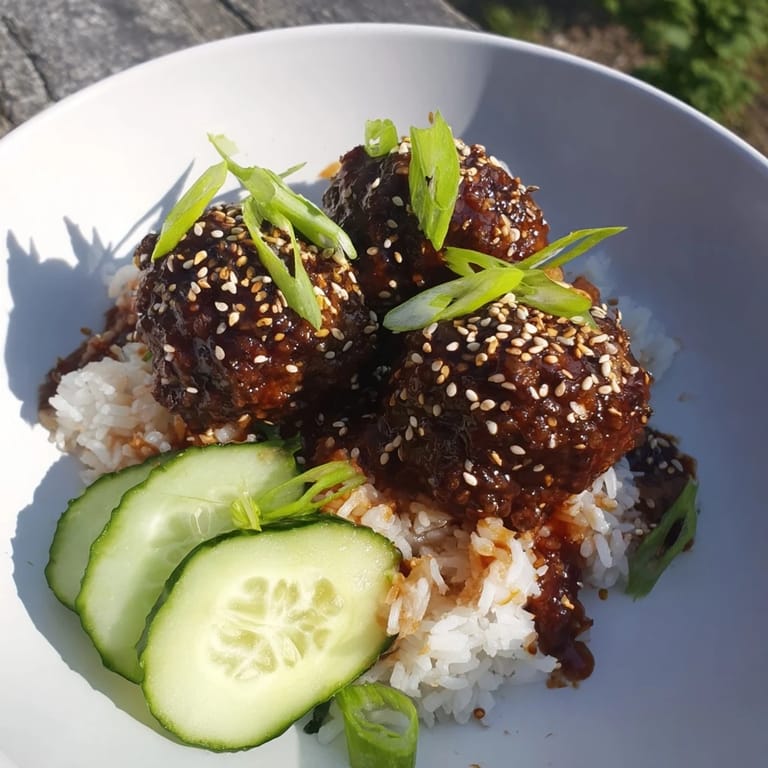
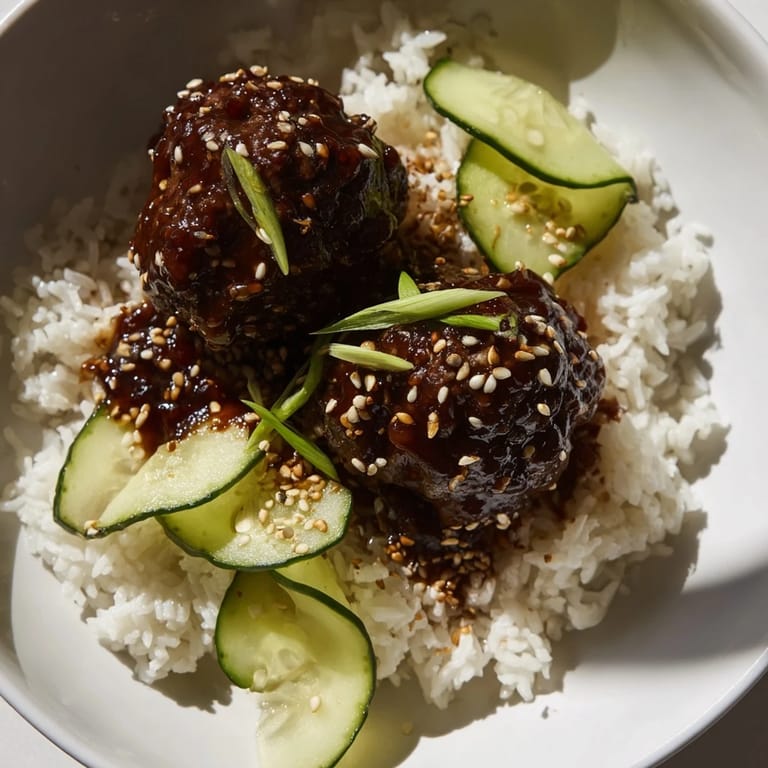
- Divide the warm rice among four bowls, then top each with meatballs, sliced cucumber, a sprinkle of sesame seeds, and a scatter of fresh spring onions. Serve immediately while everything's still warm and the cucumber is still crisp.
 Pin it
 What strikes me most about this dish is how it transformed my approach to weeknight cooking. There's no pretension, no complicated techniques—just honest flavors and the kind of meal that makes you feel nourished rather than just full. It's become the recipe I return to when I want to cook something that feels special without the stress.
Why This Sauce Is Different
Most people think teriyaki is just soy sauce and sugar, but there's real depth when you use mirin—it's fermented and brings body and complexity that regular sweeteners can't match. The honey adds a subtle richness at the end, while the rice vinegar keeps everything from tasting cloying. This balance is what makes the sauce taste like something you'd get at a proper Japanese restaurant, not a shortcut condiment.
Customizing Your Bowl
The beauty of bowls is how flexible they are—once you have your meatballs and sauce, you're free to build around your mood. Some evenings I add steamed broccoli for earthiness, other times I'll toss in edamame for protein and color. Pickled ginger brings a sharp counterpoint to all that sweetness, and if you have mushrooms, they soak up that glossy sauce like nothing else. The cucumber is the only thing I never skip; it's your palate cleanser, your textural contrast, the thing that keeps you coming back for another bite.
Storage and Reheating
These meatballs actually taste better the next day once the flavors have deepened and mellowed slightly. Store them separately from the rice and toppings—the meatballs and sauce keep for three days in an airtight container in the fridge, and you can gently reheat them in a low oven or on the stovetop without losing that glossy finish. Rice is best eaten fresh, but leftovers work beautifully fried up the next morning with an egg on top.
- Freeze the cooked meatballs and sauce together for up to two months; they thaw beautifully and reheat in about 10 minutes.
- If you're meal prepping, keep the cucumber raw and toss it in just before eating so it doesn't get soggy and sad.
- Make extra sauce—you'll find yourself drizzling it over roasted vegetables, stirring it into grain bowls, even using it as a glaze for grilled chicken or fish.
 Pin it
 There's comfort in a bowl that tastes this good and comes together this easily—it's the kind of recipe that reminds you why you love cooking in the first place. Make it once and it becomes a regular in your rotation, the dish people ask for, the meal that feels like a small victory at the end of a long day.
Recipe FAQs
- → How do you keep the meatballs moist?
Using a combination of ground meat, egg, and panko breadcrumbs helps retain moisture. Avoid overmixing the mixture to keep them tender.
- → Can I bake the meatballs instead of pan-frying?
Baking on a lined sheet at 200°C (400°F) for 15-18 minutes cooks the meatballs evenly with less oil, giving a moist and golden finish.
- → What can I substitute for soy sauce in the glaze?
For gluten-free options, tamari works well and maintains the savory depth of the glaze.
- → How is the sauce thickened?
A cornstarch slurry mixed with water is stirred into the simmering sauce to create a glossy, thick consistency.
- → What rice is best for these bowls?
Jasmine or sushi rice provides a fragrant, slightly sticky base that complements the sticky teriyaki coating perfectly.
- → Can I add vegetables to the bowls?
Yes, steamed broccoli, edamame, or pickled ginger make excellent additions for extra flavor and nutrition.