 Pin it
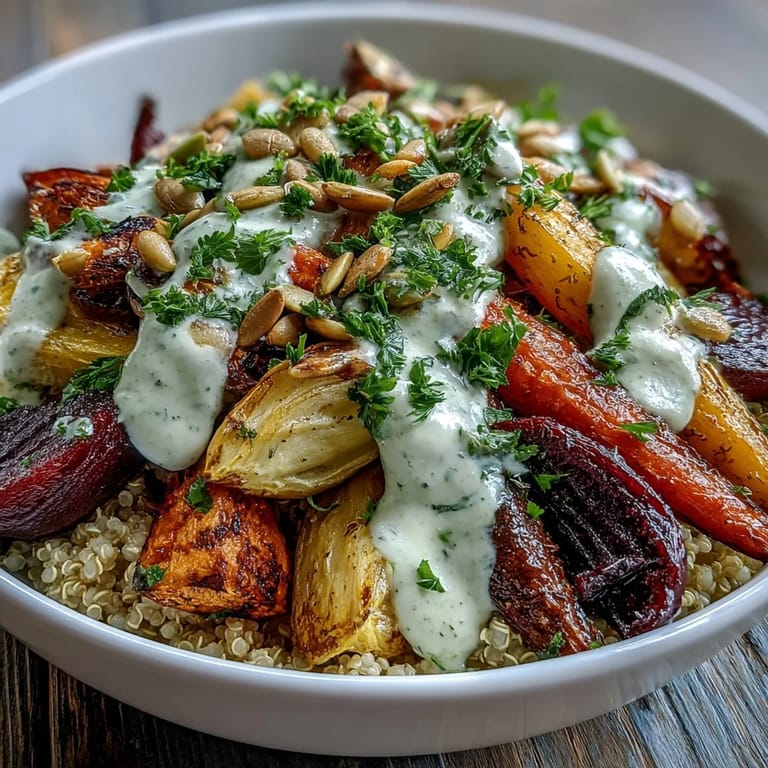
 There's something almost meditative about chopping root vegetables on a lazy Sunday afternoon—the way each piece tumbles into the bowl, earthy and honest. I stumbled onto this roasted root vegetable bowl during one of those seasons when my fridge was overflowing with farmer's market finds and I had zero inspiration beyond wanting something warm and satisfying. The result felt like an accident in the best way: golden caramelized vegetables piled onto fluffy quinoa, drizzled with tahini sauce that tastes far more luxurious than its five ingredients deserve.
I made this for a potluck once when I was convinced nobody would eat vegetables at a party full of skeptics, and it disappeared faster than anything with cheese or meat. My friend Sarah came back for seconds and asked for the recipe with genuine surprise in her voice—she'd been bracing for something virtuous and boring, not something that actually tasted incredible.
Ingredients
- Carrots (2 medium, cut into 1-inch pieces): Choose ones that feel firm and have a bright color; they caramelize beautifully and add natural sweetness to balance the earthier vegetables.
- Beets (2 medium, cut into 1-inch pieces): Don't skip these—they stain your fingers but create this gorgeous deep color and gentle sweetness that feels almost luxurious in a bowl.
- Turnips (2 medium, cut into 1-inch pieces): These are the unsung hero, adding a subtle peppery note and creamy texture when roasted that nobody ever expects.
- Parsnips (2 medium, cut into 1-inch pieces): They get sweeter and almost buttery during roasting; honestly, you might find yourself eating these straight off the pan.
- Olive oil (2 tbsp): Use a generous hand here—this is what creates those caramelized edges that make everything taste intentional.
- Sea salt (1 tsp) and black pepper (½ tsp): Season generously; roasting concentrates flavors, so what seems like enough raw tastes perfect once it's caramelized.
- Dried thyme or rosemary (1 tsp, optional): If using, the herbs perfume your entire kitchen and add an earthy sophistication that feels effortless.
- Quinoa (1 cup, rinsed): Rinsing removes bitterness, though most quinoa is pre-rinsed now—it's a quick habit worth keeping.
- Water or vegetable broth (2 cups): Broth adds subtle depth, but water works perfectly fine and lets the vegetables shine.
- Tahini (⅓ cup): This is the magic ingredient that transforms the whole bowl; buy good quality and store it upside down so the oil distributes evenly.
- Lemon juice (2 tbsp): Fresh lemon is essential—bottled juice tastes thin and sharp by comparison.
- Garlic (1 clove, minced): One small clove is enough to add presence without overpowering the creamy sauce.
- Water for sauce (2 tbsp, plus more as needed): Start conservative and add gradually; you can always thin it out, but you can't thicken it back up.
- Maple syrup or honey (1 tsp, optional): Just a touch balances the tahini's earthiness and the lemon's acidity.
- Fresh parsley (2 tbsp, chopped): The brightness is essential—dried parsley won't have the same effect.
- Toasted pumpkin or sunflower seeds (2 tbsp, optional): These add texture and a nutty finish that makes the whole thing feel complete.
Tired of Takeout? 🥡
Get 10 meals you can make faster than delivery arrives. Seriously.
One email. No spam. Unsubscribe anytime.
Instructions
- Get your oven ready:
- Preheat to 425°F and line a large baking sheet with parchment paper so cleanup becomes a non-issue. You want the oven truly hot so the vegetables caramelize rather than just steam.
- Toss the vegetables:
- Combine carrots, beets, turnips, and parsnips in a large bowl with olive oil, salt, pepper, and herbs if you're using them. Make sure every piece gets a light coating of oil—this is what creates those golden, crispy edges.
- Spread and roast:
- Arrange vegetables in a single layer on your sheet pan and roast for 30–35 minutes, stirring halfway through. You'll know they're done when the edges are deep golden and a fork slides through easily; don't rush this step or you'll miss the magic.
- Cook the quinoa:
- While vegetables roast, combine quinoa, water or broth, and salt in a medium saucepan and bring to a boil. Reduce heat, cover, and simmer for 15 minutes, then let it sit covered for 5 minutes before fluffing with a fork.
- Make the tahini sauce:
- Whisk together tahini, lemon juice, water, minced garlic, salt, and maple syrup in a small bowl until smooth. If it's too thick, add water one tablespoon at a time until it reaches a drizzle-able consistency that still coats a spoon.
- Assemble and serve:
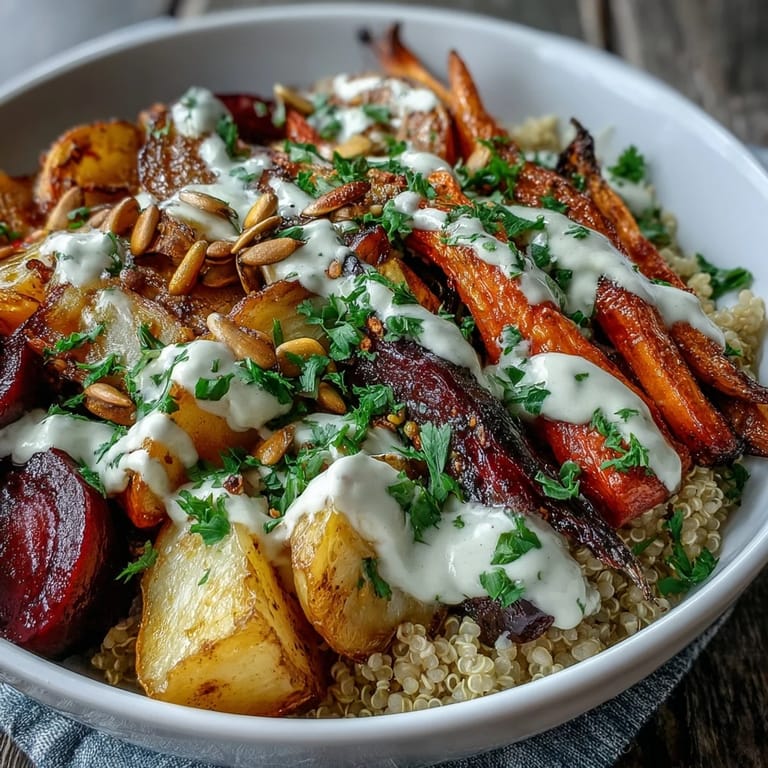
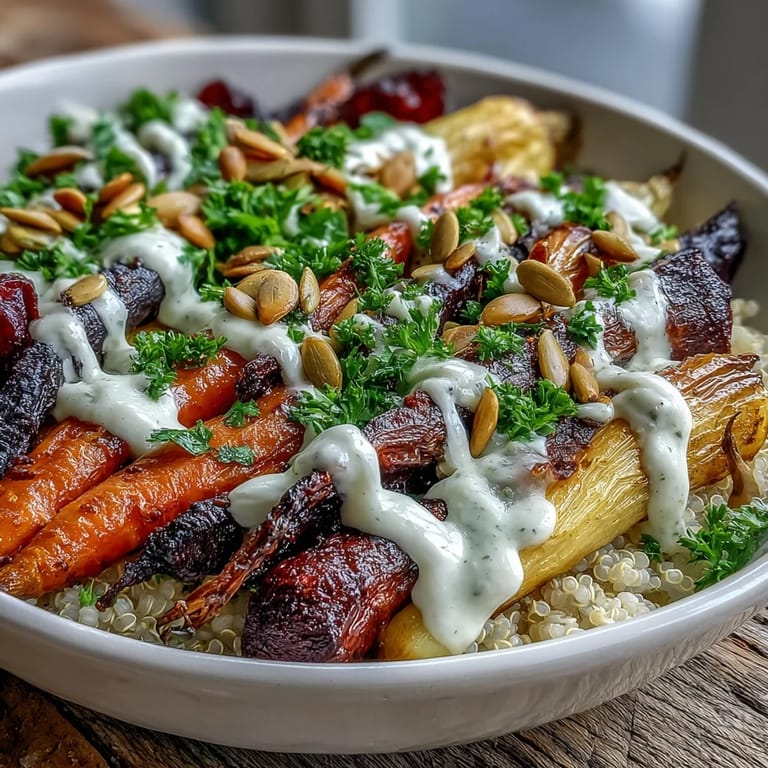
- Divide fluffy quinoa among four bowls, top with roasted vegetables, drizzle generously with tahini sauce, and finish with fresh parsley and seeds. Serve warm or at room temperature.
 Pin it
 My mom tasted this once and said it finally made her understand why people get excited about vegetables, which felt like a small victory. There's something about feeding people something this wholesome and delicious that shifts the conversation from food as fuel to food as care.
Why Root Vegetables Matter
Root vegetables are the quiet achievers of the vegetable world—they live underground storing sweetness and nutrients, then transform completely under heat. Roasting concentrates their natural sugars and creates this tender-outside, slightly creamy-inside texture that makes people pause mid-bite and ask what they're eating. The color shift is dramatic too: deep purples from beets, golden oranges from carrots, pale sweetness from parsnips and turnips all come together like an edible sunset.
The Tahini Sauce Philosophy
Tahini is one of those ingredients that feels fancy but behaves like a workhorse—it's just ground sesame seeds, yet it creates this luxurious, creamy coating that elevates everything it touches. The acid from lemon juice keeps it bright and prevents it from tasting heavy, while garlic adds whisper-thin savory depth. Once you realize how simple this sauce is, you'll start drizzling it on everything: roasted vegetables, grains, salads, even roasted chickpeas.
Variations and Flexibility
The beauty of this bowl is that it adapts to whatever you have or whatever you're craving—sweet potatoes bring more sweetness, rutabaga adds earthier notes, and red onions caramelize into thin crispy sheets if you're feeling fancy. You can add protein however you want: roasted chickpeas for crunch, a soft poached egg for richness, or even some crispy tofu if you're keeping it plant-based. The quinoa can be swapped for farro, brown rice, or even shredded kale if you want to shift the whole bowl in a different direction.
- Roast chickpeas alongside vegetables for extra protein and satisfying crunch.
- Try swapping tahini for a tahini-miso blend for deeper umami flavor.
- Make it a grain bowl by substituting farro, wild rice, or cauliflower rice based on what you need.
 Pin it
 This bowl somehow manages to be both exactly what you need on a busy weeknight and impressive enough to serve when you want to feed someone well. Keep it in your rotation and it'll become one of those dishes you make without thinking, knowing it'll always be satisfying.
Recipe FAQs
- → Which root vegetables work best for roasting?
Carrots, beets, turnips, parsnips, and sweet potatoes roast beautifully. Their natural sugars caramelize at high heat, creating sweet, tender interiors with crispy golden edges. Choose firm, fresh vegetables for best results.
- → Can I prepare this ahead of time?
Yes. Roast vegetables and cook quinoa up to 3 days ahead. Store separately in airtight containers. The tahini sauce keeps for 5 days refrigerated. Assemble bowls just before serving for optimal texture.
- → How do I get the right tahini consistency?
Whisk tahini with lemon juice first — it will thicken. Then gradually add water, one tablespoon at a time, until smooth and drizzleable. The sauce should coat the back of a spoon.
- → What proteins pair well with this bowl?
Chickpeas, lentils, or a poached egg complement these flavors perfectly. Grilled tofu or roasted chicken also work if you're not vegetarian. The tahini sauce ties everything together.
- → Can I substitute the quinoa?
Absolutely. Farro, brown rice, or bulgur offer similar textures. For a grain-free option, use cauliflower rice or serve roasted vegetables over mixed greens with tahini dressing.