 Pin it
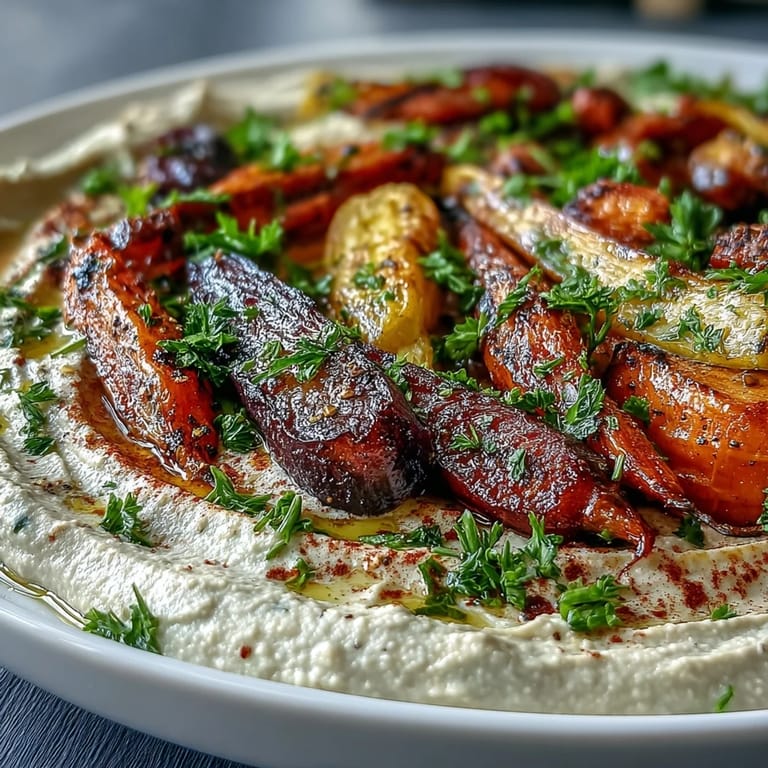
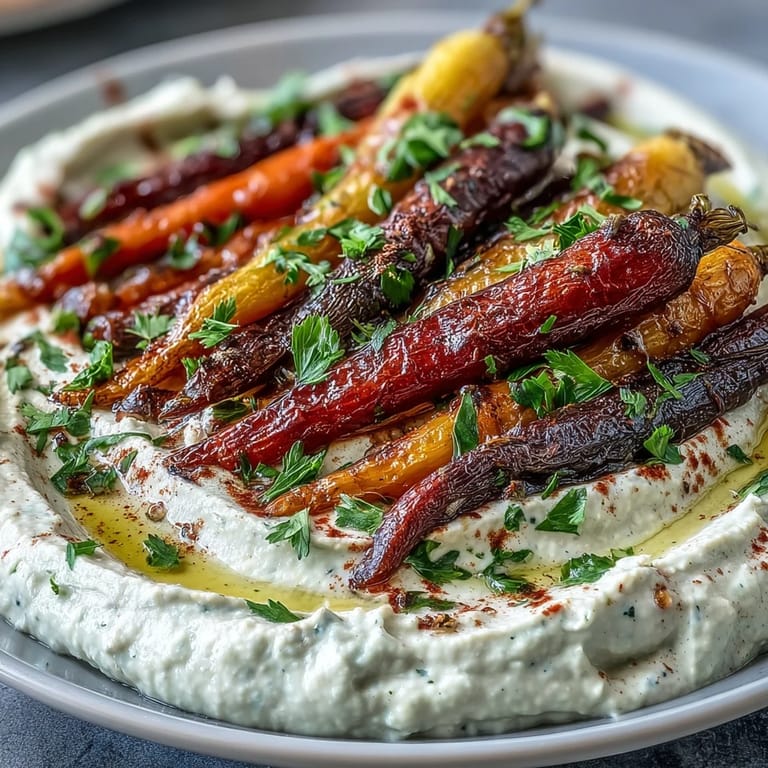
 I discovered the magic of roasted rainbow carrots on a Tuesday afternoon when my farmer's market haul looked almost too beautiful to cook. The purple, orange, and yellow roots were bundled together like a sunset, and I couldn't resist tossing them with olive oil and letting the oven work its magic. Watching them transform into caramelized jewels while I blended up a silky tahini hummus felt like uncovering a secret both simple and profound. What started as a color experiment became the appetizer I now reach for whenever I need something that looks impressive but feels effortless.
I brought this to a potluck last spring and watched it become the first thing people reached for, even though there were fancy dips and spreads everywhere. Someone asked if I'd trained as a chef, which made me laugh—I was just following my nose and hunger that day. That moment taught me that good food doesn't need complicated credentials, just fresh ingredients and a little attention while things cook.
Ingredients
- Rainbow carrots, 1 lb peeled and trimmed: Look for ones about the thickness of a marker so they roast evenly; thinner carrots can scorch while thicker ones stay raw inside.
- Olive oil, 2 tbsp plus 2 more for the hummus: The good stuff matters here—it's not hidden under heavy sauces, so use something you'd actually taste on bread.
- Sea salt and freshly ground black pepper: These seem basic, but tasting as you go makes the difference between flat and bright.
- Ground cumin, 1/2 tsp in the carrots and 1/2 tsp more for hummus: This warm spice is the background music that ties everything together without announcing itself.
- Fresh parsley, 1 tbsp chopped: Adds a peppery freshness right at the end that stops the dish from feeling heavy.
- Canned chickpeas, one 15 oz can drained and rinsed: Rinsing them thoroughly removes the can's starchy liquid and keeps your hummus silky instead of gluey.
- Tahini, 1/4 cup: This sesame paste is the soul of the hummus—unstir it gently before measuring since the oil separates naturally.
- Fresh lemon juice, 2 tbsp: Squeeze it yourself minutes before cooking; bottled lemon juice tastes like regret in a hummus.
- Garlic, 1 small clove minced: One clove is plenty because raw garlic intensifies as hummus sits, and nobody wants to apologize for their breath.
- Cold water, 2–3 tbsp as needed: Add it slowly while the food processor runs so you can stop exactly when the hummus reaches creamy rather than soupy.
- Smoked paprika, 1/4 tsp for garnish: This optional touch adds a whisper of smokiness and a color accent that makes the hummus look professionally finished.
Tired of Takeout? 🥡
Get 10 meals you can make faster than delivery arrives. Seriously.
One email. No spam. Unsubscribe anytime.
Instructions
- Heat your oven and prep:
- Get your oven to 425°F and line a baking sheet with parchment paper so the carrots don't stick and cleanup stays minimal. This temperature will caramelize the carrots' natural sugars without drying them out.
- Dress the carrots:
- Toss your rainbow carrots with olive oil, salt, pepper, and cumin in a bowl, making sure each piece gets a light coating. Spread them on the baking sheet in a single layer—they'll roast more evenly when they're not crowded.
- Roast until caramelized:
- Pop them into the oven for 25–30 minutes, turning them over halfway through so they brown on both sides. You'll know they're done when a fork slides through easily and the edges have turned golden and slightly charred.
- Build the hummus while carrots cook:
- In a food processor, combine your drained chickpeas, tahini, olive oil, lemon juice, minced garlic, cumin, and salt. Blend until completely smooth, which usually takes about 2 minutes of continuous processing.
- Adjust the texture:
- With the processor still running, add your cold water one tablespoon at a time until the hummus reaches that cloud-like consistency you're after. You want it creamy enough to dip a carrot into, not thick enough to stand in peaks.
- Taste and season:
- Stop the machine and taste a small spoonful, adjusting salt or lemon juice if needed—hummus is forgiving and wants you to make it exactly right for your palate.
- Present your platter:
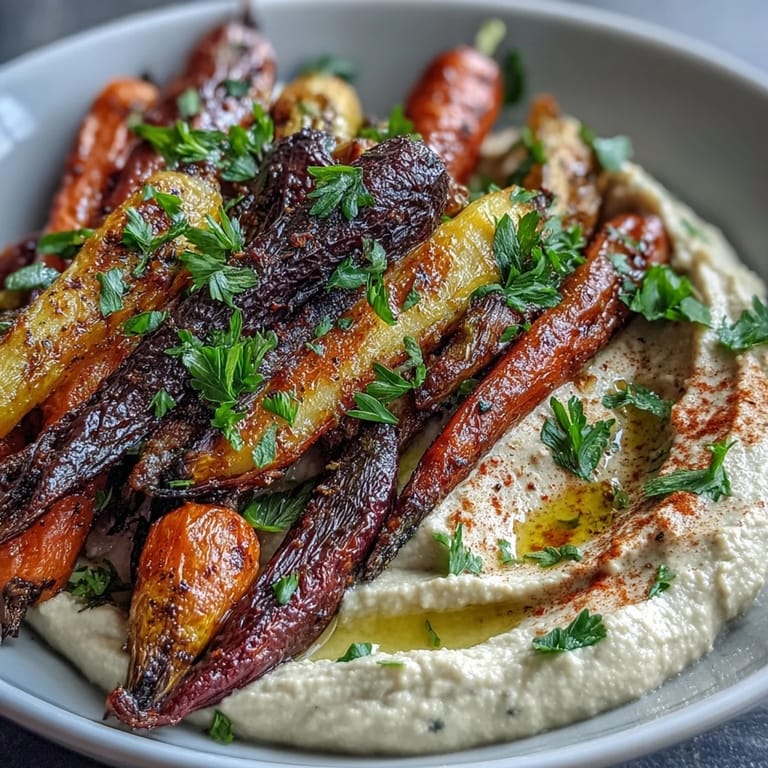
- Transfer hummus to a serving bowl, drizzle a small amount of olive oil across the top, and sprinkle with smoked paprika if you're using it. Arrange your warm roasted carrots on a platter nearby, scatter parsley over them, and let people serve themselves.
 Pin it
 There's a quiet moment when everything comes together—the hummus is silky enough to swirl, the carrots are still warm and smell like caramelized heaven, and the colors look so alive on the platter that you almost hate to disturb them. But then someone dips a carrot into that hummus and closes their eyes, and you remember that food's real magic happens when it gets eaten and shared.
Why Roasting Transforms Carrots
Raw carrots are nice enough, but roasting them is like turning up the volume on their flavor. The dry heat of the oven concentrates their natural sweetness and creates those crispy, caramelized edges that won't happen in a steamer or pot of water. By the time they come out of the oven, they taste almost like a vegetable candy, which is why they disappear so fast.
The Hummus Secret Nobody Tells You
Restaurant-quality hummus is silky because it's made with just the right ratio of tahini to chickpeas and gets blended longer than you'd expect. Most people stop too early and end up with something bumpy instead of butter-smooth. I learned to let the food processor run for a full two minutes minimum, adding water slowly until it looks almost too creamy—it firms up slightly as it cools, so you want it a touch looser than you think it should be.
Serving Suggestions and Variations
This platter works as a solo appetizer, but it's also perfect alongside warm pita bread, raw vegetable sticks, or even crunchy crackers for catching every last bit of hummus. You can roast other vegetables alongside the carrots—try red beets, parsnips, or even thick-cut radishes for more color and texture variety. The hummus keeps for five days in the fridge, making it an easy snack to have on hand, though it tastes best when served at room temperature.
- Sprinkle toasted sesame seeds or dukkah over the carrots for texture contrast and a nutty flavor boost.
- Add a pinch of chili flakes or cayenne to the carrots before roasting if you like heat without overwhelming the natural sweetness.
- Make the hummus a day ahead so flavors deepen and mellow—it actually tastes better the next day than it does fresh.
 Pin it
 This recipe proves that the best dishes don't need long ingredient lists or techniques that scare you—just honest vegetables, patience, and the willingness to taste as you go. Make it once, and it becomes something you'll reach for whenever you want to feel both nourished and a little bit proud.
Recipe FAQs
- → What makes rainbow carrots special?
Rainbow carrots come in purple, orange, yellow, and white varieties. Each color offers slightly different flavor notes—from sweet and earthy to mildly peppery. They retain their colors after roasting, creating a stunning presentation that's as beautiful as it is delicious.
- → Can I make the hummus ahead of time?
Absolutely. Homemade hummus actually tastes better after resting in the refrigerator for a few hours or overnight. Store it in an airtight container and bring to room temperature before serving. Add a splash of water and re-blend if it thickens too much.
- → What else can I serve with this platter?
The options are endless. Add raw vegetable crudités like cucumber, bell peppers, or radishes. Warm pita bread or pita chips make excellent accompaniments. Olives, pickled vegetables, or fresh herb sprigs round out the Mediterranean spread beautifully.
- → How do I get the hummus extra smooth?
The secret lies in blending long enough—at least 2-3 minutes. If your hummus still feels grainy, add another tablespoon of cold water and continue blending. Some cooks even peel the chickpeas for the silkiest texture, though it's not strictly necessary.
- → Can I use regular orange carrots?
Of course. Regular orange carrots work perfectly well and will still be delicious. You just lose the visual variety that rainbow carrots provide. Try to find carrots of similar thickness so they roast evenly.