 Pin it
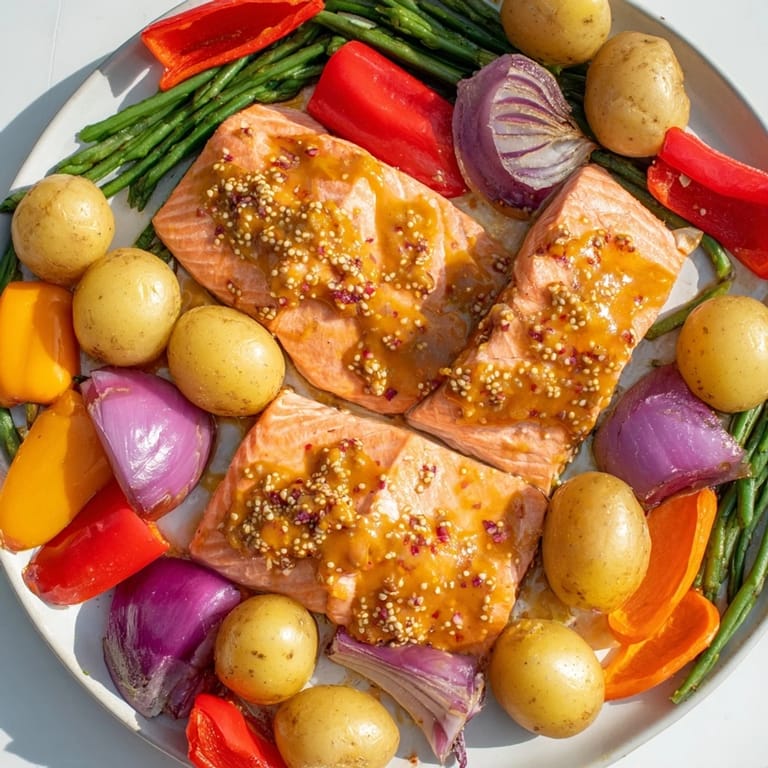
 I was running late on a Tuesday when I remembered this recipe. The kitchen was a mess, I had four hungry people arriving in an hour, and my original dinner plan had fallen apart. I grabbed a piece of parchment paper, lined a tray, and started tossing vegetables with more hope than skill. Twenty minutes later, the smell of caramelized honey and roasted salmon filled the apartment, and I felt like I'd pulled off a miracle.
The first time I made this for my sister, she was skeptical about the vegetables. She picked at a roasted carrot, then a potato, then quietly went back for seconds without saying a word. By the end of the night, she was texting me for the recipe. That's when I knew this dish had crossed over from weeknight survival mode into something worth sharing.
Ingredients
- Salmon fillets: Skin-on keeps the fish moist and protects it from drying out, but skinless works fine if you prefer it.
- Baby potatoes: Halving them ensures they cook through in the same time as the salmon, no mushy vegetables or undercooked centers.
- Carrots: Slicing them into sticks instead of rounds gives you more caramelized edges, which is where all the sweetness lives.
- Red bell pepper: Adds a pop of color and a slight char that balances the honey in the sauce beautifully.
- Red onion: Wedges roast into soft, jammy bites that melt into the rest of the tray.
- Green beans: They stay crisp-tender and add a fresh bite against the richness of the salmon.
- Dijon mustard: The sharpness cuts through the honey and brings the whole sauce to life.
- Honey: Use real honey, not the squeezable kind, it makes a difference in how the sauce clings to the fish.
- Lemon juice: Freshly squeezed is best, it brightens everything and keeps the dish from feeling too heavy.
- Garlic: Minced fine so it melts into the sauce and doesn't burn on the tray.
- Dried thyme: A tiny amount brings warmth without overpowering the delicate flavor of the salmon.
Tired of Takeout? 🥡
Get 10 meals you can make faster than delivery arrives. Seriously.
One email. No spam. Unsubscribe anytime.
Instructions
- Preheat and Prep:
- Set your oven to 200°C and line a large tray with parchment paper. This step saves you from scrubbing baked-on sauce later, trust me.
- Toss the Vegetables:
- In a big bowl, coat the potatoes, carrots, pepper, onion, and green beans with olive oil, salt, and pepper until everything glistens. Spread them out in one layer so they roast instead of steam.
- Roast the Vegetables First:
- Give the vegetables a 10-minute head start in the oven. They need more time than the salmon, and this trick keeps everything perfectly timed.
- Make the Honey Mustard Sauce:
- Whisk together the Dijon, honey, wholegrain mustard, lemon juice, olive oil, garlic, thyme, salt, and pepper until smooth. Taste it, it should be tangy, sweet, and a little sharp all at once.
- Add the Salmon:
- Pull the tray out and nestle the salmon fillets among the vegetables. Brush each piece generously with the sauce, saving a spoonful or two for the end.
- Finish Baking:
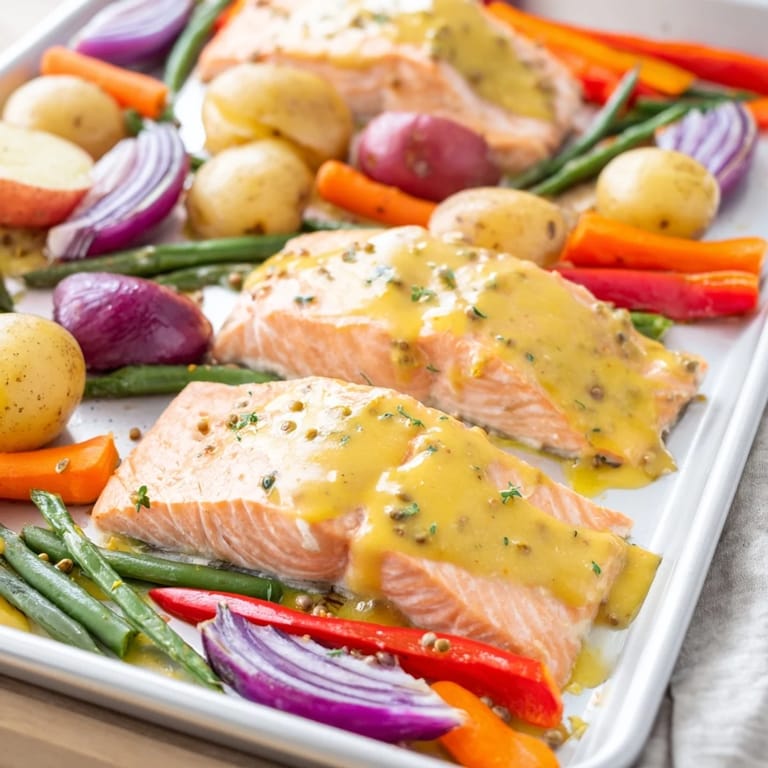
- Slide the tray back into the oven for 10 to 12 minutes. The salmon should flake easily and the vegetables should be tender with golden edges.
- Serve:
- Drizzle the leftover sauce over the top and add fresh herbs if you have them. Serve it straight from the tray if you want to skip another dish.
 Pin it
 One night I served this to a friend who claimed she didn't like salmon. She ate every bite, then asked if I could teach her how to make it. We stood in my kitchen the following week, brushing sauce onto fillets and talking about everything except the recipe. That's what I love most about this dish, it's easy enough that you can actually pay attention to the people you're feeding.
What to Do with Leftovers
Leftover salmon flakes beautifully into a grain bowl the next day. I toss it with quinoa, the roasted vegetables, a handful of greens, and a squeeze of lemon. It tastes even better cold, and you can eat it straight from the fridge without reheating.
How to Adapt the Vegetables
I've swapped in zucchini, asparagus, and cherry tomatoes depending on what's in the fridge. Just keep the pieces roughly the same size so everything cooks evenly. Asparagus doesn't need the head start, add it with the salmon instead.
Serving Suggestions
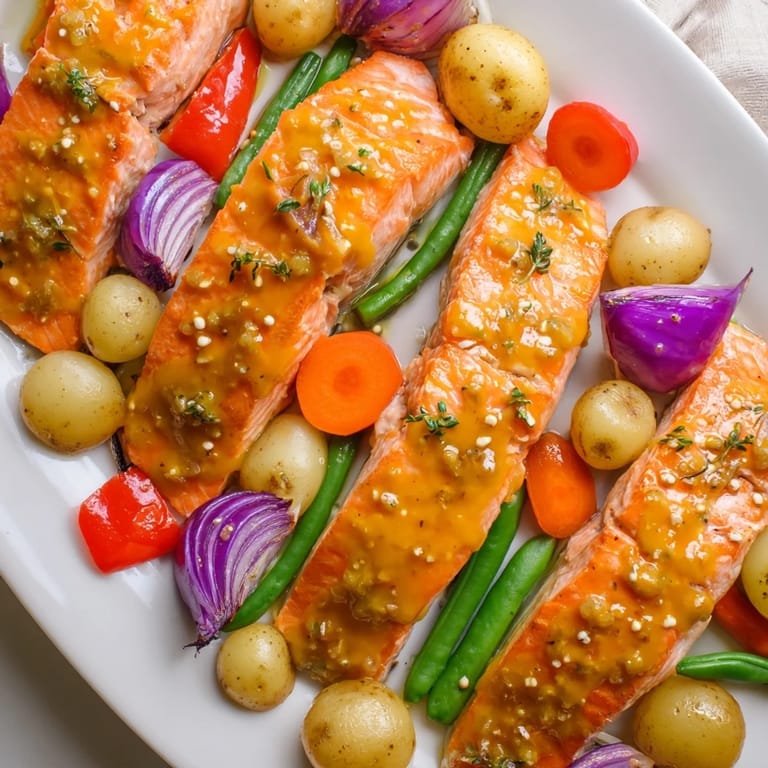
This dish doesn't need much, but a wedge of lemon on the side and a hunk of crusty bread make it feel complete. If you want to stretch it further, serve it over rice or couscous to soak up the sauce.
- A crisp white wine like Sauvignon Blanc cuts through the richness perfectly.
- Fresh dill or parsley scattered on top adds a bright, herby finish.
- If you like heat, a pinch of chili flakes on the vegetables before roasting adds a gentle kick.
 Pin it
 This recipe taught me that good food doesn't have to be complicated. Sometimes all you need is a hot oven, a single tray, and the confidence to let simple ingredients do their thing.
Recipe FAQs
- → How do I ensure the salmon stays moist?
Brushing the salmon with the honey mustard sauce before baking helps retain moisture while adding flavor. Avoid overcooking by baking just until the fish flakes easily with a fork.
- → Can I use different vegetables in this dish?
Yes, feel free to swap the vegetables with favorites like zucchini, asparagus, or cherry tomatoes to suit your taste or seasonality.
- → Is it necessary to pre-roast the vegetables?
Pre-roasting the vegetables for 10 minutes enhances their texture and ensures they cook evenly alongside the salmon during baking.
- → How can I adjust the honey mustard sauce for spiciness?
Add a pinch of chili flakes or smoked paprika to the sauce or vegetables for a gentle spicy kick without overpowering the dish.
- → What wine pairs well with this meal?
A crisp Sauvignon Blanc complements the honey mustard glaze and salmon's richness perfectly, balancing the flavors.
- → Is this dish suitable for gluten-free diets?
Yes, all ingredients used are gluten-free, but always verify store-bought items for cross-contamination risks.