 Pin it
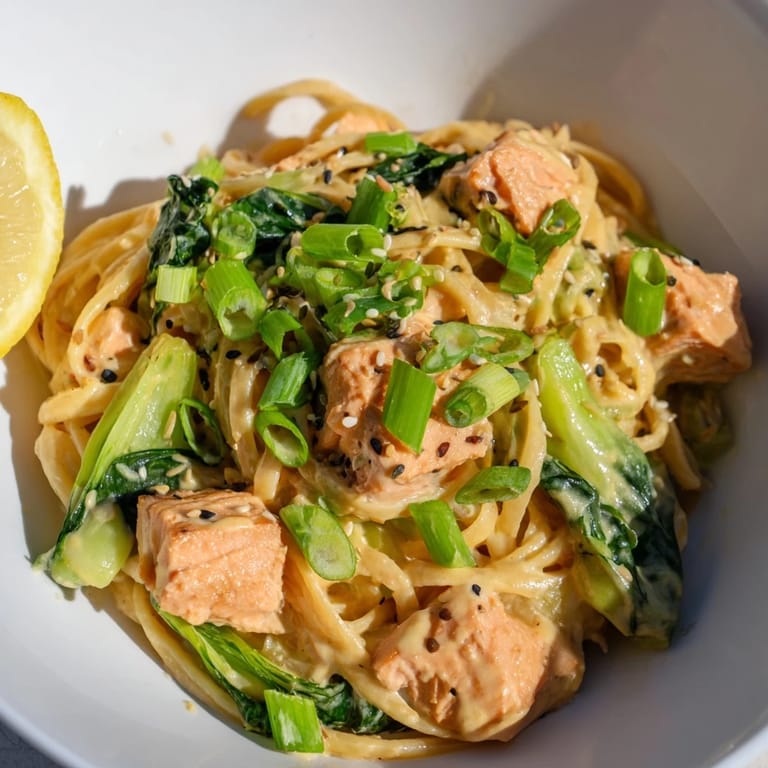
 One rainy Tuesday I found myself staring at a half-empty fridge, a package of salmon, and a jar of miso paste left over from a failed soup attempt. I'd just discovered that miso wasn't just for broths—it could melt into butter and transform into something silky and profound. That evening, I threw together this dish almost by accident, and the moment the first forkful hit my tongue, something clicked. Now it's the recipe I make when I want to feel like I'm cooking something impressive without the stress.
I remember cooking this for my sister on a night when she was stressed about work, and she kept sneaking tastes straight from the pan before I could plate anything. By the time we sat down, she'd already decided it was her new favorite, and I started making it every time she visited. There's something about the combination of cream and miso that makes people slow down and actually enjoy their meal instead of rushing through.
Ingredients
- Salmon fillets: Buy the freshest you can find and cut them into bite-sized pieces so they cook evenly and mingle with the pasta instead of sitting on top like an afterthought.
- Linguine or spaghetti: The thinner the pasta, the better it clings to this silky sauce—I learned this the hard way with thick fettuccine that just pushed the sauce away.
- White miso paste: This is gentler and slightly sweeter than red miso, which is exactly what you want here so it doesn't overpower the salmon.
- Heavy cream: Don't skip this or substitute with Greek yogurt; the cream creates that glossy, luxurious texture that makes the dish feel special.
- Baby bok choy: The slight bitterness balances the richness beautifully, and it wilts in just minutes without turning to mush.
- Sesame oil: A little goes a long way—use it as a finishing note, not the main event, or it'll taste like salad dressing.
- Garlic, soy sauce, mirin, and scallions: These are your flavor anchors that tie the whole dish together with depth and brightness.
Tired of Takeout? 🥡
Get 10 meals you can make faster than delivery arrives. Seriously.
One email. No spam. Unsubscribe anytime.
Instructions
- Get your pasta going:
- Fill a large pot with salted water—it should taste like the sea. Bring it to a rolling boil and add your pasta, stirring once so it doesn't stick. Cook it one minute under what the box says for al dente; it'll finish cooking in the sauce.
- Sauté your aromatics:
- Heat a tablespoon of butter with the sesame oil in a large skillet over medium heat. Add the minced garlic and let it perfume the pan for about a minute until it smells irresistible, but don't let it brown.
- Cook the salmon gently:
- Add your bite-sized salmon pieces to the skillet and give them two to three minutes per side. They'll look just barely opaque inside when they're perfect; fish is forgiving, so don't stress about overcooking—just watch for when they change color.
- Build your miso butter sauce:
- Add the remaining butter to the pan and let it melt completely. Whisk in the miso paste bit by bit until it's smooth and integrated, then add the soy sauce and mirin so everything tastes cohesive and deep.
- Make it creamy:
- Pour in the heavy cream and a crack of black pepper, stirring gently until you have one glossy sauce. Add the bok choy now and let it wilt for a couple of minutes while the cream and miso get to know each other.
- Bring it all together:
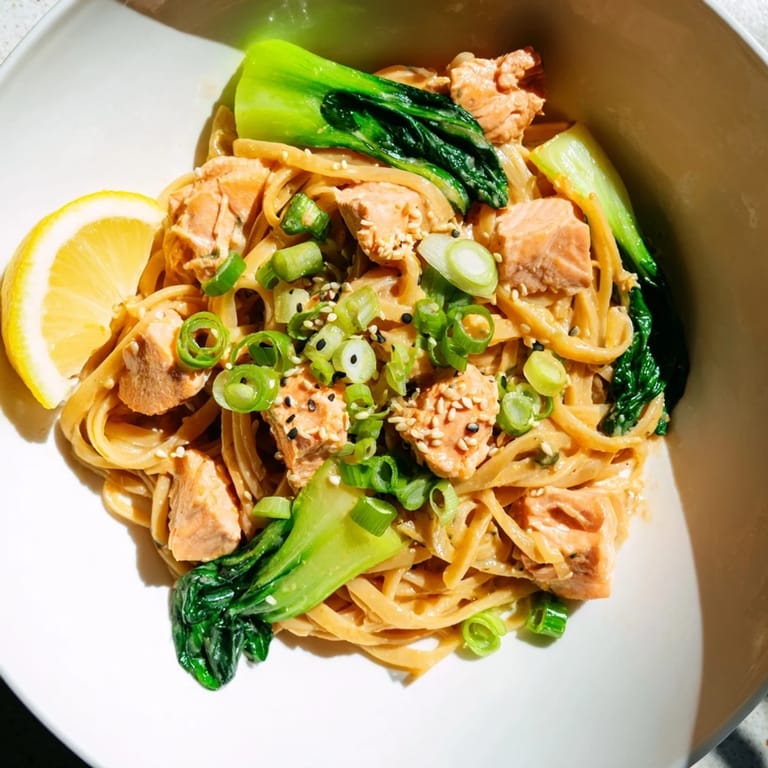
- Gently return the cooked salmon to the skillet, then add your drained pasta. Toss everything together, adding splashes of that reserved pasta water until the sauce coats the noodles silkily without pooling at the bottom.
 Pin it
 There was a moment while eating this dish with friends when someone asked what made it taste so special, and I realized it wasn't fancy ingredients or complicated technique—it was just good things treated with respect. Since then, I've made it dozens of times, and it's become the dish I reach for when I want to cook something that feels both comforting and elevated.
The Magic of Miso Butter
Miso paste is usually hidden in soups or dressings, but when you whisk it into warm butter, something unexpected happens. The saltiness becomes rounder and more savory, almost like a secret ingredient that people can't quite identify. I've had friends ask if there's anchovy in the sauce, and the answer is just that miso has the same umami depth that makes you want to keep twirling your fork.
Why Bok Choy Belongs Here
Spinach is fine, but bok choy has a subtle bitterness that cuts through the richness like a palate cleanser built into your dinner. It also stays bright green instead of turning into a dark, sad pile, and it wilts so quickly that you can add it at the last second without having to time anything perfectly. The texture is tender but still has a hint of bite, which makes the whole dish feel more interesting.
Making It Your Own
This recipe is a foundation, not a rulebook. I've made it with whatever vegetables I had on hand—sugar snap peas, mushrooms, even frozen broccoli on nights when I forgot to shop. The sauce is forgiving enough to adapt, though I'd never mess with the miso-butter ratio because that's where all the flavor lives. Once you've made it once, you'll find yourself improvising naturally.
- Add red pepper flakes or fresh chili if you want heat and a little attitude.
- A squeeze of lemon juice at the very end brightens everything without drowning the umami.
- If you can't find white miso, use red miso but use less of it so it doesn't overpower the salmon.
 Pin it
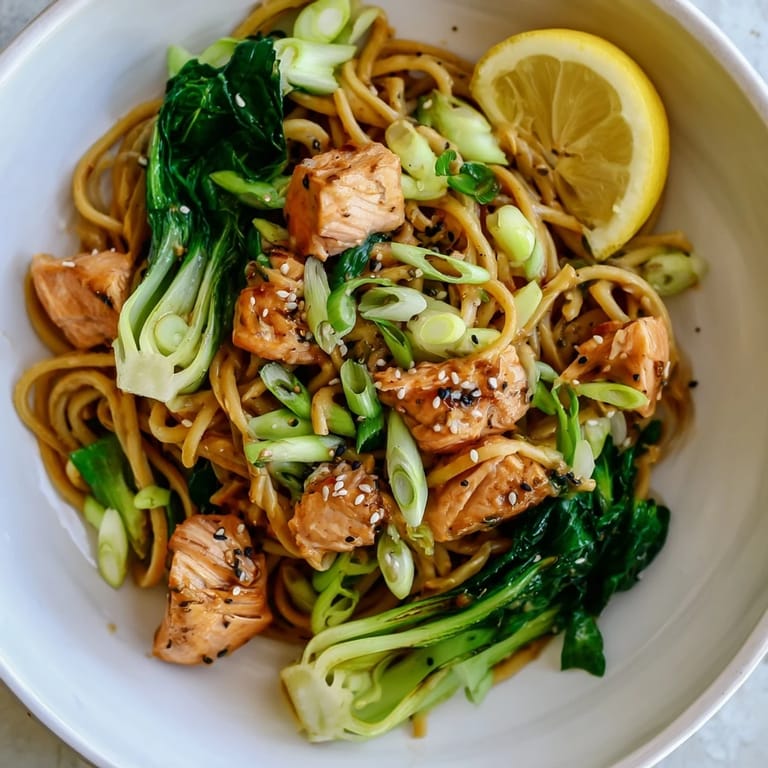
 This is the kind of dish that reminds you why cooking matters. It's fast enough for a weeknight, impressive enough for company, and delicious enough to make you smile on the first bite.
Recipe FAQs
- → What type of pasta works best for this dish?
Linguine or spaghetti are ideal, providing a smooth texture that blends well with the creamy sauce.
- → Can I substitute bok choy with other greens?
Yes, spinach or baby spinach can be used as alternatives for a similar tender texture.
- → How do I prevent salmon from overcooking?
Cook salmon pieces gently for 2–3 minutes per side until just opaque to keep them tender and flaky.
- → What enhances the sauce’s flavor in this dish?
The delicate balance of miso, soy sauce, mirin, and butter creates a rich umami depth with subtle sweetness.
- → Is there an option for spiciness?
Adding a pinch of chili flakes during the garlic sauté can introduce gentle heat without overpowering.
- → How do I achieve a silky sauce texture?
Reserving and adding pasta water to the sauce helps create a smooth, cohesive coating for the pasta and salmon.