 Pin it
 My neighbor Marco showed up one Sunday afternoon with a basket of vegetables from his garden and a half-eaten baguette from the bakery down the street. We had maybe twenty minutes before guests arrived, so we threw together whatever we could find in my kitchen—butter, garlic, ricotta—and those charred vegetables became something unexpectedly memorable. Since then, I've made these crostini countless times, each batch a little different depending on what's in season or what I'm craving that day.
I served these at a small dinner party last summer when a friend brought her new partner for the first time, and watching them both reach for a second one at the same moment felt like a tiny victory. There's something about food that tastes restaurant-quality but arrived from your own hands that shifts the energy of a gathering.
Ingredients
- 1 baguette, sliced into 1/2-inch rounds (about 8 pieces): A day-old baguette actually works better than fresh because it's slightly drier and won't fall apart when you brush it with butter.
- 3 tbsp unsalted butter, softened: Softening the butter before mixing means the garlic distributes evenly and the whole spread becomes silky.
- 2 tbsp extra-virgin olive oil: Good olive oil makes a real difference here—use one you actually enjoy tasting on its own.
- 2 garlic cloves, minced: Mince them small so they cook into the butter rather than staying as sharp little pieces.
- 1 garlic clove, whole (for rubbing): This final rub while the bread is still warm creates a subtle flavor that blooms as it cools.
- Fine sea salt, to taste: Taste as you go because salt levels vary depending on your other ingredients.
- 1 small zucchini, diced: Cut into roughly the same size as your other vegetables so everything roasts at the same pace.
- 1 small red bell pepper, diced: The sweetness of red peppers intensifies when roasted, becoming almost caramelized.
- 1 small yellow bell pepper, diced: Yellow peppers add brightness and a slightly different flavor profile than red ones.
- 1 cup cherry tomatoes, halved: Halving them prevents them from rolling everywhere and exposes more surface area for charring.
- 1 small red onion, diced: Red onion becomes almost mild and sweet once roasted, losing its raw sharpness.
- 2 tbsp olive oil (for vegetables): Toss everything generously so every piece gets coated and caramelized.
- 1/2 tsp dried oregano: Mediterranean dried herbs work beautifully here—feel free to use thyme or a mix instead.
- 1/4 tsp freshly ground black pepper: Grind it fresh because pre-ground loses its punch over time.
- 1 cup ricotta cheese: Room temperature ricotta spreads much easier and tastes creamier than cold cheese straight from the fridge.
- 2 tbsp fresh basil leaves, thinly sliced: Slice basil right before serving or it bruises and turns dark.
- 1 tbsp balsamic glaze (optional): The glaze is sweeter and thicker than regular balsamic vinegar, so a little goes a long way.
- Freshly ground black pepper, for garnish: A final crack of pepper adds visual appeal and a reminder of spice.
Tired of Takeout? 🥡
Get 10 meals you can make faster than delivery arrives. Seriously.
One email. No spam. Unsubscribe anytime.
Instructions
- Heat your oven and prep your workspace:
- Preheat to 425°F and line two baking sheets with parchment paper—one for vegetables, one for bread. This way nothing sticks and cleanup becomes almost pleasant.
- Toss and roast the vegetables:
- In a bowl, combine zucchini, both bell peppers, cherry tomatoes, and red onion with 2 tbsp olive oil, oregano, pepper, and salt until everything glistens. Spread them on your first sheet in a single layer and roast for 18–20 minutes, stirring once halfway through, until you see charred edges and the vegetables have softened. The kitchen will smell incredible at this point.
- Make the garlic butter:
- While vegetables roast, mix softened butter with minced garlic and 2 tbsp olive oil in a small bowl until combined. Taste it—you should feel the garlic clearly.
- Toast the bread:
- Arrange baguette slices on your second baking sheet and brush each one generously with the garlic butter mixture, making sure the sides get coated too. Bake for 6–8 minutes until golden and crisp, watching toward the end because ovens vary and you want them crunchy, not burned.
- Finish the crostini while warm:
- The moment they come out of the oven, rub the top of each crostini with your whole garlic clove—the warmth of the bread will soften it just enough. This step is almost meditative.
- Assemble with care:
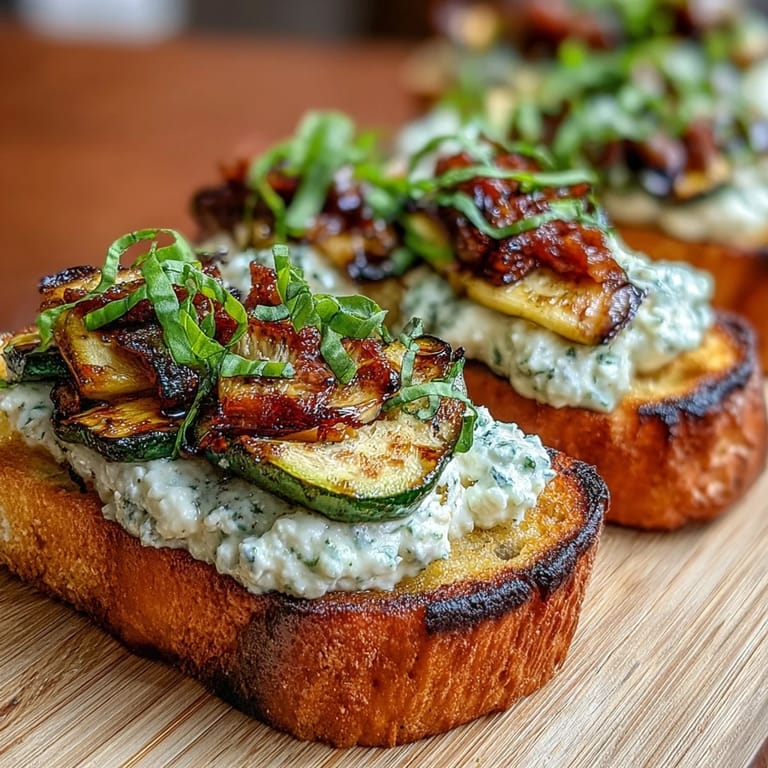
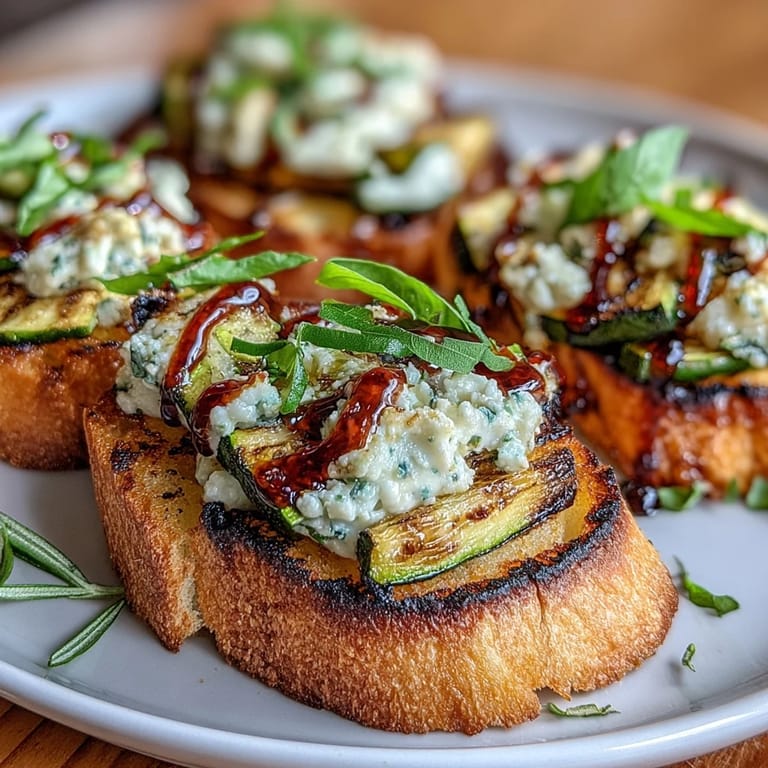
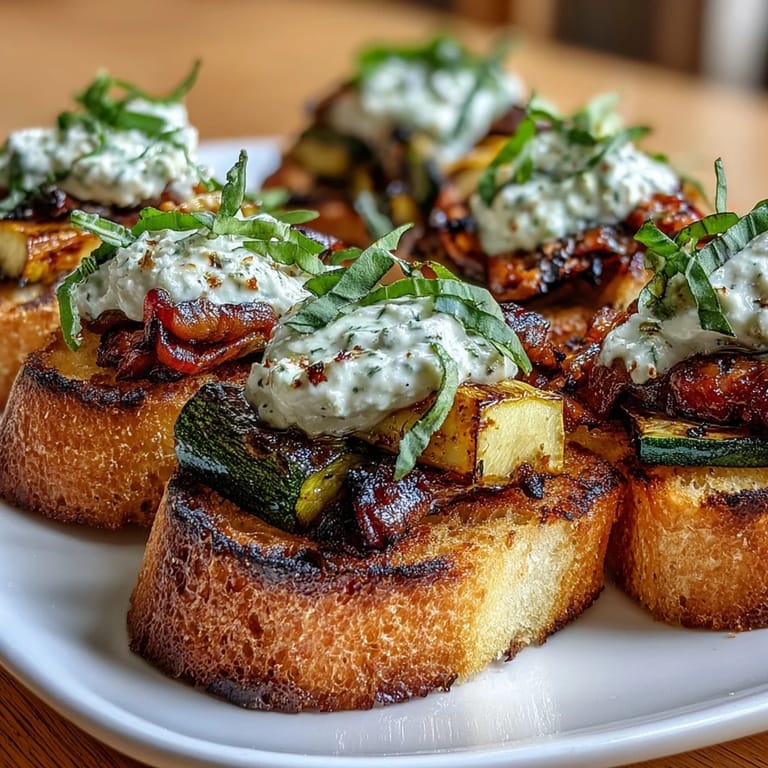
- Spread a generous spoonful of ricotta on each crostini, then top with a small handful of roasted vegetables. The ricotta acts as an anchor that keeps everything from sliding.
- Finish and serve:
- If using balsamic glaze, drizzle lightly across the tops, then sprinkle fresh basil and a grind of black pepper. Serve while the bread is still warm but not so hot that the ricotta melts completely.
 Pin it
 There was an evening when my daughter, who usually picks vegetables off everything, asked for a third crostini and then wanted to know if we could make them again the next day. Those moments remind me that the best recipes aren't about being fancy—they're about creating something that tastes good enough to make people ask for more.
Timing and Make-Ahead Options
You can roast the vegetables up to 4 hours ahead and keep them at room temperature, which means you only need to toast the bread and assemble at the last minute. The garlic butter stays good in the fridge for a few days, so mixing it the night before cuts your prep time in half when guests are on their way. If you're making crostini for a crowd, toast all the bread at once and set them on a cooling rack so they stay crispy; assemble them just before serving so the ricotta doesn't absorb moisture from the warm vegetables.
Wine and Pairing Ideas
These crostini sing alongside a crisp white wine like Pinot Grigio or Sauvignon Blanc—the acidity cuts through the richness of the ricotta and butter in a way that makes both the food and wine taste better. You can also serve them with sparkling water and fresh lemon for a lighter touch, or even as part of a larger spread with other small bites.
Variations and Swaps You Can Make
If dairy isn't your thing, whipped feta tastes fantastic instead of ricotta—it's tangier and holds up beautifully to roasted vegetables. For heat seekers, add a pinch or two of chili flakes to the roasted vegetables before they go in the oven, or sprinkle them on top just before serving. You can also swap in grilled eggplant, roasted mushrooms, or even charred asparagus if you want to play with the vegetable mix—the garlic butter and ricotta base stays the same and ties everything together.
- For gluten-free eaters, use a good quality gluten-free baguette and toast it a minute or two longer to get it crispy.
- Vegan versions work beautifully with plant-based butter and a cashew ricotta or store-bought vegan cheese spread.
- Fresh mint, arugula, or thin shavings of parmesan are all wonderful additions depending on your mood.
 Pin it
 These crostini prove that simple ingredients, when treated with attention and care, become something memorable. Make them for yourself on a quiet afternoon or for people you love on a Friday night—either way, they'll disappear quickly.
Recipe FAQs
- → What type of bread works best for crostini?
A baguette sliced into thin rounds crisps nicely and holds toppings well.
- → How do I achieve a crispy crostini base?
Brushing the slices with garlic butter and baking at a high temperature until golden ensures a crisp texture.
- → Can I use other cheeses instead of ricotta?
Yes, whipped feta or plant-based cheeses also pair well with the roasted vegetables.
- → How are the vegetables prepared for topping?
They are diced, tossed with olive oil, herbs, and seasonings, then roasted until tender and slightly charred.
- → What is a good way to add extra flavor?
A drizzle of balsamic glaze and fresh basil leaves add sweetness and aromatic freshness.