 Pin it
 My friend Sarah called me one winter evening asking if I could host a dinner that didn't require me to stand at the stove all night. That's when hot pot clicked for me, not as some fancy restaurant experience, but as the ultimate permission slip to cook together with people around the table. There's something magnetic about a bubbling pot of aromatic broth in the center of everything, where everyone becomes both diner and chef. I watched my usually quiet cousin open up while fishing for noodles, saw my nephew carefully orchestrate which vegetable went in next. That night, the food mattered less than the rhythm of conversation between bites.
I remember plating everything for a dinner and feeling this quiet satisfaction watching the table fill with small bowls and platters, each ingredient glowing under the warm light. My partner's mom, who usually politely picks at food, actually leaned over the pot with focus, timing her beef slices with the precision of someone who'd suddenly found her favorite sport. By dessert, we'd used nearly everything, and the broth had transformed into this concentrated essence of ginger, garlic, and time well spent together.
Ingredients
- Chicken or vegetable broth (2.5 liters): This is your foundation, so use something you'd actually drink on its own, not the sad cardboard box hiding in the pantry.
- Garlic and ginger (2 cloves sliced, 5 cm piece sliced): These two build the backbone of flavor, and slicing them thin means they release their essence into every sip.
- Soy sauce, rice vinegar, sesame oil (1 tablespoon each): Don't skip the rice vinegar, it brightens everything in a way that makes people ask what the secret is.
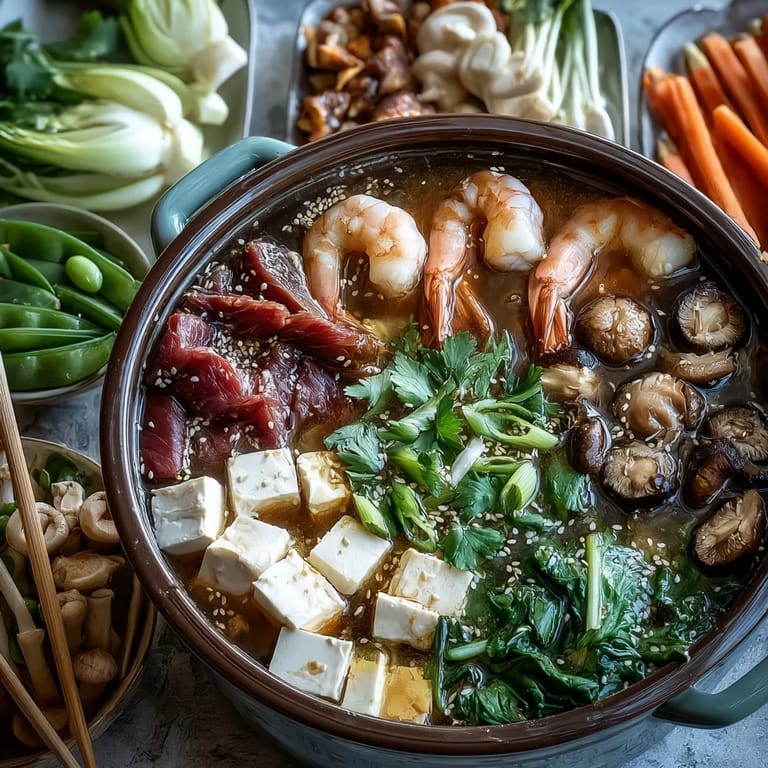
- Dried shiitake mushrooms (2): They're tiny flavor bombs that make the broth taste like it's been simmering for hours.
- Chili, sliced (1 small, optional): Leave it in or pull it out depending on your crowd, but fresh chili heat is different from chili oil, more alive somehow.
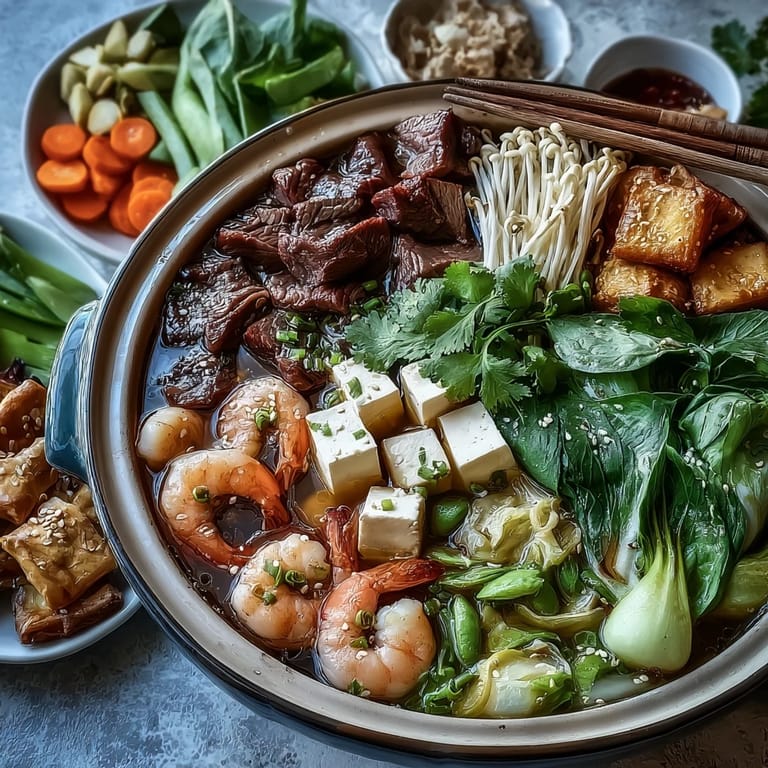
- Beef, chicken, or pork (300 g thinly sliced): Ask the butcher for paper-thin cuts, the kind that turn opaque in seconds, and arrange them on a platter so they overlap like flower petals.
- Shrimp (200 g peeled and deveined): These cook the fastest and often disappear first, so have extra if you're feeding people who love seafood.
- Firm tofu (200 g cubed): Tofu in hot pot is completely different from other tofu dishes, it becomes delicate and absorbs the broth's personality.
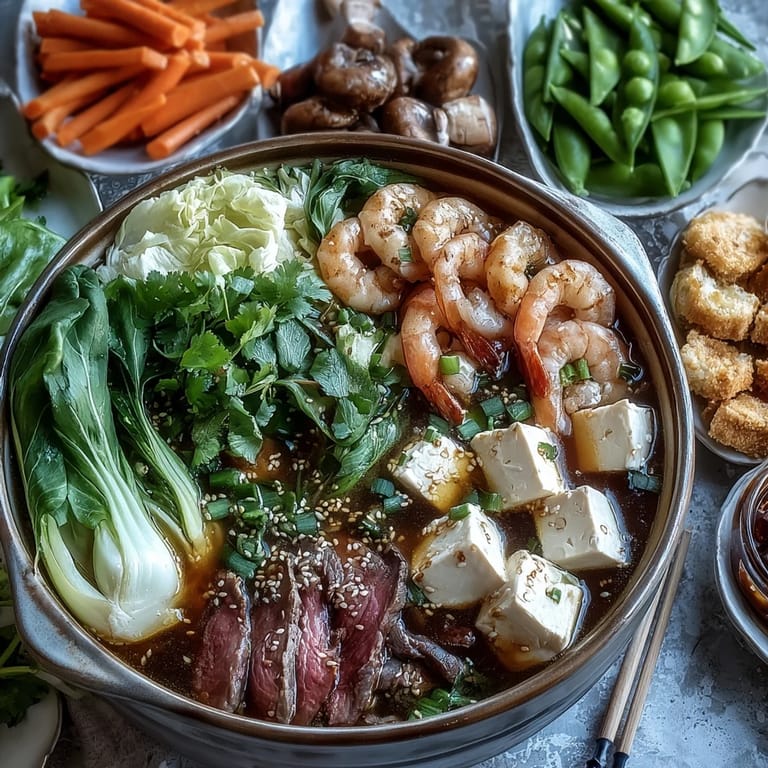
- Napa cabbage, bok choy, mushrooms, carrot, snow peas, corn, scallions: The more variety, the more the table looks like abundance, and people eat with their eyes first.
- Rice or glass noodles (200 g): Soak them until just pliable, still with a little resistance, so they don't turn to mush in the pot.
- Dipping sauces, cilantro, sesame seeds, lime (soy sauce, chili oil, hoisin, fresh cilantro, sesame seeds, lime wedges): These are where quiet magic happens, each person building their own flavor profile with tiny adjustments.
Tired of Takeout? 🥡
Get 10 meals you can make faster than delivery arrives. Seriously.
One email. No spam. Unsubscribe anytime.
Instructions
- Build your broth base:
- In a large pot, combine your broth with garlic, ginger, soy sauce, rice vinegar, sesame oil, shiitake mushrooms, and chili if using. Bring it to a boil, watching for that moment when steam rises and the kitchen smells like somewhere you want to stay. Then dial it back to a gentle simmer for at least 30 minutes, letting all those flavors marry and deepen, then strain out the solids just before the meal.
- Arrange everything on platters:
- Slice proteins thin and layer them artfully, chop vegetables into bite-sized pieces, and set everything out within arm's reach. This step takes time but it's meditative, knowing that in an hour your table will look generous and intentional.
- Prep your noodles:
- Soak them in warm water until they're soft enough to bend but still have that subtle chew, then drain and put them in a bowl so they're ready the moment someone wants them.
- Set the table for cooking:
- Place your portable burner or induction cooktop in the center with the wide shallow pot, pour in your strained hot broth, and adjust the heat so it's simmering gently but never boiling violently. This is your table's heartbeat for the next hour.
- Let people cook their own way:
- Hand out chopsticks or slotted spoons and let diners pull ingredients into the broth as they like, knowing proteins take about a minute or two, vegetables another minute or three, and noodles soften in under five. There's no wrong order, just different preferences playing out in real time.
- Finish and serve:
- As items cook, they float to the surface ready to be fished out and dipped in whichever sauce calls to someone. Keep the broth simmering throughout, top it up with warm water if needed, and let the meal unfold at its own pace.
 Pin it
 There was a moment during one hot pot dinner when my brother, who's usually rushing through meals, set down his chopsticks and just watched the steam rise from the pot. He said something like, 'I'm not even thinking about my phone,' and that sentence somehow captured what this meal does, it creates this small pocket of time where the only thing that matters is what's in front of you and who's across from you.
The Beauty of Customization
Hot pot thrives on personalization in a way that other meals don't, because everyone's cooking journey is visible and unique. I watched my vegetarian friend create this perfect rotation of vegetables and tofu while my dad methodically cooked thin slices of beef, and somehow both of them felt equally invested in their bowls. The broth becomes a neutral canvas where every preference makes sense, which sounds philosophical but really just means nobody has to explain themselves.
Building Your Dipping Sauce Strategy
The sauces matter more than people expect, because they're where individual flavor stories happen. I started out mixing everything together in one bowl and learned quickly that keeping things separate lets people taste the chili oil as its own heat, the hoisin as its own sweetness, the cilantro as its own brightness. A squeeze of lime at the very end is sometimes the moment when someone says, 'Oh, now I get it.'
Making It Work for Different Diets
The genius of hot pot is that it welcomes everyone without making anyone feel like an afterthought or a burden. Vegetarians load up on mushrooms, tofu, and noodles while meat eaters do their thing, and the shared broth means nobody's eating alone or from a separate meal.
- Use vegetable broth if anyone at your table doesn't eat meat, and honestly it's just as rich and fragrant as chicken broth when given time.
- Have rice noodles on hand alongside regular ones, and keep gluten-free soy sauce nearby if anyone needs it.
- The variety of vegetables means even the most restricted dieter finds plenty to cook and enjoy without modification.
 Pin it
 Hot pot isn't fancy, but it's generous in a way that matters, turning a simple dinner into an experience where people relax and actually talk to each other. Once you've hosted it, you'll find yourself reaching for it whenever you want the kitchen to be joyful instead of stressful.
Recipe FAQs
- → What ingredients are essential for the broth?
The broth includes garlic, ginger, soy sauce, rice vinegar, sesame oil, dried shiitake mushrooms, and optional chili for depth and aroma.
- → Can I use different proteins in the dish?
Yes, thinly sliced beef, chicken, pork, tofu, or shrimp are ideal choices to cook quickly in the broth.
- → What vegetables work best for the hot pot?
Leafy greens like Napa cabbage, baby bok choy, mushrooms, carrots, snow peas, corn, and scallions add great texture and flavor.
- → How long should noodles be soaked before cooking?
Noodles should be soaked in warm water as per package instructions until pliable, then briefly cooked in the broth at the table.
- → What tools are recommended for serving this dish?
A portable burner or induction cooktop, a large shallow pot, slotted spoons or strainers, chopsticks, and bowls are ideal for an interactive setup.
- → Are there options for dietary preferences?
Yes, by using vegetable broth and omitting animal proteins, it can be made vegetarian or vegan; gluten-free noodles and sauces can accommodate gluten sensitivities.