 Pin it
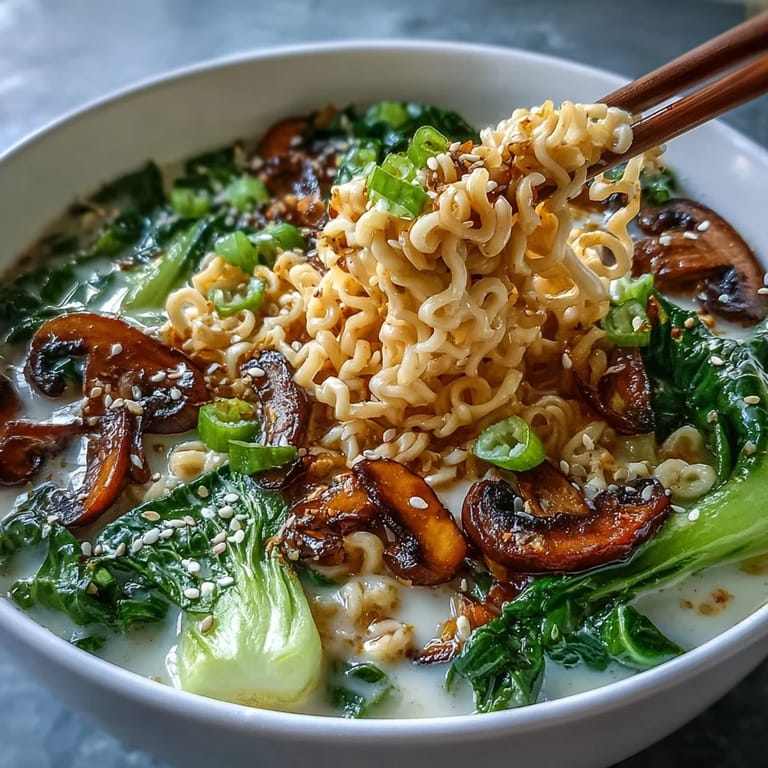
 My kitchen smelled like a street market in Bangkok the first time I really paid attention to building a proper curry broth instead of just dumping ingredients together. A friend had mentioned that toasting the curry paste before adding liquid was the secret, and I was skeptical until that moment when the aroma shifted from harsh to honeyed and complex. That bowl of coconut curry ramen changed how I thought about vegetarian cooking, proving that you don't need animal products to create something deeply satisfying and craveable.
I made this for my partner on a cold Tuesday night when they were stressed about work, and watching them close their eyes after that first spoonful felt like a small victory. The way the steam rose off the bowl, the way cilantro scattered across the surface caught the kitchen light—suddenly it wasn't just dinner, it was care in a bowl.
Ingredients
- Coconut oil: Use unrefined if you can; it adds a subtle sweetness that refined versions skip.
- Yellow onion: The backbone of the broth, it becomes almost invisible but essential after those first few minutes of sautéing.
- Garlic and fresh ginger: Never use the jarred stuff here—fresh makes you taste the difference with your first sip.
- Red curry paste: Buy the good stuff from an Asian market, and always verify it's vegan; some brands sneak in fish sauce.
- Ground turmeric: Beyond color, it brings earthiness and a hint of warmth that rounds out the curry spice.
- Vegetable broth: Make your own if you have time, but quality store-bought works just as well and saves you hours.
- Full-fat coconut milk: This is where the richness comes from; don't skimp with light versions.
- Soy sauce or tamari: Tamari tastes cleaner and works if you're avoiding gluten, but standard soy sauce adds deeper umami.
- Maple syrup: A small touch of sweetness balances the heat and brings all the flavors into harmony.
- Sesame oil: The toasted kind adds a roasted depth that regular sesame oil can't touch.
- Cremini or shiitake mushrooms: Shiitakes give more umami punch, but cremini are easier to find and still deliver that earthy satisfaction.
- Baby bok choy: It wilts quickly and stays tender, keeping its bright color through serving.
- Ramen noodles: Check the package to confirm they're vegan; most are, but some brands use eggs.
- Carrot: Sliced thin so it softens just enough to yield to your teeth without falling apart.
- Scallions, sesame seeds, and cilantro: These are the final flourish that makes people think you've spent all day cooking.
Tired of Takeout? 🥡
Get 10 meals you can make faster than delivery arrives. Seriously.
One email. No spam. Unsubscribe anytime.
Instructions
- Build your flavor base:
- Heat the coconut oil until it shimmers, then add onion and let it turn soft and golden, about 3 to 4 minutes. When you add garlic and ginger, you'll notice the smell shift immediately—that's when you know it's working right.
- Toast the spices:
- Stir in curry paste and turmeric, letting them sizzle for about a minute so the raw flour taste cooks out and the flavors deepen. Your whole kitchen will smell like a curry house, and you'll know you're on the right track.
- Bring in the broth:
- Pour in vegetable broth and coconut milk slowly, stirring so they blend smoothly together. Add soy sauce, maple syrup, and sesame oil, then bring everything to a gentle simmer—not a boil, as gentle bubbles will treat the vegetables with more respect.
- Cook the mushrooms:
- Add mushrooms and let them hang out in the broth for 8 to 10 minutes until they're tender and have absorbed some of the flavor. They'll darken slightly and release their earthiness into the liquid.
- Prepare the noodles separately:
- While mushrooms cook, get your ramen going in a separate pot according to package instructions. Drain them well so they don't water down your finished bowl.
- Finish with fresh vegetables:
- Add bok choy and carrots to the simmering broth and cook just 2 to 3 minutes until bok choy is wilted but still bright green. Taste and adjust salt and pepper until the broth sings.
- Assemble the bowls:
- Divide noodles among four bowls, then ladle the hot broth and vegetables over the top. The heat will warm the noodles through and marry all the flavors together.
- Garnish like you mean it:
- Scatter scallions, sesame seeds, cilantro, chili slices if you like heat, and squeeze lime over everything. That burst of lime is what transforms a good bowl into one people remember.
 Pin it
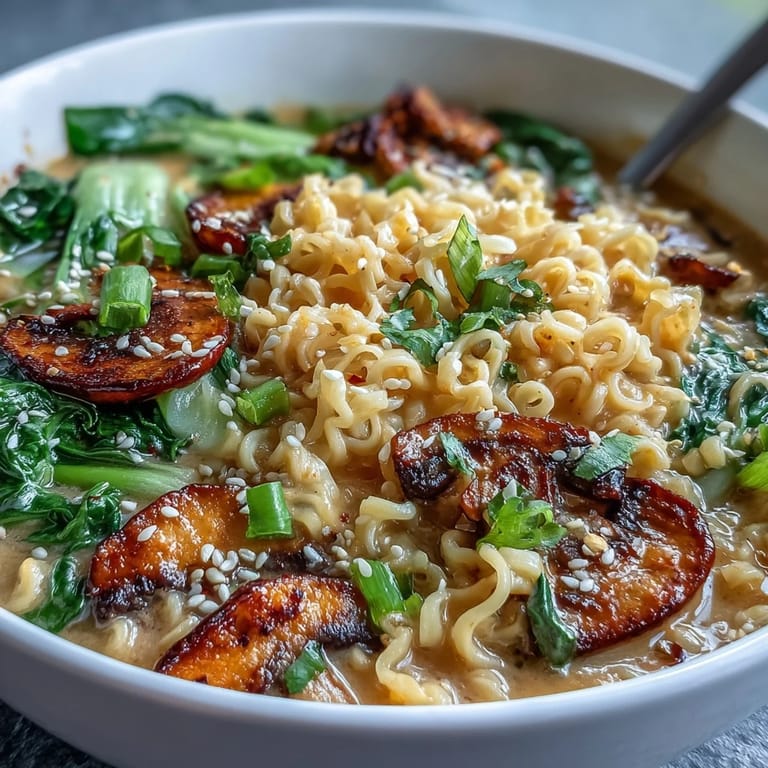
 Someone once told me that ramen is about balance, and they were right—heat from curry, sweetness from coconut, brightness from lime, earthiness from mushrooms, tenderness from greens. When every element hits at once, that's when you understand why this dish has such power to comfort and impress at the same time.
The Secret Life of Curry Paste
The difference between curry paste that tastes raw and one that tastes integrated lives in those 60 seconds of toasting in hot oil. I learned this the hard way by rushing through that step, and the broth tasted sharp and one-dimensional instead of rounded and inviting. Now I treat that moment like a small meditation, watching the paste darken slightly and release that honeyed, complex aroma that tells you it's ready to meet the liquid.
Coconut Milk Selection Matters
Full-fat coconut milk is not a luxury here; it's essential architecture for the broth's texture and richness. Light coconut milk will give you a thinner, less satisfying bowl, and you'll find yourself wanting more spoons of broth but having less to savor. The cream that rises to the top of full-fat milk also catches heat and creates little pockets of unctuousness throughout the bowl.
Building Heat and Brightness
The heat level in curry paste can vary wildly between brands, so taste the broth before serving and adjust if needed. Fresh lime squeezed over each bowl is non-negotiable—it cuts through the richness and wakes up your palate with each sip, making the whole experience feel fresher and more alive.
- Start with less chili and add more at the table if you want extra heat rather than burning out the broth for everyone.
- Fresh cilantro should go on right before eating so it stays vibrant and doesn't turn dark and wilted in the heat.
- Toasted sesame seeds add a nutty crunch that textually balances the soft noodles and tender vegetables.
 Pin it
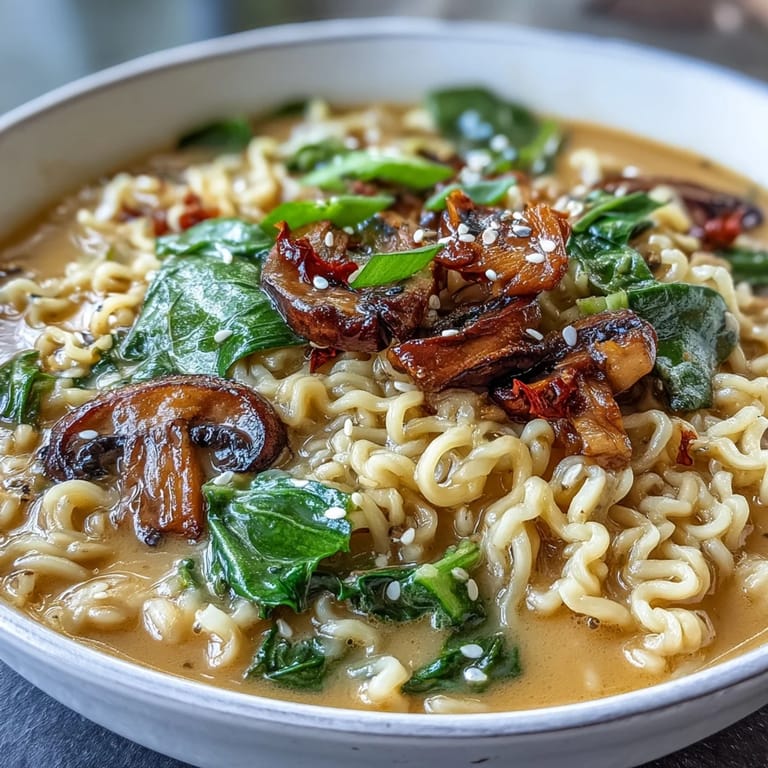
 This ramen has become my go-to when I want something that feels restaurant-quality but asks so little of my time. It reminds me that comfort food doesn't have to be complicated, just thoughtfully built from good ingredients and a little attention to the moments that matter.
Recipe FAQs
- → Can I use other greens instead of bok choy?
Yes, spinach or kale work well as alternatives, offering different textures and flavors while complementing the broth.
- → How can I adjust the spice level?
Modify the amount of red curry paste and add sliced chili peppers to increase heat, or reduce these ingredients for a milder taste.
- → What noodles are best for this dish?
Traditional ramen noodles work well, but gluten-free or whole grain noodles can be used based on preference or dietary needs.
- → Can I add protein to this dish?
Yes, cubed tofu or edamame can be added to boost protein content without altering the dish's flavor profile.
- → What is the best way to store leftovers?
Store broth, noodles, and vegetables separately in airtight containers in the refrigerator for up to 3 days to maintain texture and flavor.