 Pin it
 One Tuesday evening, I was standing in my kitchen staring at four salmon fillets, knowing I had maybe thirty minutes before everyone would be hungry. My instinct was to reach for the same old lemon-butter routine, but then I remembered watching my neighbor glaze vegetables on a sheet pan with this glossy teriyaki sauce, and something clicked. That night, this dish came together so effortlessly that it became my go-to whenever I need something that looks impressive but doesn't demand hours of attention.
I made this for my sister when she announced she was trying to eat healthier, and watching her eyes light up when she took that first bite reminded me that good food doesn't have to be complicated or feel like a compromise. She's requested it at least a dozen times since then, and now it's become our thing whenever she visits.
Ingredients
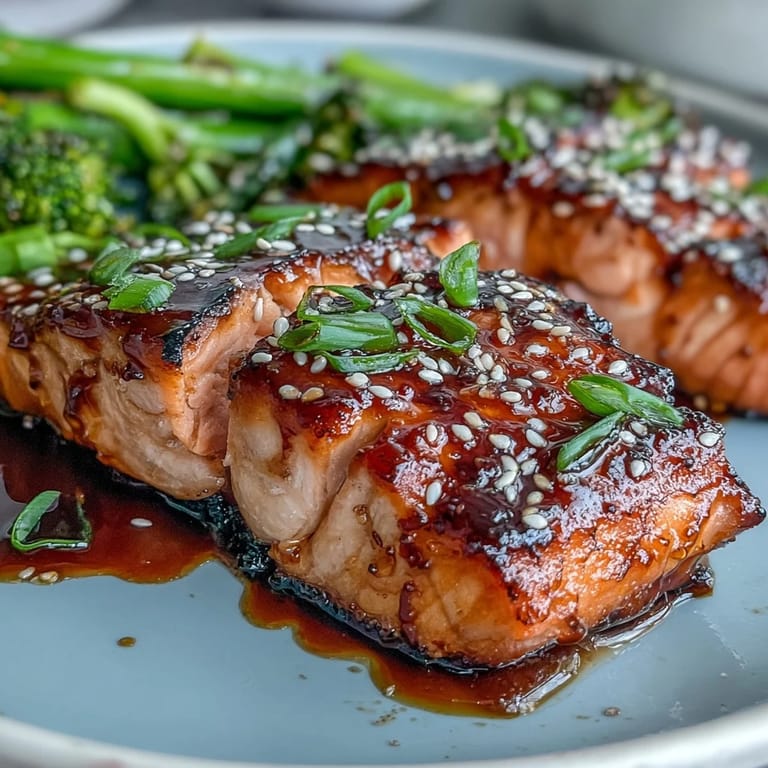
- Salmon fillets, skin-on (four 5–6 oz pieces): Skin-on keeps the fish moist and gives you a crispy side that's honestly underrated, plus it's easier to check for doneness when you can see the flesh pull away slightly.
- Broccoli florets (2 cups): Cut them roughly equal in size so they roast evenly; smaller pieces get crispier edges, which I happen to love.
- Sugar snap peas, trimmed (2 cups): These stay crisp-tender if you don't overcrowd the pan, and their natural sweetness plays beautifully against the savory sauce.
- Red bell pepper, sliced (optional): This is really more for color and sweetness, but if you skip it, the dish is honestly just as delicious.
- Low-sodium soy sauce (1/4 cup): Low-sodium lets you control the salt level and prevents the sauce from tasting one-note.
- Honey or maple syrup (3 tbsp): Honey gives a cleaner sweetness, but maple syrup adds this earthy depth that's harder to replicate.
- Rice vinegar (1 tbsp): This bright acidity keeps the sauce from becoming cloying and ties everything together.
- Sesame oil (1 tbsp): Use the darker toasted kind; a little goes a long way and transforms the whole flavor profile.
- Garlic and ginger (2 cloves and 1 tsp): Mince and grate these fresh if you can; it makes a noticeable difference in how vibrant the sauce tastes.
- Cornstarch slurry (1 tsp cornstarch mixed with 2 tsp water): This thickens the sauce just enough to cling to the salmon without making it heavy.
- Sesame seeds and scallions (1 tbsp and 2, optional): These are the finishing flourish that elevates the whole plate, so don't skip them if you have them.
Tired of Takeout? 🥡
Get 10 meals you can make faster than delivery arrives. Seriously.
One email. No spam. Unsubscribe anytime.
Instructions
- Set your oven and pan:
- Preheat to 400°F and line a large sheet pan with parchment paper or foil. This step takes two minutes and saves you from scrubbing salmon stuck to metal afterward.
- Make the teriyaki glaze:
- In a small saucepan over medium heat, combine soy sauce, honey, rice vinegar, sesame oil, minced garlic, and grated ginger, letting it come to a gentle simmer. You'll notice it smelling incredibly fragrant in about a minute, which is your cue that the garlic and ginger are doing their job. Stir in the cornstarch slurry and whisk constantly for about two minutes until the sauce thickens enough to coat the back of a spoon lightly.
- Arrange and glaze the salmon:
- Place salmon fillets on one side of the sheet pan and brush each generously with teriyaki sauce, setting aside about two tablespoons for the vegetables. The brush should glide smoothly across the fish, coating it evenly.
- Prepare the vegetables:
- In a bowl, toss broccoli, snap peas, and bell pepper with a light drizzle of olive oil and that reserved teriyaki sauce, then spread them in a single layer beside the salmon on the pan. Try to give each piece space so they roast rather than steam.
- Roast everything together:
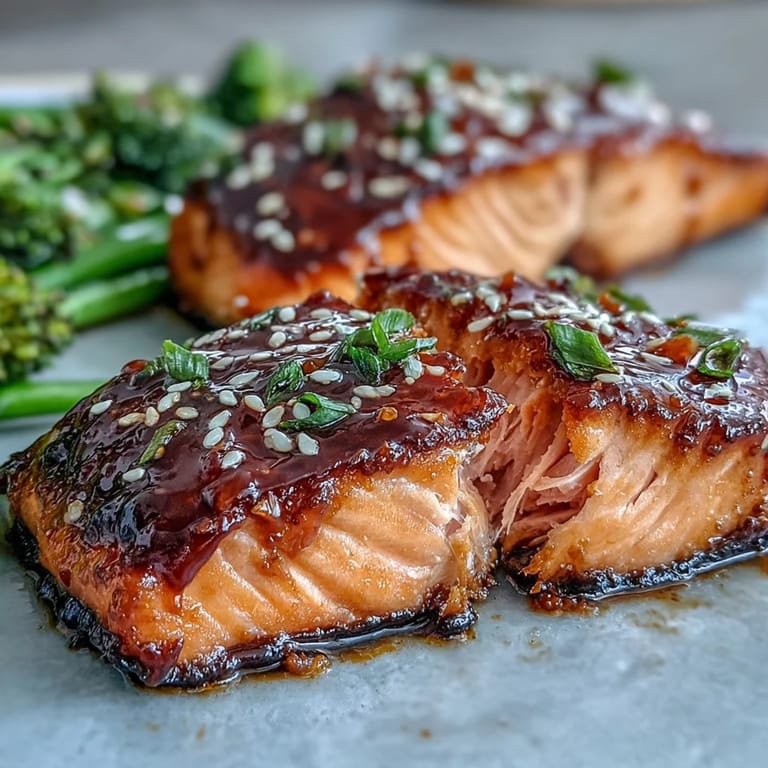
- Place the sheet pan in your 400°F oven and roast for fifteen to eighteen minutes, watching for the salmon to flake easily when tested with a fork and the vegetables to turn crisp-tender with slightly browned edges. The vegetables should smell nutty and slightly caramelized when they're ready.
- Broil for caramelization (optional but recommended):
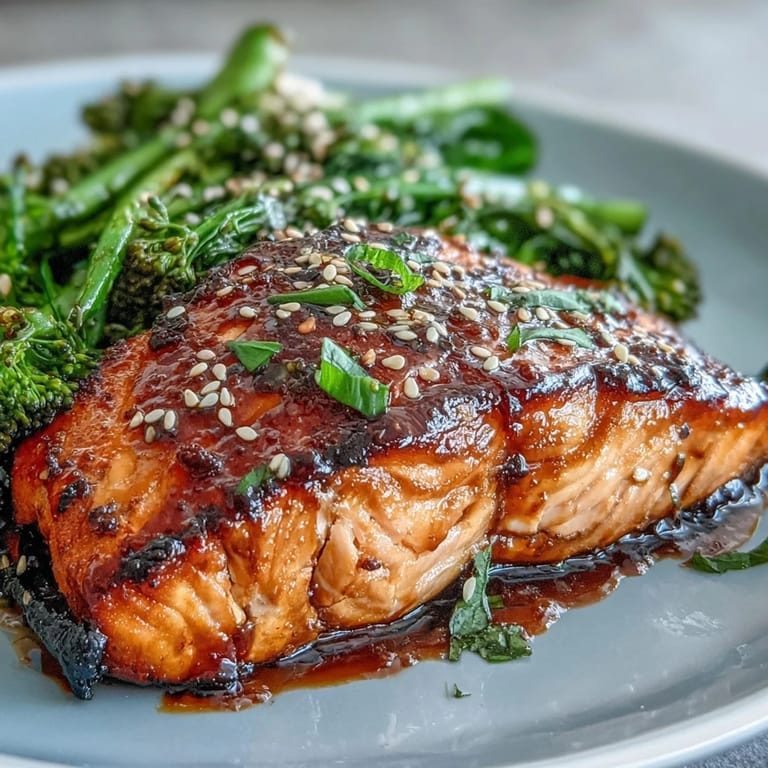
- If you want extra glossy, caramelized edges on the salmon and vegetables, turn on the broiler for the last one to two minutes, keeping a close eye so nothing chars. This step transforms the glaze into something almost candy-like in the best way possible.
- Finish and serve:
- Drizzle any remaining teriyaki sauce over the salmon and vegetables, then scatter sesame seeds and sliced scallions across the top and serve with lime wedges on the side. Everything should go straight to the table while it's still warm.
 Pin it
 There's something quietly satisfying about putting a sheet pan in the oven and knowing that in twenty minutes, you'll have a complete, restaurant-quality meal that looks like you spent way more energy than you actually did. My family has stopped being surprised by this dish, but I haven't stopped enjoying how easy it makes weeknight dinners feel.
Why This Sauce Works
Teriyaki is one of those sauces that seems intimidating until you realize it's just a few balanced ingredients that play off each other: soy sauce brings saltiness and depth, honey or maple syrup adds sweetness and helps with caramelization, rice vinegar cuts through richness with brightness, and sesame oil brings this toasty, aromatic quality that ties everything together. Making it from scratch means you control how thick it gets and how much salt ends up in your food, which feels like a small luxury once you try it.
Swaps and Flexibility
This dish is incredibly forgiving about substitutions because the teriyaki glaze is sturdy enough to carry whatever vegetables you have on hand. I've swapped snap peas for green beans or asparagus, added mushrooms when the produce drawer looked sparse, and even threw in some sliced bok choy once, and every version tasted genuinely delicious. For the protein, you could use halibut or cod instead of salmon if you adjust the cooking time slightly since they're thinner and cook faster.
Storage and Meal Prep
Leftovers keep in the refrigerator for up to two days, and reheating is as simple as popping everything into a 350°F oven for about five minutes, just until it's warmed through. I sometimes portion leftovers into containers right away and eat it cold straight from the fridge with a bowl of rice the next day, which honestly tastes just as good.
- For a gluten-free version, swap regular soy sauce for tamari and double-check your sesame oil label.
- Serve alongside steamed jasmine rice or brown rice if you want something more filling.
- This dish pairs unexpectedly well with a light white wine or even a crisp lager if you're in the mood for a drink.
 Pin it
 This is the kind of recipe that stops feeling like cooking and starts feeling like something you just know how to make, which is exactly how I want a weeknight meal to feel. Once you've made it once, you'll understand why it keeps circling back to my table.
Recipe FAQs
- → What is the best way to glaze the salmon for even flavor?
Brush the teriyaki sauce generously over each salmon fillet before roasting, reserving some sauce to drizzle after cooking for extra flavor.
- → Can I use frozen vegetables instead of fresh broccoli and snap peas?
Fresh vegetables are recommended for the best texture, but if using frozen, thaw and pat dry to avoid excess moisture during roasting.
- → How do I ensure the salmon remains moist when roasting?
Use skin-on fillets and roast at a high temperature for a shorter time to keep the salmon tender and juicy.
- → Is it necessary to broil at the end of cooking?
Broiling for 1-2 minutes adds caramelization and extra flavor but is optional based on your preferred finish.
- → Can I prepare the teriyaki sauce in advance?
Yes, the teriyaki glaze can be made ahead and stored refrigerated for up to 2 days, which helps save time when cooking.