 Pin it
 My oven was acting up one April evening, running hotter than usual, and I had pork shoulder thawing on the counter with no backup plan. I spotted a bundle of rhubarb in the crisper drawer, left over from a pie I never made, and decided to throw caution to the wind. The smell that filled the kitchen that night, sweet and sharp and a little smoky, made me forget all about the temperamental oven. Sometimes the best meals come from a little chaos and whatever needs using up.
I made this for a small dinner party last spring, and my friend who swore she hated rhubarb went back for seconds. She kept asking what the secret ingredient was, convinced I had used some fancy glaze from a jar. When I told her it was just rhubarb, honey, and orange, she laughed and admitted she had only ever had it in overly sweet crumbles. That night taught me that context changes everything, especially when it comes to ingredients people think they have figured out.
Ingredients
- Boneless pork shoulder or loin (800 g): Shoulder has more fat and stays juicy through high heat, but loin works beautifully if you prefer leaner meat and watch the timing closely.
- Olive oil (1 tbsp): Just enough to help the spices stick and encourage a golden crust without making anything greasy.
- Sea salt (1 tsp) and black pepper (½ tsp): Simple seasoning that lets the aromatics and fruit shine without competing for attention.
- Rhubarb (300 g): Trim the ends and cut into chunky pieces so they soften but hold their shape, adding tartness that balances the richness of the pork.
- Red onions (2): They caramelize beautifully and their sweetness plays off the rhubarb in a way yellow onions just cannot match.
- Garlic cloves (2, minced): Adds depth without overwhelming the delicate balance of sweet, tart, and savory.
- Fresh ginger (thumb-sized piece, grated): Brings a warm, slightly spicy brightness that makes the whole dish feel alive.
- Orange (zest and juice): The zest gives fragrance and the juice adds acidity that helps tenderize the pork and brighten the rhubarb.
- Honey or maple syrup (2 tbsp): A little sweetness tames the rhubarb and helps everything caramelize in the oven.
- Ground coriander (1 tsp): Adds a citrusy, slightly floral note that complements both the pork and the fruit.
- Ground fennel (1 tsp): Its subtle anise flavor ties the spices together and adds complexity without being obvious.
- Ground cinnamon (½ tsp): Just a hint warms up the dish and makes the kitchen smell like comfort.
- Smoked paprika (½ tsp): Adds a gentle smokiness that makes the pork taste like it came off a grill.
- Chili flakes (¼ tsp, optional): A small kick of heat that wakes everything up, but you can skip it if you prefer things mild.
- Fresh parsley or cilantro (3 tbsp, chopped): A fresh, green finish that cuts through the richness and makes the platter look vibrant.
Tired of Takeout? 🥡
Get 10 meals you can make faster than delivery arrives. Seriously.
One email. No spam. Unsubscribe anytime.
Instructions
- Preheat and Prep:
- Set your oven to 200°C (400°F) and line a large baking tray with parchment paper so nothing sticks and cleanup stays easy. Get everything within reach before you start tossing ingredients.
- Season the Pork:
- In a bowl, toss the pork slices with olive oil, salt, pepper, coriander, fennel, cinnamon, smoked paprika, and chili flakes until every piece is coated. Arrange them on one side of the tray, leaving space for the rhubarb mixture.
- Prepare the Rhubarb and Aromatics:
- In another bowl, combine rhubarb, red onions, garlic, ginger, orange zest and juice, and honey, tossing until everything glistens. Spread this mixture out beside the pork, keeping things loose so heat can circulate.
- First Roast:
- Roast for 35 minutes, turning the pork and stirring the rhubarb mixture halfway through so everything cooks evenly. The kitchen will start to smell incredible around the 20-minute mark.
- High Heat Finish:
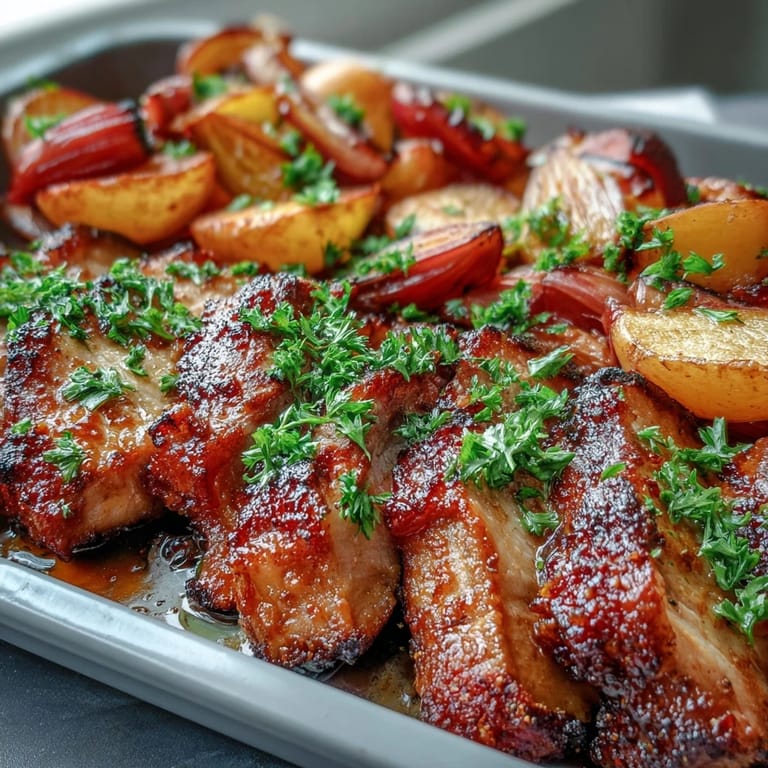
- Increase the oven temperature to 220°C (430°F) and roast for another 10 to 15 minutes, until the pork is golden and cooked through and the rhubarb is tender and caramelized at the edges. Watch closely during this stage so nothing burns.
- Rest and Serve:
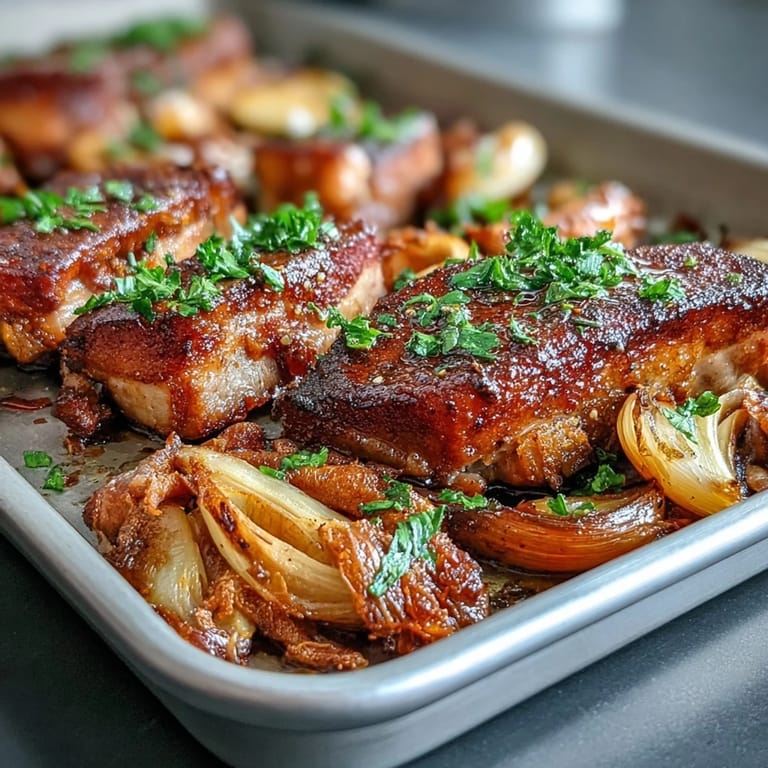
- Let the pork rest for 5 minutes before slicing so the juices settle back into the meat. Arrange everything on a platter and sprinkle with fresh herbs for color and freshness.
 Pin it
 One night I served this to my neighbor who had just moved in, and she told me it reminded her of something her grandmother used to make in Poland, even though the flavors were completely different. We sat on my back steps with plates on our laps, and she said it was the combination of sweet and savory and the way the spices smelled that brought her back. Food has a way of unlocking memories we did not even know we were carrying.
Serving Suggestions
This traybake feels complete on its own, but I love serving it over a pile of buttery couscous or alongside roasted baby potatoes tossed with olive oil and thyme. A crisp green salad with a sharp vinaigrette cuts through the richness beautifully, and sometimes I add a dollop of Greek yogurt on the side for extra creaminess. If you have any leftovers, they reheat wonderfully and the flavors actually deepen overnight.
Substitutions and Variations
If you cannot find pork shoulder or prefer poultry, bone-in chicken thighs work beautifully and stay moist through the roasting process. You can swap the rhubarb for tart apples or plums if it is out of season, though you will lose some of that signature tang. For a deeper, slightly tangy finish, add a splash of balsamic vinegar to the rhubarb mixture before roasting. Maple syrup can replace honey for a different kind of sweetness, and fresh thyme or rosemary can stand in for the parsley if that is what you have on hand.
Storage and Reheating
Store leftovers in an airtight container in the fridge for up to three days, keeping the pork and rhubarb mixture together so the flavors continue to meld. Reheat gently in a low oven or on the stovetop with a splash of water or broth to keep everything moist. I do not recommend freezing this dish because the rhubarb texture changes once thawed, becoming mushy and losing its appealing bite.
- Let everything cool completely before refrigerating to avoid condensation that makes the pork soggy.
- Reheat only what you plan to eat, as repeated heating will dry out the pork.
- If the rhubarb mixture looks too dry after storing, stir in a teaspoon of honey or orange juice before reheating.
 Pin it
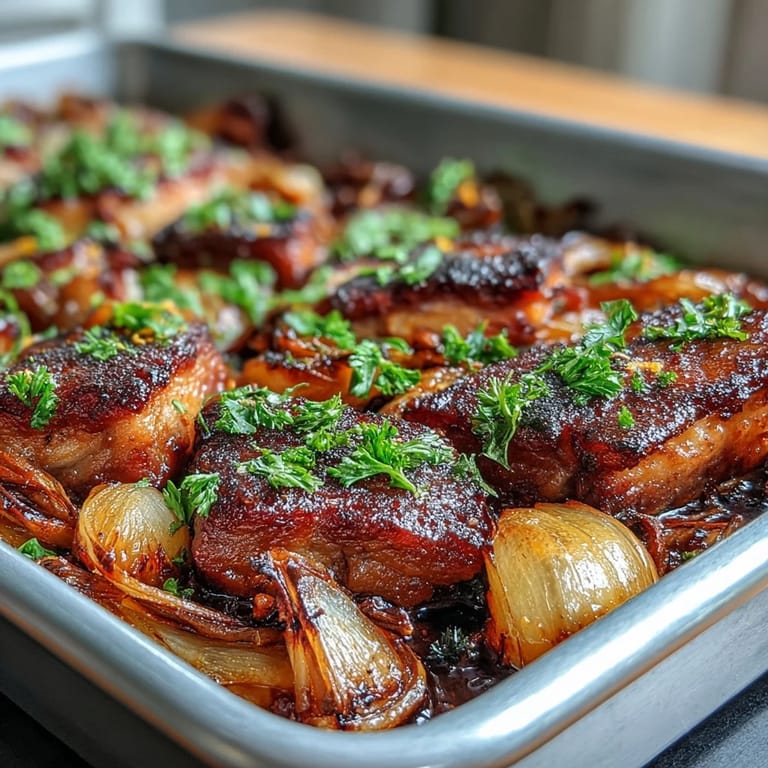
 This dish has become my go-to when I want something impressive without the fuss, and every time I make it, someone asks for the recipe. I hope it finds a place in your rotation, too.
Recipe FAQs
- → Can I use a different cut of pork?
Yes, pork loin or tenderloin work well, though shoulder provides more flavor and stays juicier during roasting. Adjust cooking time slightly for leaner cuts.
- → What if I can't find fresh rhubarb?
Frozen rhubarb can be substituted but may release more moisture. Thaw and drain it first, then reduce the honey slightly to compensate for extra liquid.
- → How do I know when the pork is fully cooked?
Use a meat thermometer to check that internal temperature reaches 63°C (145°F). The meat should be golden outside and slightly pink but not raw inside.
- → Can I prepare this traybake ahead of time?
You can marinate the pork and prepare the rhubarb mixture up to 4 hours ahead. Store separately in the refrigerator, then assemble and roast when ready.
- → What sides pair best with this dish?
Roasted potatoes, buttery couscous, or creamy polenta complement the tangy-sweet flavors beautifully. A crisp green salad adds freshness and balance.
- → Is the ginger essential to the flavor?
Fresh ginger adds warmth and depth that complements both the pork and rhubarb. If unavailable, ground ginger (½ teaspoon) can substitute, though the flavor will be less vibrant.