 Pin it
 There's something magical about dumping everything into one pot and walking away knowing dinner will be ready in thirty minutes. I discovered this pasta on a Tuesday night when my bank account was practically empty and my energy even more so, but my family was still hungry. The beauty of it is that you're not standing there stirring sauce for an hour or boiling pasta separately while vegetables get cold—it all comes together at once, each element learning from the others as they cook.
I made this for my neighbor who had just moved in, standing in her kitchen while she unpacked boxes, and she couldn't believe how fast it came together. She thought something this comforting must require a complicated ingredient list, but when I showed her the simple vegetables and pantry staples, she laughed and said she finally understood why people keep recipes like this close. Since then, she's made it probably twenty times—once even with her kids helping, which she said turned into a surprisingly calm cooking moment.
Ingredients
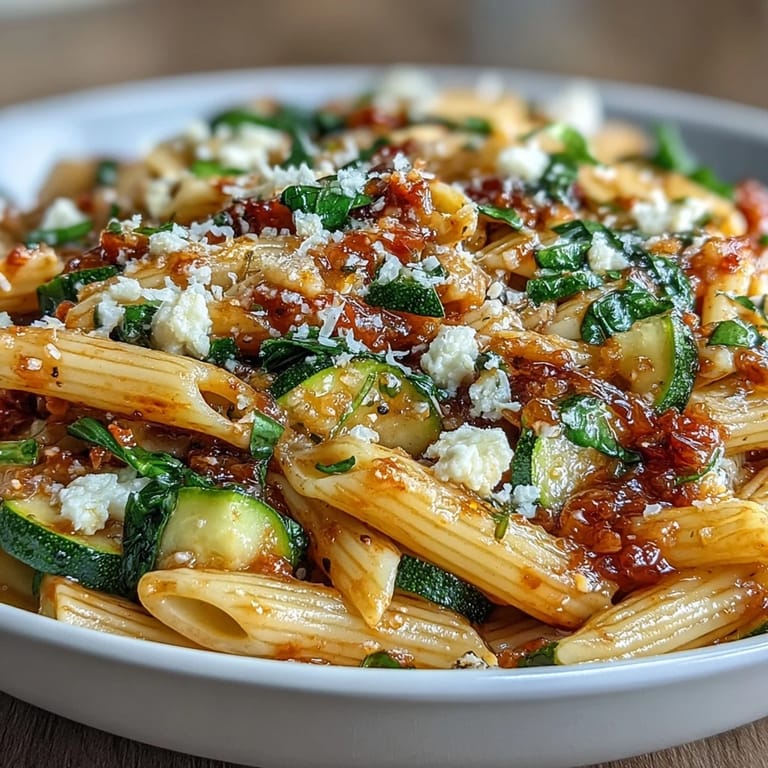
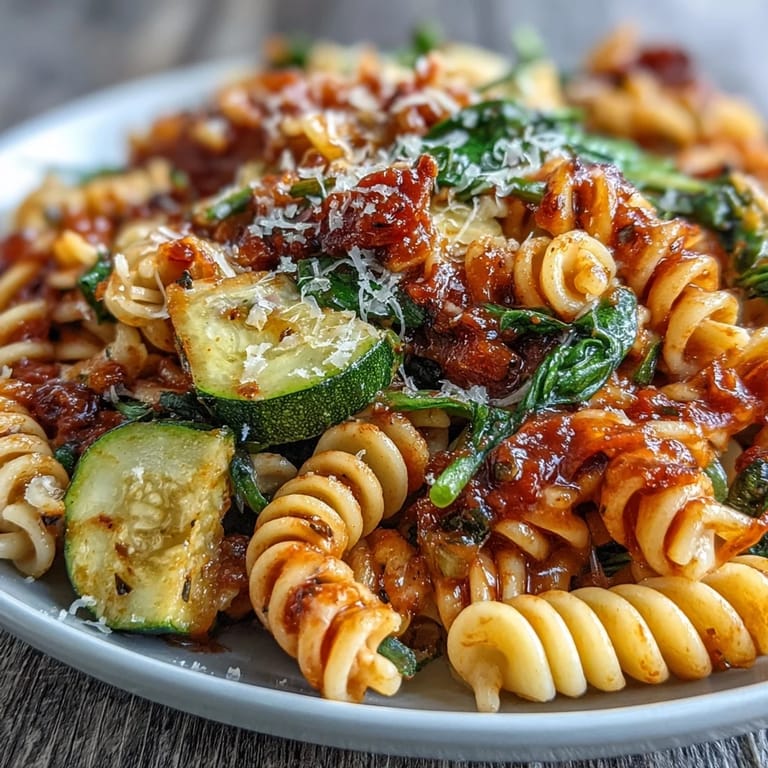
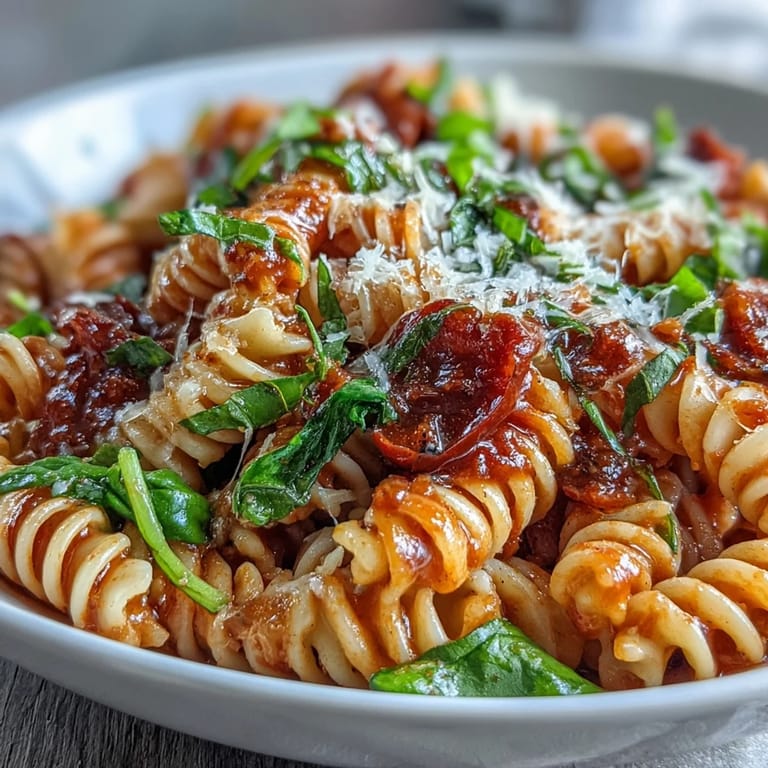
- Dried penne or fusilli (350 g): The shape matters here because you want something with enough surface area to catch the sauce; penne's tubes trap liquid beautifully, but any short pasta will work if that's what you have.
- Medium onion and garlic cloves (1 onion, 2 cloves): Chopped fine, these create the aromatic base that makes everything taste intentional rather than thrown together.
- Medium zucchini and red bell pepper (1 each, diced): The vegetables add body and color without requiring any exotic hunting; feel free to use whatever's on sale or taking up space in your crisper drawer.
- Canned diced tomatoes with juices (400 g): The juice is crucial—don't drain it—because that's half your cooking liquid and all the flavor you'd otherwise lose down the sink.
- Baby spinach (100 g): It wilts into nothing at the very end, adding a nutritional boost that nobody will taste but everyone will benefit from.
- Vegetable broth (700 ml): This is where your liquid comes from, so don't skimp on the quality; a good broth makes the difference between pasta that's tender and pasta that's merely cooked.
- Parmesan cheese (60 g, plus extra): Grated fresh tastes infinitely better than pre-shredded, and stirring it in at the end creates a subtle creamy texture without actual cream.
- Olive oil, Italian herbs, chili flakes, salt, and pepper: The seasonings are flexible because your palate is the final judge; taste as you go and trust your instincts.
Tired of Takeout? 🥡
Get 10 meals you can make faster than delivery arrives. Seriously.
One email. No spam. Unsubscribe anytime.
Instructions
- Build your flavor foundation:
- Heat the olive oil in your largest pot over medium heat, then add the chopped onion and minced garlic. Let them soften for two to three minutes until they become translucent and the smell hits you—that's when you know they're ready and your kitchen starts to feel like dinner is actually happening.
- Add the vegetables:
- Stir in the diced zucchini and bell pepper and let them cook for another few minutes until they're starting to soften at the edges. You're building layers of flavor here, not rushing toward the finish line.
- Combine everything:
- Add the uncooked pasta straight to the pot along with the canned tomatoes (juices included), vegetable broth, dried herbs, chili flakes if you're using them, and a generous pinch of salt and pepper. Give it a thorough stir so nothing's sitting in a dry pocket at the bottom.
- Simmer and watch it transform:
- Bring the whole pot to a boil, then lower the heat and cover it. Let it bubble gently for ten to twelve minutes, stirring occasionally, while the pasta cooks and the liquid reduces into a rich, saucy consistency. The pasta will soften, the vegetables will become tender, and suddenly you'll have something that looks like it took effort.
- Finish with greenery and cheese:
- Uncover the pot, stir in the baby spinach and Parmesan cheese, and cook for just a minute or two more until the spinach wilts into thin ribbons and the cheese melts throughout. Taste it now and adjust the seasoning—sometimes it needs a crack more pepper, sometimes a pinch more salt.
- Serve and celebrate:
- Ladle it into bowls while it's steaming hot, top each one with a little extra Parmesan, and take a moment to appreciate that you made something this good with one pot and minimal fuss.
 Pin it
 This dish taught me that the simplest meals often become the ones we make over and over, not because they're impressive but because they're there for us when we need them. It's the kind of food that asks nothing of you but gives back comfort, affordability, and the gift of a clean kitchen afterward.
How to Make It Your Own
The recipe is a canvas, not a contract—swap the vegetables for whatever you have or whatever's on sale. Mushrooms add an earthy depth, peas bring a sweetness, and carrots give you a little crunch if you cut them thin enough and add them early. Some weeks I use spinach, other times kale if I'm feeling ambitious, and honestly neither one changes the fundamental magic of how everything cooks together.
Adding Protein When You Need It
This is naturally vegetarian, which is why it's so budget-friendly, but it adapts beautifully if you want something heartier. Shredded rotisserie chicken stirred in at the very end is my go-to when I want protein without extra work, but canned beans, cooked sausage, or even torn pieces of leftover cooked chicken all work equally well. The key is adding it late enough that you're just heating it through rather than cooking it in the pot.
Storage and Reheating Tips
Leftovers reheat beautifully, though the pasta will drink up any remaining sauce overnight, so don't be alarmed if it looks drier the next day. Add a splash of broth or water when you reheat it, stir it over low heat, and it comes right back to life. I've found this is actually the kind of pasta that tastes even better the next day, when all the flavors have had time to get to know each other.
- Store leftovers in an airtight container in the refrigerator for up to three days.
- Reheat gently on the stovetop with a splash of liquid rather than the microwave to preserve the texture.
- You can also freeze it for up to two months, though the pasta's texture shifts slightly when thawed.
 Pin it
 This recipe exists in the space between survival and celebration, where you feed your people something real without spending hours or money you don't have. Make it once and it'll become part of your rotation, the dinner you come back to on nights when everything feels too much.
Recipe FAQs
- → Can I use gluten-free pasta for this dish?
Yes, gluten-free pasta works well and maintains the dish’s texture and flavor.
- → How can I make this dish spicier?
Add extra chili flakes or a pinch of red pepper to taste during cooking for more heat.
- → What vegetables can I substitute or add?
Mushrooms, peas, carrots, or other seasonal vegetables can be swapped or added for variety.
- → Is it possible to add protein to this meal?
Yes, incorporate cooked sausage slices, shredded chicken, or canned beans for additional protein.
- → How do I avoid the pasta sticking to the pot?
Stir occasionally during simmering to prevent sticking and ensure even cooking.