 Pin it
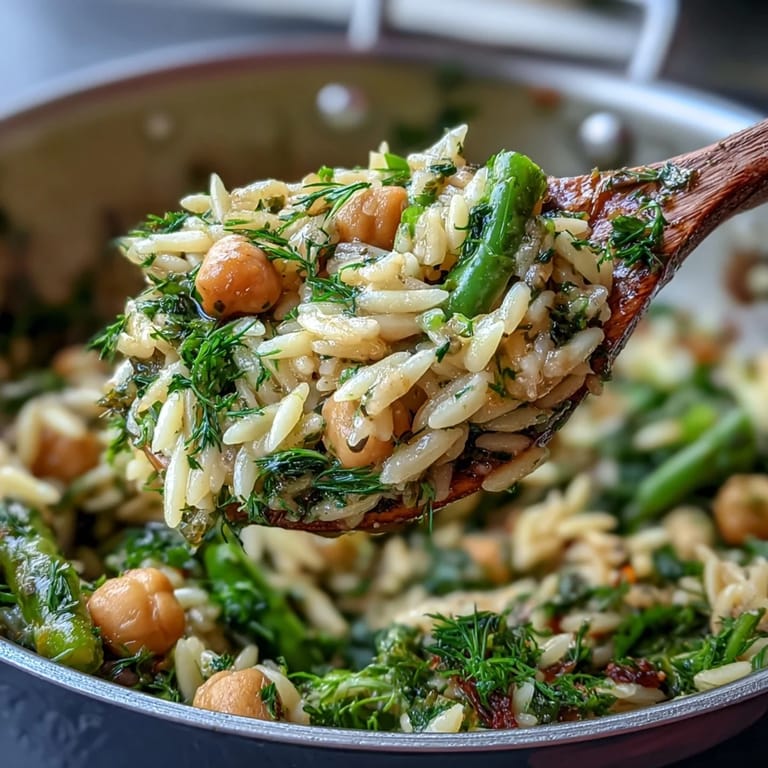
 There's something about the smell of lemon zest hitting hot olive oil that instantly lifts the kitchen's mood, and one Tuesday evening when I was tired and genuinely out of ideas, I threw together whatever spring vegetables were hiding in my crisper drawer with some orzo and chickpeas. What emerged was brighter, fresher, and somehow more satisfying than the complicated dinner I'd originally planned. That one-pot miracle has become my go-to when I need something that tastes like effort but feels effortless, and I've made it so many times now that my kitchen automatically smells like Mediterranean sunshine on the nights I need it most.
I made this for my neighbor who'd just moved in, and watching her face light up when she tasted how the lemon and fresh dill came together reminded me that simple food shared with good people is actually the whole point. She asked for the recipe before finishing her bowl, which is the kind of compliment that sticks with you.
Ingredients
- Orzo pasta (1 cup/200 g): This tiny rice-shaped pasta cooks directly in the broth and absorbs all those lovely herb and lemon flavors, which is why it works so much better here than regular long pasta would.
- Chickpeas (1 can/15 oz, drained and rinsed): They give you protein and substance without needing meat, and rinsing them removes excess sodium so you control the salt level.
- Asparagus, sugar snap peas, zucchini, and spinach (4 cups total): Choose whatever spring vegetables are fresh and available to you, since the magic is in their natural sweetness and the way they soften into the creamy broth.
- Yellow onion and garlic (1 small onion, 2 cloves): These build the flavor foundation during those first few minutes when everything is softening together.
- Vegetable broth (3 cups/720 ml): Low-sodium broth gives you control over seasoning, and it becomes part of the finished dish rather than just cooking liquid.
- Olive oil (2 tbsp): This carries the onion's sweetness and creates that first golden moment when everything tastes rich and intentional.
- Lemon juice and zest (1 large lemon): Both the bright juice and the fragrant oils in the zest do the heavy lifting here, so don't skip either one or you'll lose half the personality of the dish.
- Fresh parsley and dill (1/4 cup parsley, 2 tbsp dill): These are what make it taste like spring, and fresh herbs are non-negotiable for this one, though dried dill works if that's what you have.
- Oregano, salt, pepper, and red pepper flakes (1 tsp oregano, 1/2 tsp salt, 1/4 tsp pepper, pinch of flakes): These quiet seasonings let the lemon and vegetables shine without competing for attention.
Tired of Takeout? 🥡
Get 10 meals you can make faster than delivery arrives. Seriously.
One email. No spam. Unsubscribe anytime.
Instructions
- Soften the onion in golden olive oil:
- Pour your olive oil into a large, deep skillet or Dutch oven over medium heat and let it shimmer for a moment before adding your finely chopped onion. Watch it turn translucent and sweet over three to four minutes, stirring now and then, because this is where the whole dish's flavor story begins.
- Add the spring vegetables and let them start to soften:
- Toss in your minced garlic, diced zucchini, asparagus pieces, and sugar snap peas, stirring occasionally as they soften just slightly over two to three minutes. You're looking for that moment when they still have some firmness but are beginning to release their sweetness into the pan.
- Toast the orzo for a minute:
- Stir in the dry orzo and let it sit in the hot oil for about a minute, which adds a subtle nutty depth that you wouldn't get otherwise. The pasta will click and tumble a bit in the pan, which is exactly what you want.
- Pour in the broth and aromatics, then bring to a gentle boil:
- Add your low-sodium vegetable broth, the drained chickpeas, oregano, salt, pepper, and red pepper flakes if you like a hint of heat. Stir everything together and let it come up to a gentle boil, which usually takes a few minutes.
- Simmer until the orzo is tender and the broth mostly disappears:
- Turn the heat down to a simmer, cover your pot, and let it bubble quietly for eight to ten minutes, stirring once or twice. You'll watch the liquid gradually get absorbed into the pasta, which is oddly satisfying.
- Wilt the spinach and finish with brightness:
- Stir in your baby spinach along with the lemon juice and lemon zest, cooking for just a minute or two until the spinach turns tender and dark green. The lemon will immediately make everything taste fresher and more alive.
- Finish with fresh herbs and taste:
- Remove from heat, scatter in your fresh parsley and dill, and toss everything gently together. Give it a taste and adjust the salt or lemon if it needs it, because every lemon is different.
 Pin it
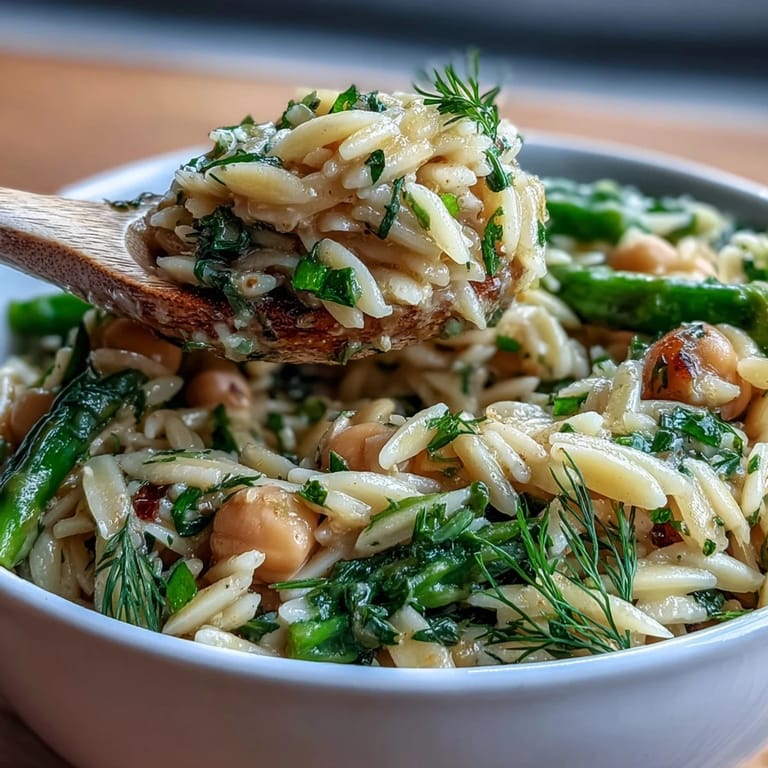
 My eight-year-old, who has opinions about what counts as real food, asked for seconds without being asked, and that's when I knew this recipe had crossed into something that works for everyone. It's the kind of dish that doesn't feel like compromise, where vegetables taste like an actual choice rather than an obligation.
Why This One-Pot Method Changes Everything
Cooking the orzo directly in the broth means it's drinking in all those herb flavors and lemon oils the entire time, so you end up with something more cohesive than if you'd cooked everything separately and mixed it together at the end. The starchy water from the pasta also thickens the broth slightly, creating a gentle sauce that coats everything without any cream. This is why one-pot meals feel more satisfying even though they're technically simpler.
Timing Your Vegetables So They're Still Bright
The reason to add the hearty vegetables (asparagus and zucchini) early and the spinach at the very end is texture and color. If you threw everything in at once, you'd end up with a softer, less vibrant dish where the green things would all taste the same. By staggering them, you get the snap of the peas, the tenderness of the asparagus, and the fresh-tasting spinach that wilts in just seconds at the end, making every bite feel different.
Flavor Building and Flexibility
This dish wants to be played with, and I've made it with peas instead of peas, added a handful of shredded carrots when I felt like it, and once even threw in some diced artichoke hearts because they were there. The chickpeas could be swapped for white beans if that's what you have, and if you want it richer, a spoonful of Greek yogurt stirred in at the end makes it creamy without heaviness. The only non-negotiable elements are the lemon and the fresh herbs, because those are what make it taste like itself.
- Edamame or additional chickpeas work great if you want more protein density without changing the character of the dish.
- A splash of white wine instead of part of the broth adds a subtle complexity that nobody can quite identify but everyone notices.
- Crushing a few red pepper flakes into the oil at the very beginning spreads their heat throughout the whole dish in a more integrated way than adding them later.
 Pin it
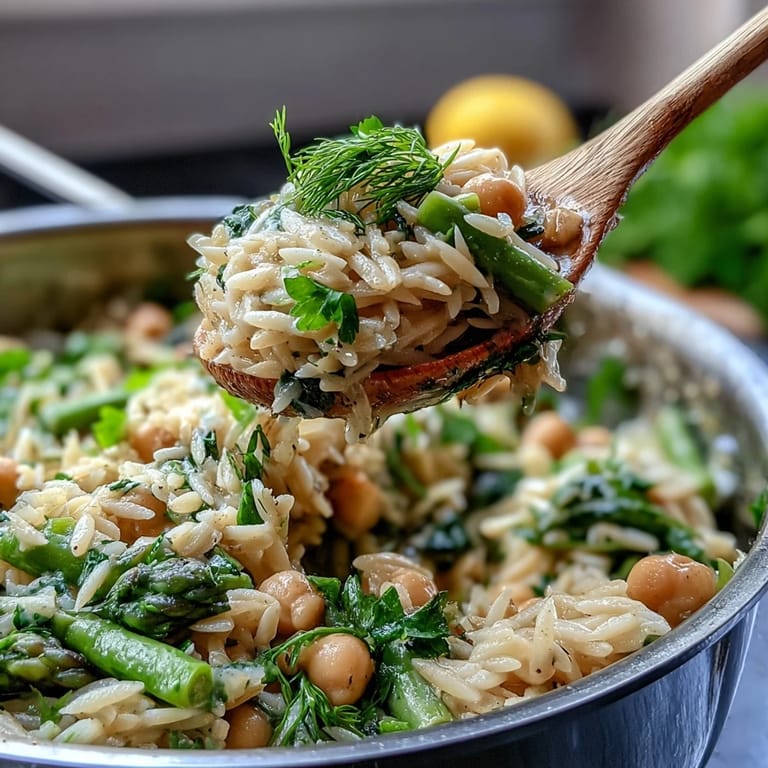
 This is the kind of recipe that teaches you how to cook intuitively, trusting your senses to tell you when things are ready rather than watching a timer. Once you've made it a few times, you'll find yourself throwing versions of this together whenever you want something bright and nourishing without the whole production.
Recipe FAQs
- → Can I substitute the vegetable broth?
Yes, you can use chicken broth or water with added herbs for a different flavor profile.
- → How do I make this dish gluten-free?
Swap the orzo for gluten-free pasta or a grain like quinoa to keep it gluten-free.
- → What spring vegetables can I use instead?
Feel free to add peas, green beans, broccoli, or any fresh seasonal vegetables you prefer.
- → Can I add more protein to this meal?
Extra chickpeas or shelled edamame can be added for a plant-based protein boost.
- → What herbs complement this dish best?
Fresh parsley, dill, oregano, and lemon zest all enhance the bright, fresh flavors beautifully.