 Pin it
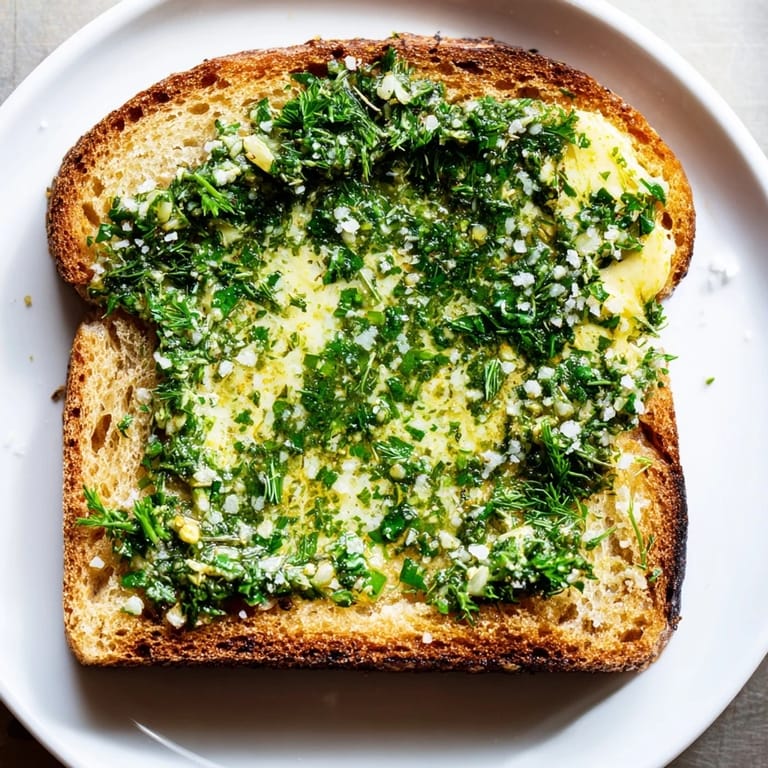
 I was standing at the kitchen counter one late afternoon, holding a loaf of stale sourdough and wondering what to do with it. My fridge had a stick of butter, half a bunch of parsley, and some garlic I'd bought days ago with good intentions. I mashed everything together without much of a plan, spread it thick on toasted bread, and watched it bubble under the broiler. The smell alone made me forget I was supposed to be making dinner.
I started making this for guests who'd drop by unexpectedly. I'd slice whatever bread I had, slather on the herb butter, and toast it while we caught up in the kitchen. It became the thing people mentioned later, the small detail they remembered. Once, a friend asked me to write down the recipe, and I realized I'd been winging it every time.
Ingredients
- Crusty artisan bread: Sourdough or baguette works best because the crust crisps beautifully and the interior stays soft enough to soak up the melted butter.
- Unsalted butter: Softened butter blends smoothly with the herbs and lets you control the salt level, keeping the flavor bright instead of heavy.
- Fresh parsley: The backbone of the compound butter, it adds color and a grassy brightness that balances the richness.
- Fresh chives: A mild onion note that layers gently without overpowering the other herbs.
- Fresh thyme leaves: Earthy and aromatic, thyme brings depth and warmth to every bite.
- Garlic clove: Minced fine so it melts into the butter, adding a subtle punch without bitterness.
- Lemon zest: A small amount lifts everything, cutting through the butter and making the herbs taste even fresher.
- Freshly ground black pepper: Just enough to add a hint of spice without drawing attention to itself.
- Fine sea salt: Mixed into the butter for even seasoning throughout.
- Flaky sea salt: The final touch that adds texture and little bursts of saltiness on top.
Tired of Takeout? 🥡
Get 10 meals you can make faster than delivery arrives. Seriously.
One email. No spam. Unsubscribe anytime.
Instructions
- Preheat your oven:
- Set it to 200°C or turn on the broiler to high. You want direct heat to crisp the bread quickly without drying it out.
- Mix the compound butter:
- In a small bowl, combine softened butter with parsley, chives, thyme, minced garlic, lemon zest, black pepper, and fine sea salt. Stir until the herbs are evenly distributed and the butter is smooth and fragrant.
- Toast the bread lightly:
- Place the bread slices on a baking sheet and toast them in the oven or under the broiler for 2 to 3 minutes. You're looking for a light golden color and a firm surface that can hold the butter.
- Spread the herb butter generously:
- While the bread is still warm, spread a thick layer of compound butter on each slice. Don't be shy, the butter is the star here.
- Finish under heat:
- Return the buttered toasts to the oven or broiler for 1 to 2 minutes, just until the butter melts into the bread and the edges turn golden and crisp. Watch closely so they don't burn.
- Sprinkle and serve:
- Remove the toasts from the oven, finish with a pinch of flaky sea salt, and serve them right away while they're still warm and crackling.
 Pin it
 One evening I made a double batch of the herb butter and rolled it into a log wrapped in parchment paper. I kept it in the fridge and sliced off rounds whenever I needed them. It became my secret weapon for busy nights, turning plain pasta or roasted vegetables into something special. My partner started calling it magic butter, and I didn't correct him.
Choosing Your Bread
The bread you choose changes everything. A thick slice of sourdough gives you a chewy interior with a crackling crust, while a baguette offers more surface area for butter and a lighter, airier bite. I've used ciabatta, whole grain loaves, and even day old focaccia. As long as the bread has structure and a good crust, it will work. Avoid soft sandwich bread, it turns limp under the butter and doesn't crisp properly.
Variations Worth Trying
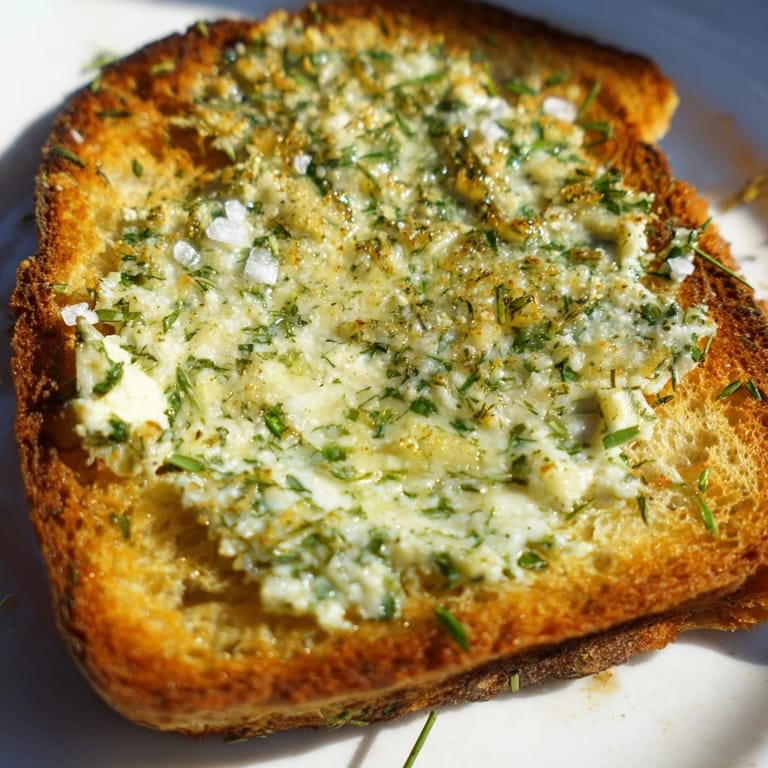
Once you've made the basic version, it's easy to play around. I've stirred in a pinch of chili flakes for a gentle heat, swapped thyme for fresh dill when serving it with fish, and added a teaspoon of grated Parmesan for a sharper, savory edge. In summer, I use basil instead of parsley and serve the toast alongside tomatoes. In winter, I lean into rosemary and pair it with soup. The compound butter adapts to whatever's in season or whatever you're craving.
Serving Suggestions
This toast works in more situations than you'd expect. I've served it as an appetizer before dinner, as a side with roasted chicken, and as a late night snack with a glass of wine. It's excellent alongside a bowl of soup or a simple green salad. Sometimes I'll make it for breakfast and top it with a soft fried egg. The richness of the yolk mixing with the herb butter is worth waking up for.
- Pair it with a crisp white wine like Sauvignon Blanc or a light Pinot Grigio.
- Serve it warm from the oven, the butter should still be glistening.
- If you're making it for a crowd, double the butter recipe and keep extra on hand for seconds.
 Pin it
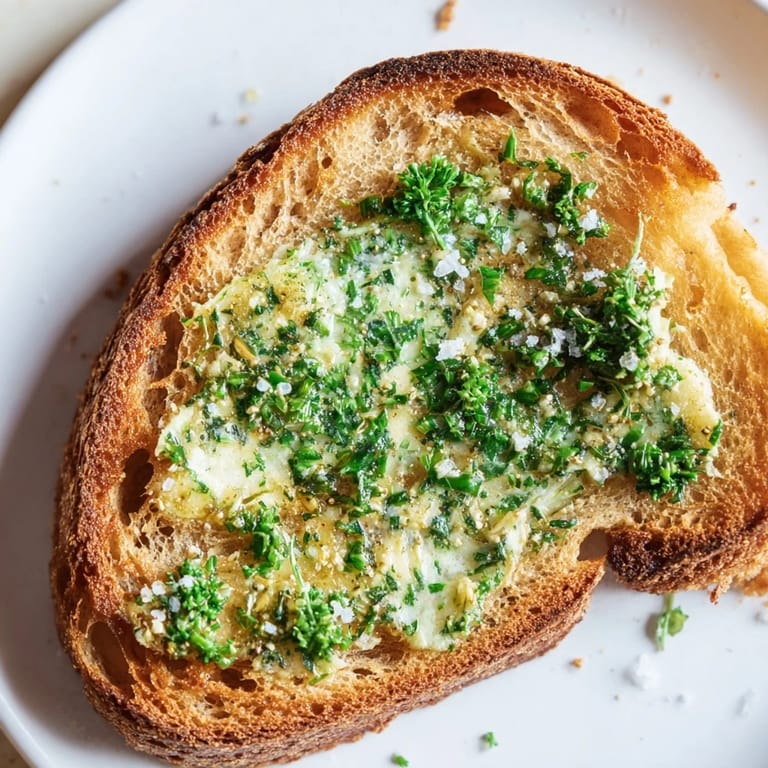
 There's something about warm, buttery bread that makes a moment feel a little more generous. Whether you're feeding friends or just treating yourself after a long day, this toast does exactly what it's supposed to do.
Recipe FAQs
- → Can I prepare the compound butter in advance?
Yes, you can make the compound butter up to 3 days ahead. Store it in an airtight container in the refrigerator, or wrap it in plastic wrap and freeze for up to one month. Simply soften it before spreading onto your toasted bread.
- → What types of bread work best for this preparation?
Crusty artisan breads with good structure work wonderfully. Sourdough, baguettes, ciabatta, or whole grain loaves all hold up well. Avoid soft breads like sandwich loaves, as they won't achieve the desired crispiness.
- → How can I customize the herb butter?
Feel free to swap fresh herbs based on what you have available. Dill, tarragon, basil, oregano, or rosemary all complement the butter beautifully. You can also add a pinch of chili flakes, Dijon mustard, or finely grated Parmesan for different flavor profiles.
- → Is this suitable for vegetarian diets?
Yes, this preparation is completely vegetarian, as it contains only bread, butter, fresh herbs, and seasonings. Simply verify that your butter is made from vegetarian sources if needed.
- → What pairs well with herb butter toast?
This versatile preparation complements light soups, salads, cured meats, and cheeses beautifully. A crisp white wine, light rosé, or sparkling water pairs perfectly. It also works wonderfully as an accompaniment to seafood or roasted vegetables.
- → Can I use a toaster oven instead of a regular oven?
Absolutely. A toaster oven works equally well for this preparation. Follow the same temperature and timing guidelines, watching carefully to ensure the bread toasts evenly and the butter melts without burning.